WASHINGTON (ANP) - De VS hebben samen met bondgenoten, inclusief Canada, Duitsland, Groot-Brittannië, Frankrijk en Nederland, vermeende samenzweringen veroordeeld van een speciale buitenlandbrigade van de Iraanse Islamitische Revolutionaire Garde (IRG). Het gaat in de verklaring van het ministerie van Buitenlandse Zaken van de VS om de Quds Force die in Europa, Noord-Amerika en Australië ook dodelijke acties zou beramen.
Daarbij wordt volgens Washington met criminelen samengewerkt. Doelwit zouden Amerikaanse en Israëlische belangen, Joodse instellingen en Iraanse dissidenten zijn. In de verklaring van 22 landen worden de veronderstelde samenzweringen veroordeeld en wordt geëist dat Iran hier nu mee ophoudt.
In de verklaring wordt de geheimzinnige beweging Harakat Ashab al-Yamin al-Islamiya genoemd (de islamitische beweging van de metgezellen van de rechtvaardigen). Die is dit jaar plotseling opgedoken op sociale media en claimt brandstichtingen in onder meer Amsterdam, Londen, Luik en Rotterdam.
DEN HAAG (ANP) - Voormalig minister Wouter Koolmees van Sociale Zaken en Werkgelegenheid had "buikpijn" door de invoering van de avondklok op 23 januari 2021. Hij vreesde dat de maatregel tot polarisatie in de samenleving zou leiden en dat mensen zouden denken aan de bezettingsperiode onder nazi-Duitsland, toen er ook een avondklok was.
"Het was een ernstig vrijheidsbeperkende maatregel", zei Koolmees. De avondklok was een makkelijk uit te leggen maatregel, volgens Koolmees, maar hij twijfelde over de legitimiteit.
Daarom werd in het kabinet besproken hoe effectief het was, aangezien alles al dicht was. Hij noemde het invoeren dan ook "een duivels dilemma".
Maandenlange discussie
Aan het invoeren gingen drie maanden aan discussie vooraf, zei Koolmees. "Uiteindelijk was het toch proportioneel, want volgens wetenschappers zou het een groot effect hebben op de verspreiding van het coronavirus."
De avondklok werd uiteindelijk vijf keer verlengd en duurde tot en met 28 april 2021.
ROSMALEN (ANP) - Tennisser Tallon Griekspoor heeft zich ten koste van Botic van de Zandschulp geplaatst voor de tweede ronde van het grastoernooi van Rosmalen. Griekspoor won het duel tussen de twee beste spelers van Nederland met 6-2 6-7 (2) 6-4. De partij werd dinsdag gestaakt vanwege de regen bij een 2-0-voorsprong in de derde set in het voordeel van Griekspoor.
De mondiale nummer 41 treft in de tweede ronde de Chinees Zhang Zhizhen. Griekspoor (29) en Van de Zandschulp (30) bereikten maandag al als duo de tweede ronde van het dubbelspel in Rosmalen.
Griekspoor had dinsdag de eerste set gewonnen dankzij twee late breaks. Na een slordige tweede set trok Van de Zandschulp de stand gelijk in de tiebreak. De voorsprong van Griekspoor in de derde set kwam na de hervatting niet meer in gevaar. Hij wist op 5-3 twee matchpoints niet te benutten, maar verzekerde zich van de winst op eigen service.
Griekspoor ging onlangs in de eerste ronde van Roland Garros onderuit tegen de Italiaan Matteo Arnaldi. De vroege uitschakeling kostte hem acht plaatsen op de wereldranglijst.
Tijdens de tweede golf van coronabesmettingen in het najaar van 2020 begonnen de spanningen in het kabinet, zei oud-minister Wouter Koolmees van Sociale Zaken en Werkgelegenheid tijdens een verhoor door de parlementaire enquêtecommissie corona. Volgens hem zijn er "vast en zeker lelijke woorden gebruikt", maar kwam het kabinet altijd tot beleid dat door iedereen gedragen werd.
"In de tweede golf kwam er discussie over de aanpak en de maatregelen die moesten worden genomen", aldus Koolmees. "Maar daar was het overleg in het Catshuis ook voor bedoeld", verwees de oud-minister naar informele overleggen tussen een aantal betrokken ministers. "De vertrouwelijkheid van het Catshuis zorgde ervoor dat je van je hart geen moordkuil hoefde te maken."
Het botste volgens Koolmees tussen ministers die het belang van de zorg benadrukten en ministers die keken naar andere belangen. Maar: "Als we zagen dat de situatie slechter werd, was er ook geen discussie over dat we maatregelen moesten nemen om het virus in te dammen."
Commonwealth Fusion has published five peer-reviewed papers laying out the physics case for ARC, its planned 400 MW fusion power plant, which would follow the company's smaller SPARC tokamak now under construction. The papers suggest ARC could produce more energy than it consumes using high-temperature superconducting magnets, molten-salt heat extraction, and 15-minute fusion pulses. Ars Technica reports: ARC will be a tokamak that hosts fusion between hydrogen's two heavier isotopes, deuterium and tritium. This reaction results in a helium nucleus and releases a neutron and radiation. The helium transfers heat to the plasma, maintaining the conditions needed for fusion, but it is otherwise a waste product, referred to as "ash" in the fusion context. The neutron and radiation, however, are put to use. Part of that use is simply imparting energy into a blanket of molten salt that surrounds the fusion chamber. That energy, in the form of heat, will be used to drive a turbine that produces the electricity. The molten salt includes lithium ions; when one lithium isotope absorbs a neutron, it decays into more helium, plus tritium that can be used as fuel for the reactor. There are isotopes present that will also release additional neutrons, allowing this process to generate sufficient fuel.
Overall, the present design of ARC is expected to produce about 1.13 GW of fusion power, with 500 MW of that extracted as electricity. Some of that (100 MW) will be needed to power the plant's operations, leaving 400 MW to be sent to the grid. The rest of the energy is either kept in the tokamak to maintain the fusion reactions or lost due to inefficiencies in the heat and energy transfer of the system. There's a lot of uncertainty about these numbers; the 1.13 GW is just the center of a range of potential values running from 900 MW to 1.3 GW, so the 400 MW output may need to be adjusted up or down accordingly.
Some of that 400 MW comes during periods where fusion is not occurring. The nuclear reactions will occur within 15-minute-long periods that will be interspersed with one minute resets. The resets are meant to be kept short enough that nothing has much of a chance to cool down before it gets heated up again -- thermal inertia will let it continue generating power. That will be one of the key differentiators with SPARC, which doesn't have the heat extraction needed to maintain stable fusion for these long time periods, and so can't maintain the near constant temperatures needed for reliable power generation.
It's inevitable that parts of the device will be exposed to radiation and perhaps fusion plasma. The inner walls of the reactor will be shielded by tungsten, which will limit erosion by the conditions. Meanwhile, the vacuum vessel is designed to be replaced every one to two years. The papers note that this flexibility will allow them to make some design changes even after ARC is built. To enable this, the whole tokamak is meant to split in half for maintenance.


Overall, the present design of ARC is expected to produce about 1.13 GW of fusion power, with 500 MW of that extracted as electricity. Some of that (100 MW) will be needed to power the plant's operations, leaving 400 MW to be sent to the grid. The rest of the energy is either kept in the tokamak to maintain the fusion reactions or lost due to inefficiencies in the heat and energy transfer of the system. There's a lot of uncertainty about these numbers; the 1.13 GW is just the center of a range of potential values running from 900 MW to 1.3 GW, so the 400 MW output may need to be adjusted up or down accordingly.
Some of that 400 MW comes during periods where fusion is not occurring. The nuclear reactions will occur within 15-minute-long periods that will be interspersed with one minute resets. The resets are meant to be kept short enough that nothing has much of a chance to cool down before it gets heated up again -- thermal inertia will let it continue generating power. That will be one of the key differentiators with SPARC, which doesn't have the heat extraction needed to maintain stable fusion for these long time periods, and so can't maintain the near constant temperatures needed for reliable power generation.
It's inevitable that parts of the device will be exposed to radiation and perhaps fusion plasma. The inner walls of the reactor will be shielded by tungsten, which will limit erosion by the conditions. Meanwhile, the vacuum vessel is designed to be replaced every one to two years. The papers note that this flexibility will allow them to make some design changes even after ARC is built. To enable this, the whole tokamak is meant to split in half for maintenance.
Read more of this story at Slashdot.
Oscar winner Mikey Madison and Jeremy Strong to star in film focused on fallout from whistleblower Frances Haugen
The first trailer for Aaron Sorkin’s eagerly anticipated follow-up to The Social Network has landed.
The Social Reckoning has been described as a film that isn’t a “straight sequel” but one that will still revisit Mark Zuckerberg and Facebook.
Continue reading...
Questions over the future of Moscow’s control of the Tartus naval base and the Hmeimim airbase have mounted since the December 2024 ouster of Russian ally Bashar al-Assad.
🌘
Subscribe to 404 Media to get The Abstract, our newsletter about the most exciting and mind-boggling science news and studies of the week.
Scientists have discovered that people walking in crowds tend to spontaneously turn counterclockwise—regardless of the environment, from schoolyards to busy settings—a surprise finding that “may represent a manifestation of a deeper biological principle of symmetry breaking,” according to a study published in Nature Communications on Wednesday.
The bizarre finding was made essentially by accident; during the Covid-19 pandemic, researchers led by Iñaki Echeverría Huarte, a professor who studies pedestrian dynamics at the University of Navarra in Spain, studied the movements of pedestrians as part of a project to inform public health guidance on social distancing measures. But the videos revealed something unexpected—a consistent pattern of people turning counterclockwise when switching direction.
“The discovery was a serendipitous one (as sometimes happens in science),” Huarte told 404 Media in an email exchange that also included study co-author Claudio Feliciani, a professor who studies crowd dynamics at the University of Tokyo. “Since then, we have completed a series of experiments in Spain to test several hypotheses.”
“Curiously, during a conference where I was presenting the first part of this story, Claudio and I got talking and thought together: why not run an experiment in Japan?” he continued. “We were convinced the rotation would flip there, for several reasons (cultural ones, and the different type of avoidance behaviour that exists in Japan compared with Spain). However...it did not.”
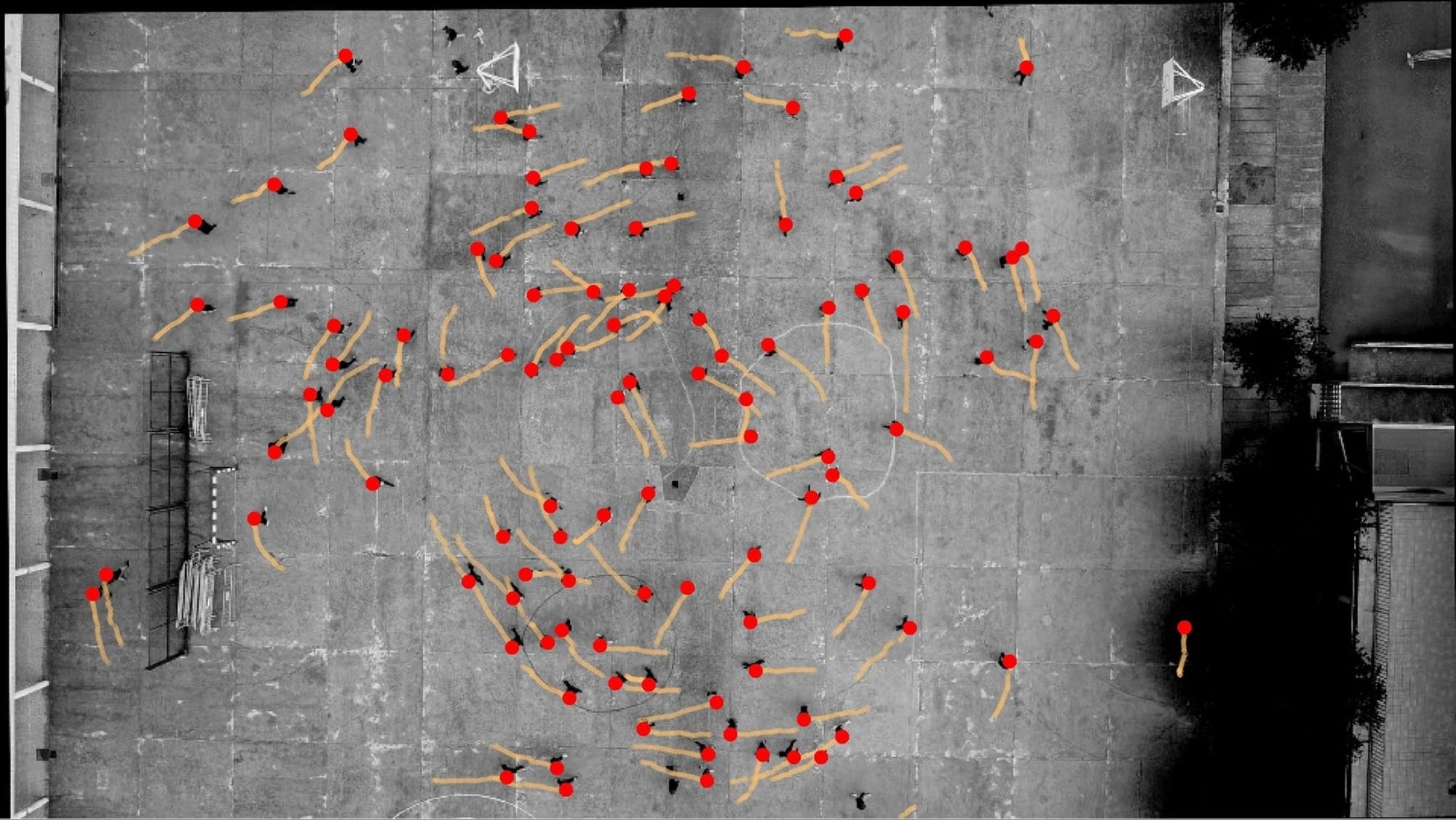
Indeed, over the course of several experiments that took place in different environments in Spain and Japan, the counterclockwise bias persisted, suggesting that the team may have stumbled on a hidden rule of behavior. This preference showed up whether people were walking alone, or as part of a group, suggesting that it emerges from individuals, rather than as a collective phenomenon that is only present in crowds.
“We are now only sure that it is not a collective but an individual bias, and that is very, very robust,” said Feliciani. However, the team stopped short of describing the bias as a “universal law” until more research is conducted, especially in more complex scenarios, such as emergency evacuations or dense crowds.
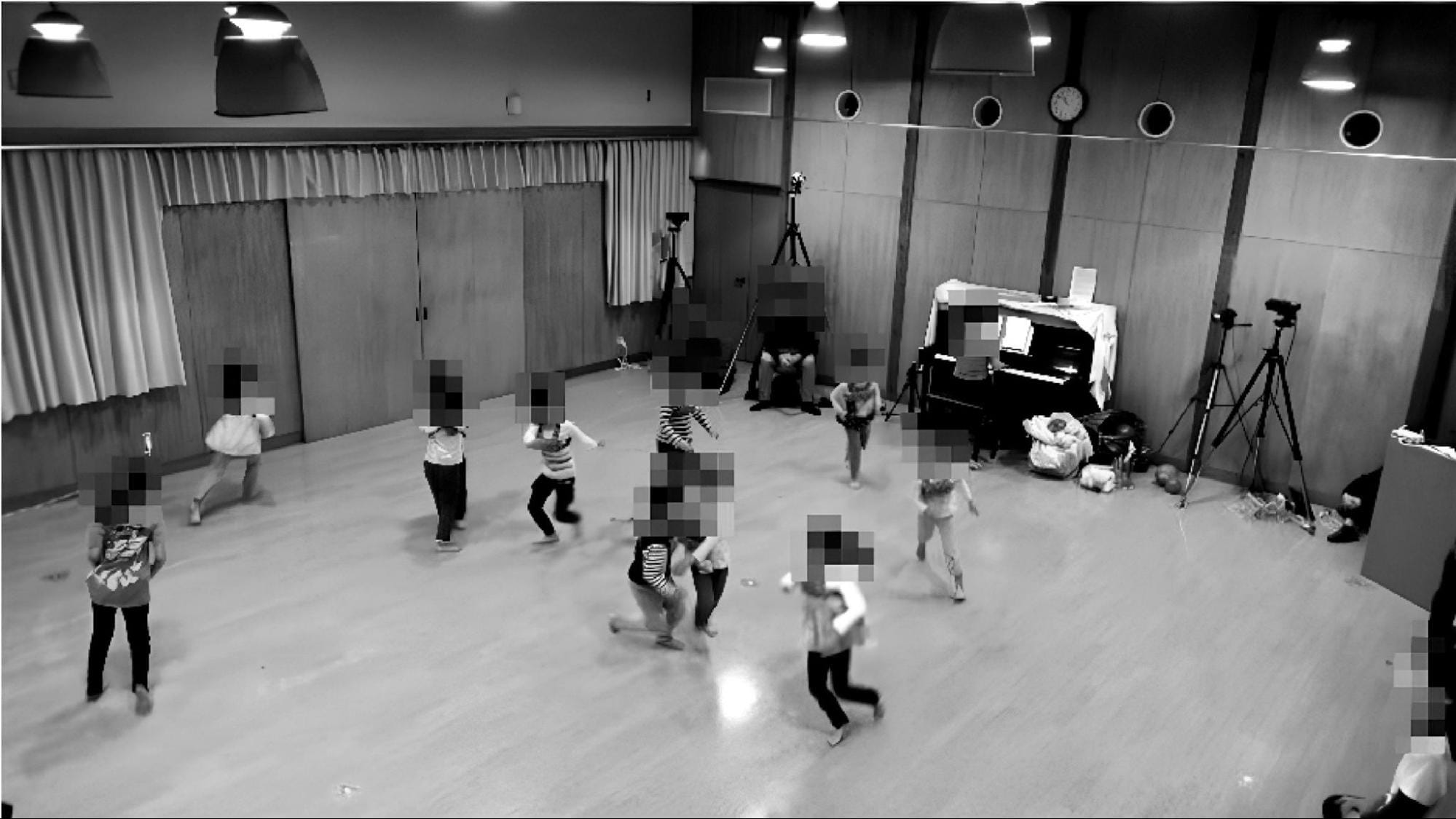
For this study, the researchers analyzed the movements of hundreds of participants, including adults who were instructed to move freely in different settings, teenagers playing in their schoolyard in Spain, and children at a nursery school in Japan. They accounted for individual variations such as handedness (left or right), age, as well as local social etiquette about expected behavior in crowds.
In each situation, the participants displayed a clear counterclockwise bias in the rotation of their bodies as they moved to a new direction. Each group also contained people who turned predominantly clockwise or showed no rotational bias, but they were fewer in number than the counterclockwise turners. The nursery school children showed an even stronger bias toward counterclockwise turns, suggesting that it may not be a learned behavior, but something biologically rooted.
“It is likely biomechanical, but exactly why is hard to tell,” said Feliciani. He added that this symmetry-breaking motion appears to be unusual in animals, and that “most animals show no bias, and humans are probably the exception or, for sure, a rare case.”
That said, the study outlined a few exceptions, including temnothorax ants, which tend to turn left while exploring, and budgies, which show preferences in certain lateral directions during flight.
Huarte is working on follow-up studies that use virtual reality to shed light on the bias, but for now, this weird pattern remains unexplained. A better understanding of its origins could be useful for applications in busy settings like airports, museums, shopping centres, and other public spaces. It’s also an example of how unexpected behavior can be hidden in plain sight.
“I believe the real value of our discoveries lies in the fact that it can lead to other discoveries on how we process locomotor information and use them to move,” Feliciani concluded.
🌘
Subscribe to 404 Media to get The Abstract, our newsletter about the most exciting and mind-boggling science news and studies of the week.

