Lof van de memoir: het genre waarin de schrijver zich niet kan verschuilen

Egodocumenten werden lang gezien als ijdel en niet-literair. Maar de memoir krijgt steeds meer erkenning als een volwaardig literair genre, dat zich onderscheidt door de directheid waarmee ongemakkelijke waarheden worden onthuld.

Iran houdt Libanon er graag bij – om deze vier redenen

Wie Iran aanvalt, krijgt te maken met zijn partners, is Irans strategie. En een van die partners, Hezbollah, zit in Libanon. Door Libanon onderdeel te maken van de onderhandelingen, versterkt Iran zijn positie als bondgenoot.

Explosieven aangetroffen in pand Nuenen waar een tijdelijk asielzoekerscentrum komt

In een pand waar komende zomer vanaf augustus asielzoekers zullen worden gehuisvest, zijn donderdagochtend explosieven aangetroffen. De noodopvanglocatie zou voor maximaal tien jaar onderdak bieden aan maximaal 159 asielzoekers. Dit besluit van de gemeente riep veel weerstand op.

Wel.nl

Minder lezen, Meer weten.

NAVO-chef Rutte noemt Finse kernwapenwet 'historische keuze'

BRUSSEL (ANP) - NAVO-chef Mark Rutte noemt de keuze van Finland om het totaalverbod op kernwapens af te schaffen een "historische keuze". Dat zegt de NAVO-secretaris-generaal desgevraagd tegen journalisten in Brussel, waar de defensieministers van NAVO-lidstaten bijeen waren voor overleg.

Het Finse parlement stemde woensdag met grote meerderheid voor afschaffing van het verbod op zaken als invoer, transport en bezit van kernwapens. Daarmee nam het een stap nader tot de NAVO wat betreft de positie rond kernwapens. In 2023 trad het land al toe tot het militaire bondgenootschap, na decennia waarin het geen lid van de NAVO wilde worden.

Desgevraagd zegt Rutte in Brussel niet al te veel te kunnen uitweiden over zijn positie rond de Finse keuze, maar benadrukt hij dat "het feit dat ik de term historisch gebruik" veelzeggend is over zijn kijk op de stap van Helsinki.

Finland deelt 1340 kilometer grens met Rusland, bestaande uit veelal ongerepte natuur. Het land sloot de oostgrens met Rusland eind 2023.


Rijnmond - Nieuws

Het laatste nieuws van vandaag over Rotterdam, Feyenoord, het verkeer en het weer in de regio Rijnmond

Slachtoffer dodelijk ongeluk met vrachtwagen is vrouw (79) uit Schiedam

Het slachtoffer dat donderdagochtend om het leven is gekomen bij een ongeluk met een vrachtwagen op de Nieuwe Damlaan in Schiedam, is een 79-jarige vrouw uit Schiedam. Dat heeft de politie bekendgemaakt.

osanpo_1948

gnsk has added a photo to the pool:

osanpo_1948

The Register

Biting the hand that feeds IT — Enterprise Technology News and Analysis

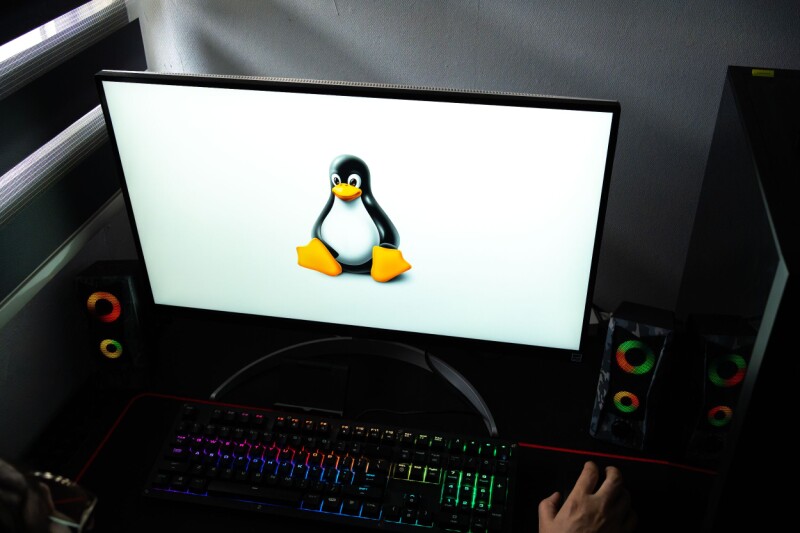
KDE Plasma 6.7 brings the X11 era to a close

The latest version of the KDE desktop - Plasma 6.7.0 - has arrived, bringing several shiny new functions – some of which have been a long time coming – and features the return of the popular Oxygen theme from KDE 4. Since the KDE 6 “megarelease” two and a half years ago, the project's developers have been very busy. Fresh Plasma releases have come thick and fast. It's fewer than six months since the release of KDE Plasma 6.6.0 back in February. This rate of change matters, as a massive implementation change is coming: as the team announced in November last year, the plan is that KDE Plasma 6.8 will be Wayland-only. That means that this new release is the last to support X11. From some time early next year, KDE Plasma will be “Wayland or no way.” There are already functional differences between Plasma on X11 and Plasma on Wayland, as the Dedoimedo blog described when reviewing Kubuntu 26.04 last month. (Dedoimedo is written by Igor Ljubuncic, who we interviewed at the 2023 Ubuntu Summit.) X11 holdouts need not feel entirely abandoned as there’s a new fork of the X11-capable version of the desktop, called SonicDE. The project’s self-description says: "We aim to preserve and improve the X11-specific aspects of KDE since they announced they are going Wayland-only in KDE Plasma 6.8. SonicDE currently consists of the customized KWin/X11 sonic-win window manager and compositor, Plasma Workspace components, the Silver theme, an SDDM theme, and some support libraries." SonicDE joins at least two existing forks of older versions of KDE: the Trinity desktop environment, based on the last version of KDE 3, and MiDesktop, which we mentioned recently, based on the last version of KDE 1. (If there are any others out there that we’ve missed, do please let us know.) Matching Macs For now, Plasma 6.7 isn’t radically different from the existing Plasma 6.6, but this version has some significant new features. Two of them may be familiar to macOS users. Firstly, while KDE has always supported virtual desktops, in this release, on computers with more than one physical display, each screen can have its own set of virtual desktops. Apple’s macOS does this, and it’s the only way to get a separate global menu bar on each screen. Aside from that, for this vulture, it’s more trouble than it’s worth – but from what we read, many people like it a lot and we think this will be a popular change. Secondly, to type letters with accents (technically, “diacritics”), such as ä or ç or Š, you can now press and hold a key, and a list of alternatives appears. This is how Macs have done it for decades. If you only very occasionally need these characters, it does have the advantage that you avoid having to memorize special shortcuts or combinations. Personally, this Vulture finds it faster to configure and use a Compose key, which KDE supports just fine, but this is a handy change if you only rarely need such things. These aren’t the only changes, of course. Alongside Plasma’s existing System Tray applets, the tray now shows GNOME-style “Background Apps” – commonly found in Flatpak apps. The Overview screen is easier to navigate, and you can now switch virtual desktops by scrolling with your pointing device, or using the PgUp and PgDn keys. The Discover software store makes the Install button more prominent, and sorts installed apps into categories. It’s now easier to switch light and dark mode globally with one click, and there’s better support for hardware detection of lighting brightness. Theme handling is in the middle of a major revamp, in an initiative called Union, which brings management of multiple different types of theme together in one place. Developers carefully modernized the “Oxygen” theme, the default dark look for KDE 4, and did likewise for its lighter equivalent “Air”. If you fancy a change from the now-ubiquitous flat look, it’s available to install, along with matching Horos wallpapers. There are a lot of smaller changes. There’s an option to test your microphone right from the taskbar. When the clock shows multiple timezones, it shows the offset in hours. Windows can be selectively hidden when recording or streaming the desktop. Type-ahead search optionally now works on the desktop itself. The printer status icon shows how many jobs are outstanding. Notifications now glide onscreen rather than fading into view, making them more obvious. There’s better color management, and ICC profiles and HDR are no longer mutually exclusive. GPU handling refinement should now mean both better performance and lower GPU utilization, even on Intel integrated GPUs. The Plasma wiki offers a more complete list, and there’s a complete changelog of everything since 6.6.5. Although the release notes still point to it, it looks to us like the KDE Neon download page is blank and empty. We’ve previously reported on the project’s technologically-innovative demo distro KDE Linux, and that now works well in VirtualBox – complete with documentation on how to do it. It’s already up to Plasma 6.7.80, a pre-release of what will become 6.8. The project dedicated this release to the late Eric Laffoon, a long-time KDE supporter. ®
AI nose uses 'Smell Language Model' to sniff out signs of disease

Many people worry about what AI knows, but what about an AI Nose that can smell what disease you might have? Ainos, an AI and biotech company that is developing smell technology, is working with National Taiwan University (NTU) to explore whether its platform can help diagnose patients by analyzing volatile organic compounds (VOCs) in exhaled breath. The year-long research effort, which starts in July, will examine individuals who present with dyspnea, or shortness of breath, said to be one of the most common symptoms seen in emergency departments. Dyspnea can be a symptom of many conditions, including acute exacerbation of chronic obstructive pulmonary disease (AECOPD) and acute decompensated heart failure (ADHF), each of which requires different treatments. Ainos and NTU hope to develop and evaluate a system to analyze VOC-based breathprints to detect AECOPD and/or ADHF in patients. Ainos's Smell AI platform relies on an AI Nose module that features multiple micro-electro-mechanical system (MEMS) sensors and an integrated digital processor. Sensor resistance increases in the presence of detectable gases, and this is converted to a digital signal that is interpreted in much the way the human nose interprets scents, according to Ainos. That interpretation is handled by by a proprietary Smell Language Model that has been developed to learn, classify, and contextualize complex scent patterns. "AI Nose was originally developed with medical diagnostic applications in mind, where non-invasive sensing, accuracy, and real-world validation are essential," said Ainos CEO Eddy Tsai. "This research program brings that experience back into a high-value clinical setting and extends our Smell AI platform into digital breath intelligence." Not content with "digital breath intelligence," a term we must confess to not being too familiar with, the the company frames the research as part of its broader vision of "building Smell ID data and Smell Language Model capabilities across healthcare, industrial, and physical AI environments." If successful, the research could help create a breathprint database for dyspnea and support future studies for emergency, outpatient, and even home-monitoring settings. The research follows a separate program testing the AI Nose in an active emergency department at National Taiwan University Hospital. The system has been deployed to monitor respiratory infections and overcrowding in waiting areas, treatment areas, and observation zones. ®

MetaFilter

The past 24 hours of MetaFilter

New Medicaid work requirement takes effect January 1, 2027

The new Medicaid work requirement takes effect on January 1, 2027.

More info here. Gonna be a nightmare all around. If you're on Medicaid check your state for details, call to confirm your reporting date (I believe it's the first date in 2027 that is 6 or 12 months after your last certification date), and start planning now to meet the requirements and document it. (The first reporting period starts 6 months before your first reporting date.)

The Guardian

Latest news, sport, business, comment, analysis and reviews from the Guardian, the world's leading liberal voice

Supreme court to release opinions with several high-stakes rulings to come including birthright citizenship – US politics live

Trump’s immigration agenda is on the supreme court docket with rulings still to come on birthright citizenship and TPS for Haitian and Syrian immigrants

In case you missed it, last night Donald Trump signed a 14-point agreement with Iran, claiming it delivered a “major win” for the United States – even as it made significant political and financial concessions to Iran to reopen the strait of Hormuz and prevent a “worldwide depression”.

In extraordinary remarks yesterday, Trump went from threatening Iran with a new wave of attacks to suggesting the country had basic rights to enrich uranium for civilian use, that he would not pressure Tehran to abandon its ballistic missiles programme and the US was “going to have to give back” billions of dollars in frozen Iranian assets.

The agreement is a record of US failure. People will see it and judge.

Continue reading...