Japan - Saitama, Soka / Greater Tokyo Area

SergioQ79 - Osanpo Photographer - posted a photo:

Japan - Saitama, Soka / Greater Tokyo Area

Vicino a Shinden, la metropoli si abbassa di tono.

Niente folle, niente neon costruiti per attirare attenzione, niente scena da fotografare. Solo un edificio usato, ancora in funzione, dentro una strada normale.

Anche questa è Tokyo, o almeno la sua continuazione quotidiana: piu silenziosa, piu umana, meno interessata a farsi guardare.

草加市金明町

新田の近くで、首都圏の音が少し小さくなる。

人混みも、目立つためのネオンも、写真のための景色もない。普通の道に、使われ続けている建物がある。

これも東京の続きだと思う。静かで、人間的で、見られることにあまり関心がない。

Kinmeicho, Soka

Near Shinden, the metropolis lowers its voice.

No crowds, no neon made to attract attention, no scene arranged for photographs. Just a used building, still working, on an ordinary street.

This too is Tokyo, or at least its everyday continuation: quieter, more human, less interested in being looked at.

Japan - Saitama, Soka / Greater Tokyo Area

SergioQ79 - Osanpo Photographer - has added a photo to the pool:

Japan - Saitama, Soka / Greater Tokyo Area

Vicino a Shinden, la metropoli si abbassa di tono.

Niente folle, niente neon costruiti per attirare attenzione, niente scena da fotografare. Solo un edificio usato, ancora in funzione, dentro una strada normale.

Anche questa è Tokyo, o almeno la sua continuazione quotidiana: piu silenziosa, piu umana, meno interessata a farsi guardare.

草加市金明町

新田の近くで、首都圏の音が少し小さくなる。

人混みも、目立つためのネオンも、写真のための景色もない。普通の道に、使われ続けている建物がある。

これも東京の続きだと思う。静かで、人間的で、見られることにあまり関心がない。

Kinmeicho, Soka

Near Shinden, the metropolis lowers its voice.

No crowds, no neon made to attract attention, no scene arranged for photographs. Just a used building, still working, on an ordinary street.

This too is Tokyo, or at least its everyday continuation: quieter, more human, less interested in being looked at.

The Guardian

Latest news, sport, business, comment, analysis and reviews from the Guardian, the world's leading liberal voice

Keir Starmer to stay on as MP but unlikely to want cabinet role

Spokesperson says departing PM will serve out remainder of his term representing Holborn and St Pancras

Keir Starmer will remain the MP for Holborn and St Pancras after standing down as prime minister, Downing Street has confirmed.

Starmer’s spokesperson said he was not expecting to take a role in Andy Burnham’s cabinet if offered one, though some MPs have suggested Burnham could make Starmer foreign secretary.

Continue reading...

Football Daily | The dullest game of the World Cup so far? Welcome back, England

Sign up now! Sign up now! Sign up now? Sign up now!

England, an apology. Football Daily and the wider English media may have previously depicted Thomas Tuchel’s lads as world champions in waiting after taking apart a Croatian team led by Luka Modric, 78, in a second-half Texan surge, but we were all so very wrong. Still, as the nation awoke following the goalless draw with Ghana, we had our England back. Tradition matters. Tea cups on the lawn, curled-up cucumber sandwiches, overpriced service stations, complaining about the weather, prime ministers departing office; familiarity is important to this nation’s psyche. England serving up the dullest game yet of the Geopolitics World Cup brought that self-same wash of familiarity. A corner of a foreign field that is forever England playing like a drain, a nation’s hopes sagging. England, our ruddy bloody England, welcome home, we’ve been expecting you.

One of the reasons that the Egyptian team beat New Zealand was that, for some reason, my countrymen were apparently so short of numbers they were forced to play Joe Bell in two different positions on the pitch at the same time. Physicists apparently call this phenomenon ‘quantum superposition’. I call it: ‘Why didn’t you ring me? I was at home doing nothing’” – Rod de Lisle.

Continue reading...

Dior mashes up laid-back ‘indie sleaze’ with elegant luxury

Jonathan Anderson’s golden touch is on display in Paris with mix of metallics, brooches and ripped jeans

Fashion brands were tuned to the weather forecast in Paris in the run-up to the menswear shows this week – and aware temperatures would reach 40C on Wednesday. This weekend a decision was made – the Christian Dior show, originally scheduled for the afternoon, would be moved to 9am, to avoid the heat of the day.

The change in time certainly made the experience more palatable – as did (in possibly a fashion-week first) the cool towels handed to guests on arrival, umbrellas to block out the sun and personalised fans on seats. In the grounds of the grand Musée Nissim de Camondo, which is under renovation to reopen in 2030, those in the garden even had the benefit of the occasional breeze.

Continue reading...

404 Media

404 Media is an independent media company founded by technology journalists Jason Koebler, Emanuel Maiberg, Samantha Cole, and Joseph Cox.

The Trump Administration’s New Census Data Rules Are a Policy Disaster

The Trump Administration’s New Census Data Rules Are a Policy Disaster

Behind closed doors and without expert input, the Trump administration issued a major policy change to how census data is released. Data experts are concerned the result will be less reliable public data related to redistricting, natural disasters, the workforce, housing, and more.

On June 4, the Trump administration released an order, Disclosure Avoidance for Statistical Products, that forbids “any use of noise infusion” for statistical products. “Coarsening shall be the preferred category of Disclosure Avoidance methods for all statistical products,” the order states. “Suppression shall be permitted as a last resort, only to be used when coarsening is prohibited by law or would substantially defeat the accuracy or usability of a statistical product.” 

In statistical terms, noise infusion is a common and accepted technique for privacy protection when working with data: it creates “fuzz” or random values within a dataset, making the published statistics slightly different from the actual, sensitive data. Coarsening is the process of grouping and rounding data, or reporting it in ranges instead of potentially identifiable specifics. Suppression is what it sounds like: redacting information, replacing it with asterisks, or not releasing the data entirely. 

NPR’s Hansi Lo Wang first reported on the policy change and its implications. People who work with census data and statistical analysis are worried that limiting the ways the Census Bureau and the Bureau of Economic Analysis (BEA) can release data will severely limit what information ends up available to the public.

Data coming out of small communities and industries, especially, could be heavily affected by the change. “Because ‘coarsening’ (grouping, rounding, reporting in ranges) and suppression are the only not-prohibited tools named in the order, it means that to keep information safe, the Census Bureau and BEA need to group small things (like small communities or small business types) into larger ones, or they need suppress the data completely,” Beth Jarosz, a senior fellow at Georgetown University's Massive Data Institute and vice president of the Association of Public Data Users, told me in an email. “Small industries may get rolled into bigger industry categories. Small counties may get rolled into county groups or not reported at all.”

On June 17, five groups — the Population Association of America, Council of Professional Associations on Federal Statistics, Association of Public Data Users, Inter-university Consortium for Political and Social Research, and Association of Population Centers — released a joint statement condemning the order. “This order subverts processes developed over decades to foster transparency and public trust and creates a scenario in which there will either be less privacy for our personal information, or less usable data, or both,” the statement says.

The Director of Science Policy for the American Statistics Association Steve Pierson wrote that the order “handcuffs the Census Bureau and the Bureau of Economic Analysis in terms of the techniques they can use for protecting the privacy of respondents.” 

John Abowd, the former Associate Director for Research and Methodology and Chief Scientist at the Census Bureau, posted a list of data products on Linkedin that this order would affect. These include the OnTheMap for Emergency Management system, a public data tool that provides real-time U.S. population and workforce statistics for areas being affected by natural disasters; Quarterly Workforce Indicators which include data about employment, job creation and destruction, wages, hires, and more; business formation and dynamics statistics; veteran employment statistics; data related to post-secondary educational outcomes, and many more. Many of these use noise infusion, which Trump’s order just banned.

There’s also confusion about how this order will even be enacted in practice. “Regarding the datasets that used noise infusion, it is unclear how this policy will impact public access,” Lynda Kellam, who leads the Research Data and Digital Scholarship team at the University of Pennsylvania Libraries and is a founding organizer of the Data Rescue Project, wrote following the order. “The policy is intended to be retroactive, raising concerns that data might be removed, but how that will play out is uncertain.” 

In the immediate fallout, at least, we’re already losing some public information. As Wang from NPR pointed out on Bluesky last week, multiple webpages related to noise infusion and differential privacy on the Census Bureau's website were removed following the order. Most of those pages have since been restored. At the Data Rescue Project, a team led by Lena Bohman has been proactively collecting and archiving Census Bureau working papers and making them available to the public. 

Jaroz said that along with the risk of unreliable or missing data, the abandonment of long-agreed-upon privacy protection methods can damage public trust in Census data. “When the Census Bureau and Bureau of Economic Analysis gather data, they promise respondents that they will keep responses confidential. When a person responded to the American Community Survey or a business owner provided information about their employees or sales, they expected that the Census Bureau and BEA would protect that information. By taking away tools that those agencies use to protect privacy and confidentiality, people may question whether or not Census and BEA can live up to that promise,” she said. “Similarly, the Census Bureau and BEA are producing information for public benefit. People respond, for example, to the American Community Survey (at least in part) because it will benefit their community. If the new rule results in cutting back how the data can be published and used, it also weakens trust and it is worth responding.” 

As Wang noted, America First Legal, a law group co-founded by Trump's deputy chief of staff for policy Stephen Miller, attempted to force the release of new 2020 Census data in a lawsuit last year, by challenging the Census Bureau's differential privacy system. Judges ruled it was too late to sue, but they refiled the case in February.

As NPR also reported last year, Trump and Republicans in Congress have been pushing to exclude people living in the U.S. without legal status in the 2030 Census. “People who are in our Country illegally WILL NOT BE COUNTED IN THE CENSUS,” Trump wrote on Truth Social in August 2025. This would be a radical change in how the Census has been conducted for more than 200 years. Redistricting and gerrymandering have been a massive fight for the Trump administration for years, and has ramped up ahead of the 2026 midterms, as the Supreme Court recently weakened the Voting Rights Act and allowed for more redistricting that would favor Republican control of the House. 

The data policy change is also happening in light of the Trump administration’s gutting of Census practice test locations in the South. In February, the Associated Press reported that the administration is eliminating four out of the six locations that were slated to test new methods for the 2030 census. “The Census Bureau would be essentially flying blind into communities that need testing most — tribal lands, rural areas with limited connectivity and places with historically low response rates,” Mark Mather, an associate vice president at the Population Reference Bureau, told the AP. “You can’t fix what you don’t test.”


Meer dan duizend scholen in Wales en Engeland gesloten door de hitte, conferentie in Londen over extreme hitte ook afgeblazen

Meer dan duizend scholen in Engeland en Wales zijn gesloten of hebben kortere lesdagen vanwege de hitte, dat meldt de BBC. In het zuiden van Engeland is het inmiddels 34,7 graden.

Vijftig jaar geleden werd ook 37 graden voorspeld. Toen vroeg men zich af: ‘Is de hitte een signaal dat het klimaat verandert?’

Ook in de zomer van 1976 was het buitengewoon heet. Het warme weer leidde tot droogte, bosbranden, burenruzies en geluidsoverlast. In de krant werd gespeculeerd over klimaatverandering als oorzaak van de hitte.

Veteranendag gaat door zaterdag, maar zomertenue mag aan: extra water- en smeerpunten

Veteranendag gaat zaterdag met de „voor evenementen bekende maatregelen” door. Dat zegt een woordvoerder van het Nationaal Comité Veteranendag desgevraagd.

The Register

Biting the hand that feeds IT — Enterprise Technology News and Analysis

British Home Office seeks techie to herd nearly 1,000 engineers looking after 600 systems

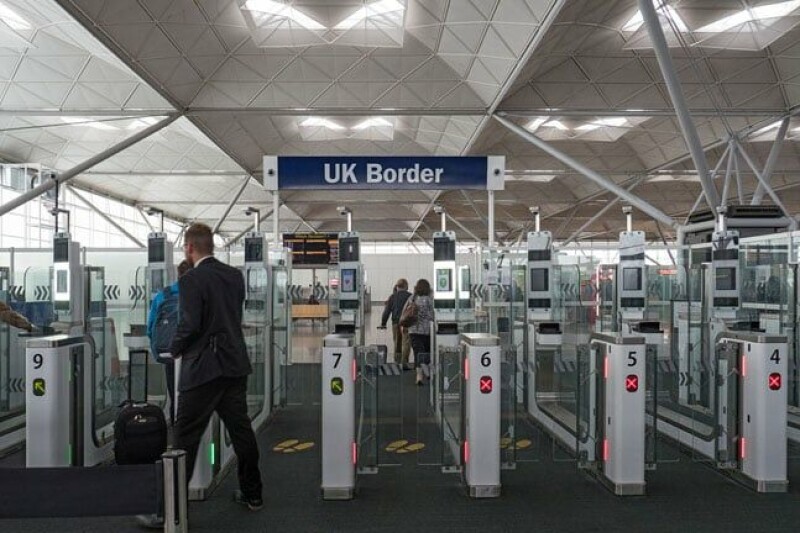
The Home Office is looking for a software engineering boss ready to support systems that when they go down can ruin the day of many thousands of people and make headlines internationally. The Director of Engineering for Home Office Digital will be responsible for managing and deploying nearly 1,000 engineers working on more than 600 systems. Among many other things, these systems enable 76 million e-gate border crossings, 140 million police checks on people, vehicles, and property and seven million passport applications every year. Since February, the UK has required many foreign nationals to apply for electronic travel authorisations, which as well as blocking some dual citizens from getting back into Britain adds another item to the list of what the job application pack calls “some of the UK’s most critical and well-used public services.” The pack adds that the department is looking for “an experienced engineering lead with a deep understanding of how to operate in a fast paced, security critical and highly visible environment” adding that “this is a leadership role of exceptional criticality and complexity”. It involves managing a £60M annual budget and a software engineering function currently known as SAS, which may or may not be a naming coincidence. The successful applicant will be paid £120,000-£150,000 a year plus a 29 percent employer pension contribution, and can be based in London, Croydon, Manchester or Sheffield. He or she will be expected to serve for at least three years, although this is not a contractual requirement, and must be British or from a European or Commonwealth country with the right to work in the UK. Applicants should email a CV and 1,250-word statement of suitability to the Home Office’s recruitment firm Global Resourcing by 23.55 BST on Tuesday 21 July. You can take a look here. ®