Visitors got a first glimpse of the medieval artefact after it went on display at the British Museum in London
On the day Bayeux tapestry tickets were released, Megan Stockwell was at the beach. She was so determined to lock down her spot, that she sat with her toes in the sand for an hour, waiting in the online queue.
“The whole ticket buying experience felt like what other people would do to get Taylor Swift tickets. I was like, ‘oh God, am I, like, the geek version of this?’” she recalled.
Twenty-five years later, the Guardian asks US readers how the attacks affected their lives, and their country
As the United States commemorates the 25th anniversary of the September 11 terrorist attacks, in which nearly 3,000 people were killed in New York City, Washington DC and Pennsylvania, the Guardian asked American readers to share how the attacks affected their day-to-day lives and the country at large.
Many readers shared their feeling of patriotism in the days following the attacks while also highlighting how the government’s response to 9/11 expanded government surveillance and fueled Islamophobia in the country. For those who were adults at the time of the attacks, the day marked a cataclysmic shift. For those too young to remember it, it served as the context for the complicated and violent world they grew up in.
French company Puy du Fou is planning a £600m history-themed park in Oxfordshire. A Guardian investigation has found the company continued working with associates of Konstantin Malofeyev, a pro-Kremlin oligarch under sanctions, on plans for a theme park in Russian-occupied Crimea for longer than it had previously disclosed, and later explored projects in Iran and China.
Business reporter Rob Davies explains his findings, including documents that raise questions about whether Puy du Fou’s activities tested the limits of EU sanctions imposed after Russia’s 2014 annexation of Crimea.
He also examines the far-right politics associated with Puy du Fou’s founder, Philippe de Villiers, and asks whether the company is a suitable choice to tell Britain’s national story
Lewis Hamilton has said there remain no rules of engagement between the drivers at Ferrari, despite the 41-year-old calling for the team to employ them after he clashed with his teammate, Charles Leclerc, at the last round in Monza.
Hamilton was forced wide by Leclerc at turn two on the opening lap at the Italian Grand Prix, which he felt had been unacceptable. Speaking before the first meeting for the Spanish Grand Prix at the new Madring circuit in Madrid this weekend, Leclerc admitted he had been at fault and Hamilton said the pair had talked frankly and cleared the air in a forthright fashion.
2026年7月26日に開催された第58回豊田おいでんまつり花火大会より、紅屋青木煙火店によるおいでんスターマイン2「幻青風景」。”Phantom Blue Landscapes” by Beniya-aoku enkaten from 58th Toyota Oiden Matsuri Fireworks Festival on July 26, 2026.
In Mesoamerican folklore, the jaguar is a prominent nagual, a being with the power to morph into an animal. Moving from one realm into another allows this hybrid creature to act as a spiritual guide through unknown territories. For Anna Ortiz, the jaguar is also a fitting metaphor for entering into a mythic borderland.
Drawing on her Mexican-American heritage, the artist renders remote landscapes through limited, yet vibrant palettes. Ortiz favors subtle shifts in tone and saturation, painting jungle terrain in shades of blues, greens, and pinks. The focused palette emphasizes the fantastic world we’ve entered into, one that appears variable and as a manifestation of myth.
“Inundada”
In her new body of work, Shapeshifter, Ortiz expands upon her interest in the borderlands and what happens when time and space collapse. Recurring motifs of an explosive volcano, double moon, and reflective pools of water position this uncanny realm as one in which multiple realities coexist and change is inevitable.
Ortiz’s pieces feel like visual pairings to the work of feminist writer Gloria Anzaldúa, whose conceptions of mixed heritage, the borderland, and the nagual the artist echoes in paint. Anzaldúa’s 1992 essay “The New Mestiza Nation” is a fitting companion to Ortiz’s practice, particularly the following passage:
Certain aspects of identity don’t disappear, aren’t assimilated or repressed when they are not in the foreground. Identity is a changing cluster of components and a shape-shifting activity. To refer to a person who is changing identity I use the Náhuatl term nagual… We shift around to do the work we have to do, to creative the identities we need to live up to our potential.
Ortiz’s Shapeshifter is on view through October 31 at Chart Gallery in Tribeca. Explore more of the artist’s work on her website and Instagram.
“Jaguar Reflejado”“Espejo Obsidiana”“El Corredor”“Floracion”“Las Garzas”“Equilibrium”“Un Eclipse en Doble”
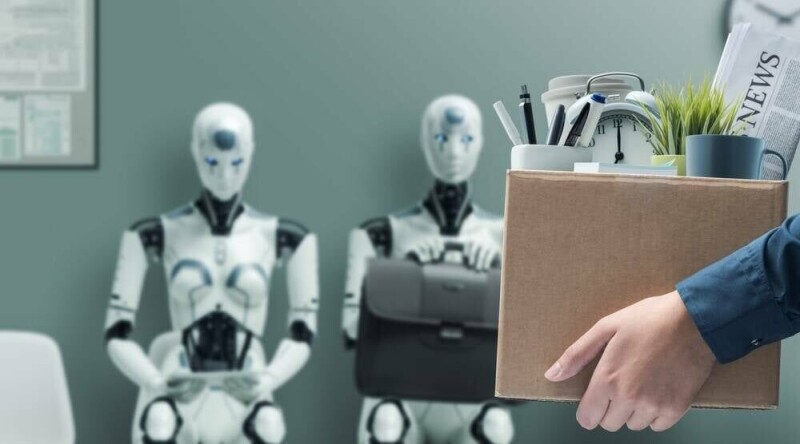
Gartner forecasts that, by 2029, nearly a third of employees laid off because of AI will need to be rehired, often at significantly higher cost. The global research firm warned that workforce cuts could save money in the short term but risk weakening talent pipelines and eroding institutional knowledge over the longer term. With labor force growth flat or declining worldwide, competition for talent would drive up recruitment, training, and onboarding costs. "When business and IT executives look back on the early AI era, they will realize their greatest mistake was believing that work automation was the point, when workforce amplification was the opportunity," said Tori Paulman, VP analyst at Gartner. "The competitive advantage will go to the CIOs and business executives who build an AI-shaped organization where AI value compounds by reshaping roles and allowing workflows to cross traditional boundaries, increasing velocity and reducing friction." Gartner predicted that, by 2027, three-quarters of organizations prioritizing cost savings from AI productivity gains will be overtaken by competitors that reinvest those gains in innovation, modernization, and upskilling. "Business and IT executives who use AI primarily as a tool for cost cutting risk making reductions that are too deep and too soon, affecting their ability to innovate their business model and compete in new markets as AI continues to mature. Instead, they should develop a 'talent remix' strategy that uses AI to reshape roles and redirect workers from less productive work to new opportunities," said Paulman. Gartner advised organizations to use AI to "enhance human capability while preserving accountability." "The most successful enterprises will use AI to strengthen employees' judgment, creativity, leadership and decision making rather than replace them," Gartner said. The technology industry has already supplied some prominent examples of companies cutting jobs while expanding their use of AI. Oracle's workforce shrank by 21,000 over the last year, according to its annual report, which said the "adoption and deployment of AI technologies across our operations have resulted, and may continue to result, in reductions to our workforce." If Gartner is right, Oracle may end up paying for those cuts in the long run. ®
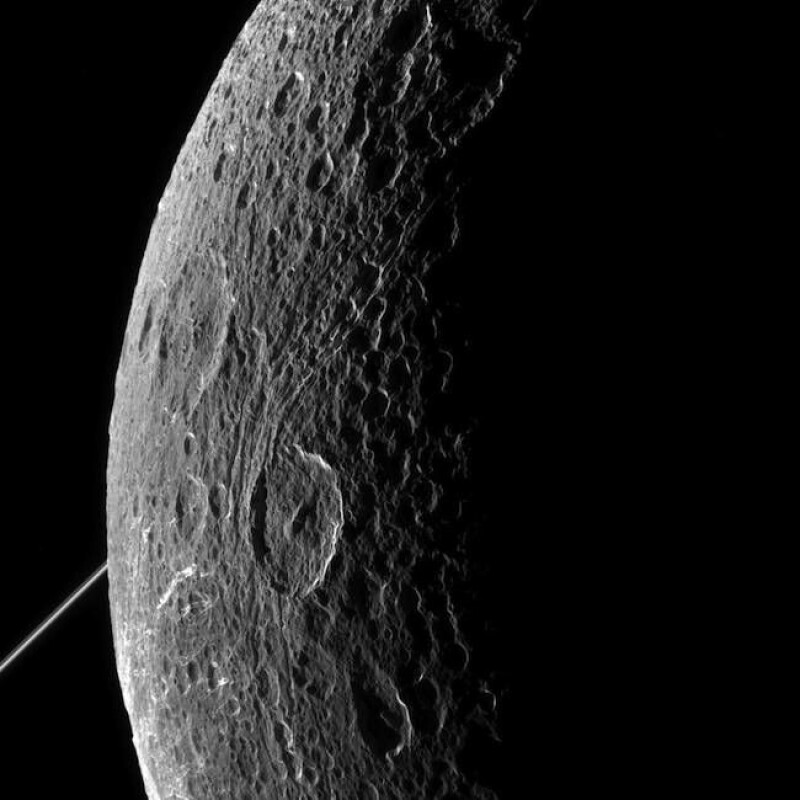
IBM and NASA have got together again and released an open source AI model of the Moon that could be used to make new discoveries about Earth’s natural satellite. The NASA‑IBM Lunar Foundation Model has been trained on an extensive lunar observation dataset curated by researchers at the two organizations, and is available now on Hugging Face. It is claimed as the first AI model to integrate observations captured in a range of modalities (data formats), and at different viewing angles and spatial scales. Instead of sifting through maps and images by hand or using low resolution machine learning models, scientists can use this to analyze geographic features, the pair say. In particular, NASA and IBM hope researchers will be able to discover previously unidentified lunar ice deposits, analyze volcanic features called Irregular Mare Patches, and identify and classify craters. Lunar ice indicates the presence of water and oxygen, which may be useful for future manned missions. It is found in permanently shadowed regions, which are among the most difficult areas to observe. The NASA-IBM model combines multimodal and multi-resolution observations to better predict where ice may be present on the lunar surface. Alongside the model, IBM and NASA scientists compiled an open-source lunar dataset from over 30 spatially-aligned layers, using data from nine instruments across four missions. It combines tens of thousands of images and maps showing various geophysical properties of the lunar surface. “NASA has spent decades building an extraordinary scientific record of the Moon, but collecting data is only part of the job,” said the space agency’s chief science data officer, Kevin Murphy. “We also have to make data easier for scientists to explore and use.” “The NASA-IBM Lunar Foundation Model gives scientists a foundation to explore the Moon at scale, connecting observations across instruments, revealing patterns that are difficult to see in isolation, and providing an open platform the global research community can build on,” claimed IBM director of research for Europe, Juan Bernabe-Moreno. This isn’t the first such project the two organizations have worked on together. In 2023, the pair released Prithvi, an open-source foundation AI model to help scientists analyze satellite imagery. A year later, they released an AI climate model designed to accurately predict weather patterns, extending the Prithvi family of models. Last year, it was an AI model named Surya, developed to predict the kind of violent solar flare-ups that might disrupt satellites and spacecraft. This was also part of the Prithvi family, as is the Lunar Foundation Model. NASA and IBM have not officially disclosed a specific parameter count or exact model size for this latest release. As it is open-source and available to download, we asked what resources someone would need to use it. “Hardware needs will depend on the application, the size and number of inputs, and whether they’re running predictions or further training the model. As a rule of thumb, most of our fine-tuning experiments were conducted using Nvidia A100 GPUs,” an IBM spokesperson told us. “Smaller-scale experiments and inference workloads may be possible on more modest hardware, although the exact requirements will vary depending on the task.” Perhaps Reg readers will be able to make some discoveries using the new foundation model? Finding the craters made by rogue rocket stages, for example, or looking for evidence of little green men?®