404 Media

404 Media is an independent media company founded by technology journalists Jason Koebler, Emanuel Maiberg, Samantha Cole, and Joseph Cox.

Scammers Sell Seeds for Exotic AI-Generated Flowers That Don’t Exist

Scammers Sell Seeds for Exotic AI-Generated Flowers That Don’t Exist

Scammers are selling seeds for plants that don’t exist with spectacular, AI-generated images of technicolor leaves that bloom in the shape of birds, butterflies, and cat heads. This type of fake seeds scam predates widespread access to AI image generators, but the ability to easily create these images has made the scam more widespread, especially on big online retailers like eBay, Amazon, and Etsy, which are unable to keep up with the flood of scam plant sellers on their platforms. 

The type of images scammers use to sell seeds online range from slightly exaggerated aesthetics to full-blown, obviously fake AI slop that looks like it was rejected from Avatar’s alien jungle. 

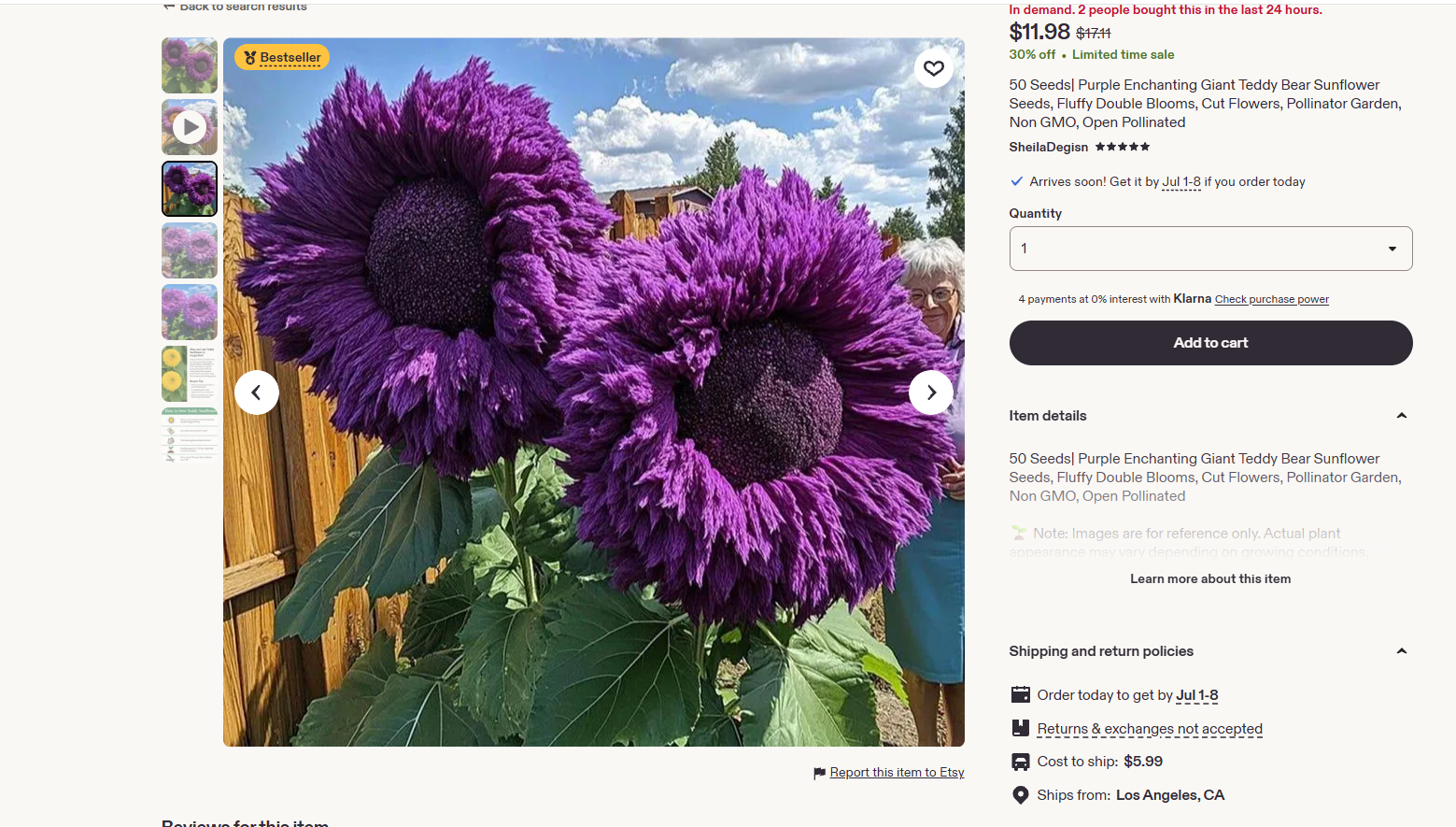
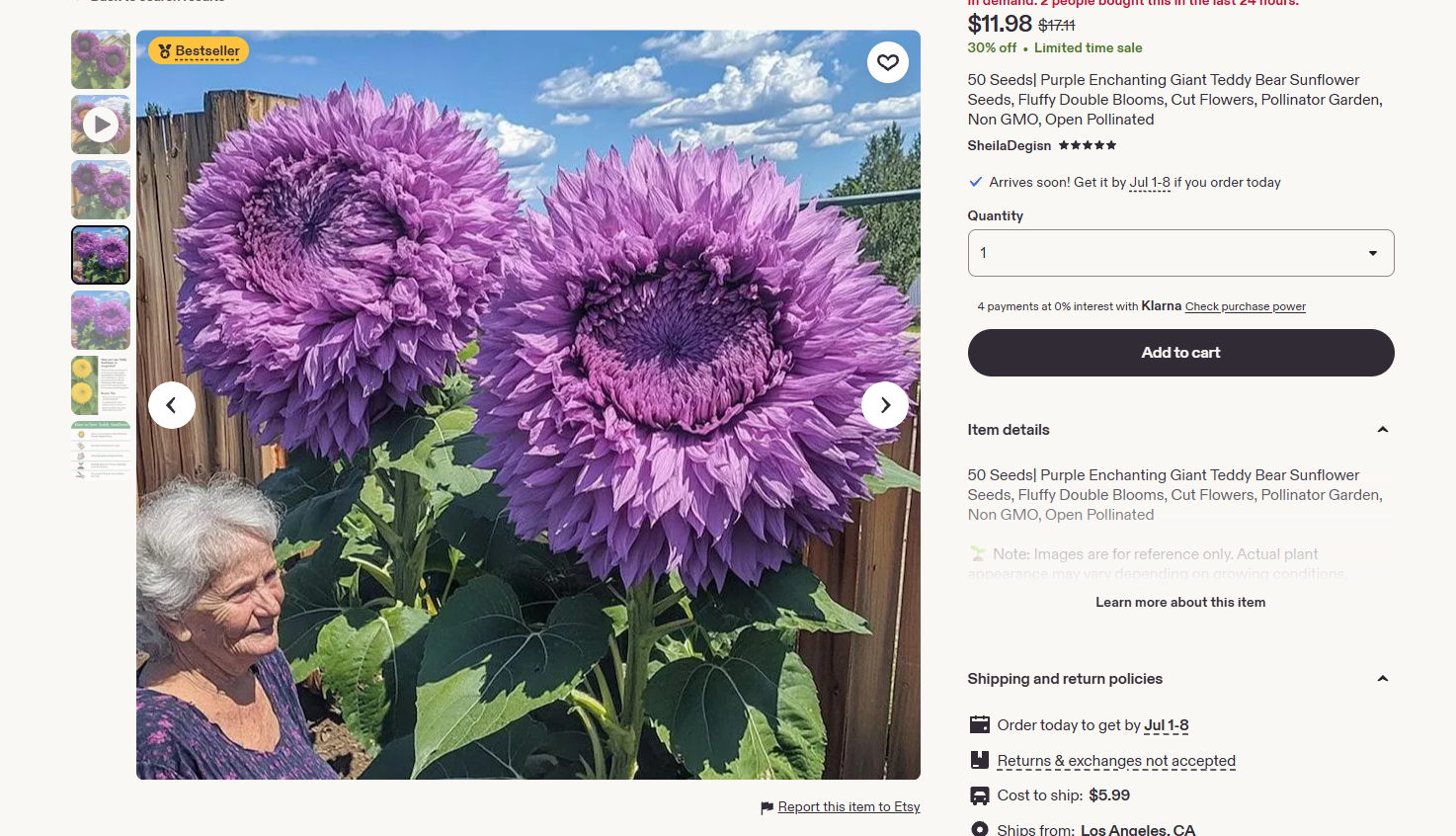
One common scam seed is for a sunflower variety called ‘teddy bear,’ named after its poofy, fluffy appearance. You can see what it looks like in reality on the Royal Horticultural Society’s website. Spectacular, yes, but that is nothing compared to the AI-generated images of gigantic, purple teddy bear sunflowers on Etsy:
Scammers Sell Seeds for Exotic AI-Generated Flowers That Don’t Exist

This Etsy store, which sells a wide selection of seeds for real plants with AI-generated images, and which also randomly sells AI-generated Trump T-shirts, has mixed reviews, with some buyers saying the seeds look healthy, and others complaining they never got their shipment, or that they received seeds for the wrong plant. 

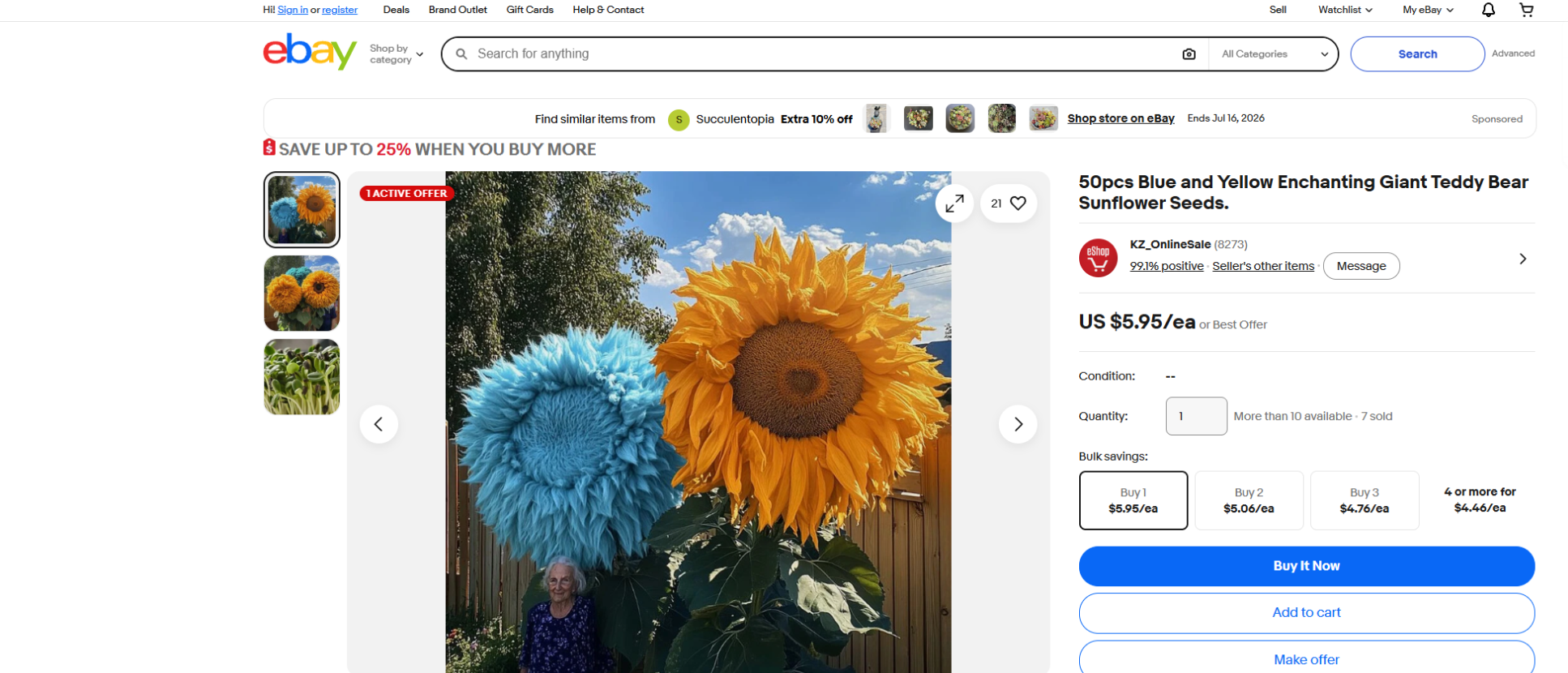
At least dozens of sellers on eBay and Amazon also offer seeds for plants they promote with clearly AI-generated images. Searching the stores for “sunflower teddy bear seeds” returns many such images, including identical images to those I found on Etsy. For some reason, AI-generated images for teddy bear sunflowers often feature a random old lady next to the gigantic flowers (grandma for scale?).
Scammers Sell Seeds for Exotic AI-Generated Flowers That Don’t Exist

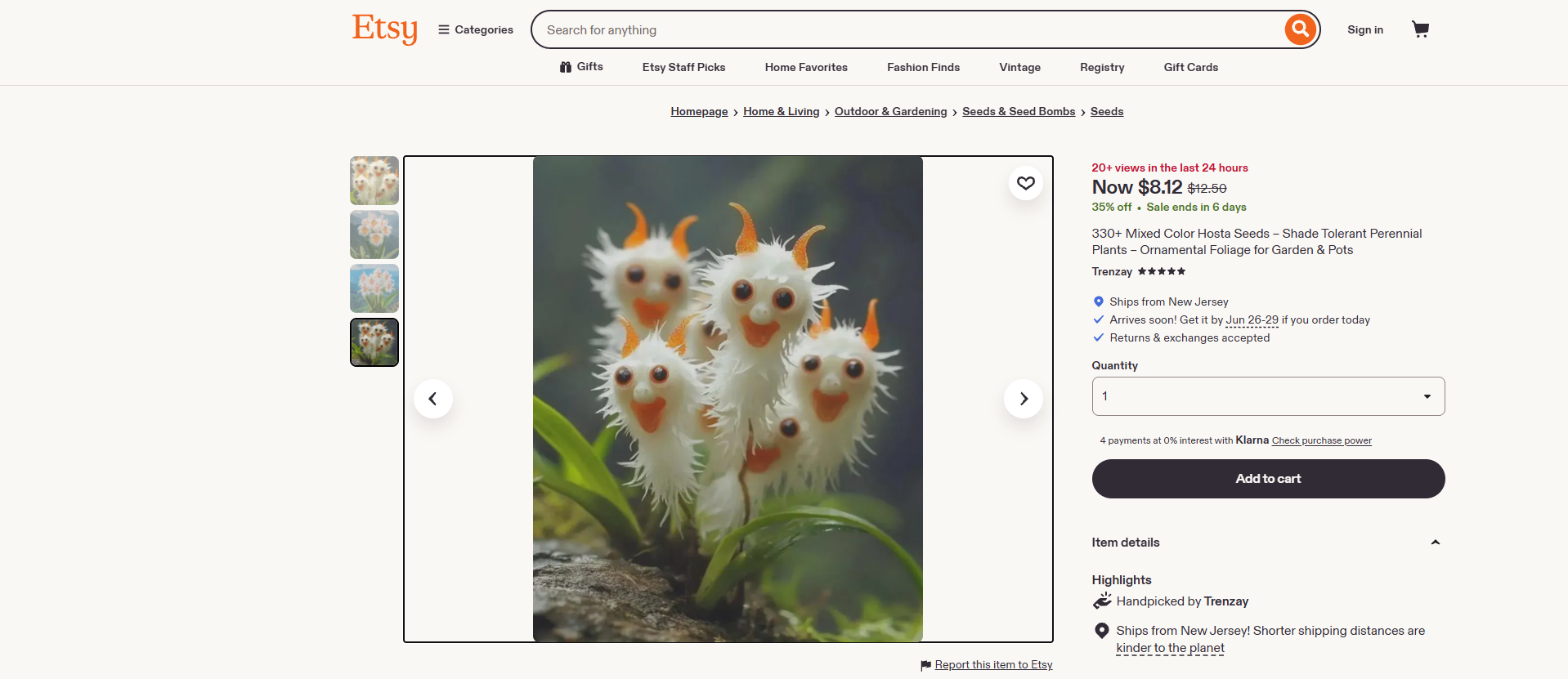
On the more obviously fake end of the spectrum is basically anything sold on Etsy by Trenzay. For example, this hosta plant that looks like a bunch of screaming demon shrimps:
Scammers Sell Seeds for Exotic AI-Generated Flowers That Don’t Exist

 This plant that looks like a butterfly:

Scammers Sell Seeds for Exotic AI-Generated Flowers That Don’t Exist

Or this very patriotic, red, white, and blue plant:

Scammers Sell Seeds for Exotic AI-Generated Flowers That Don’t Exist

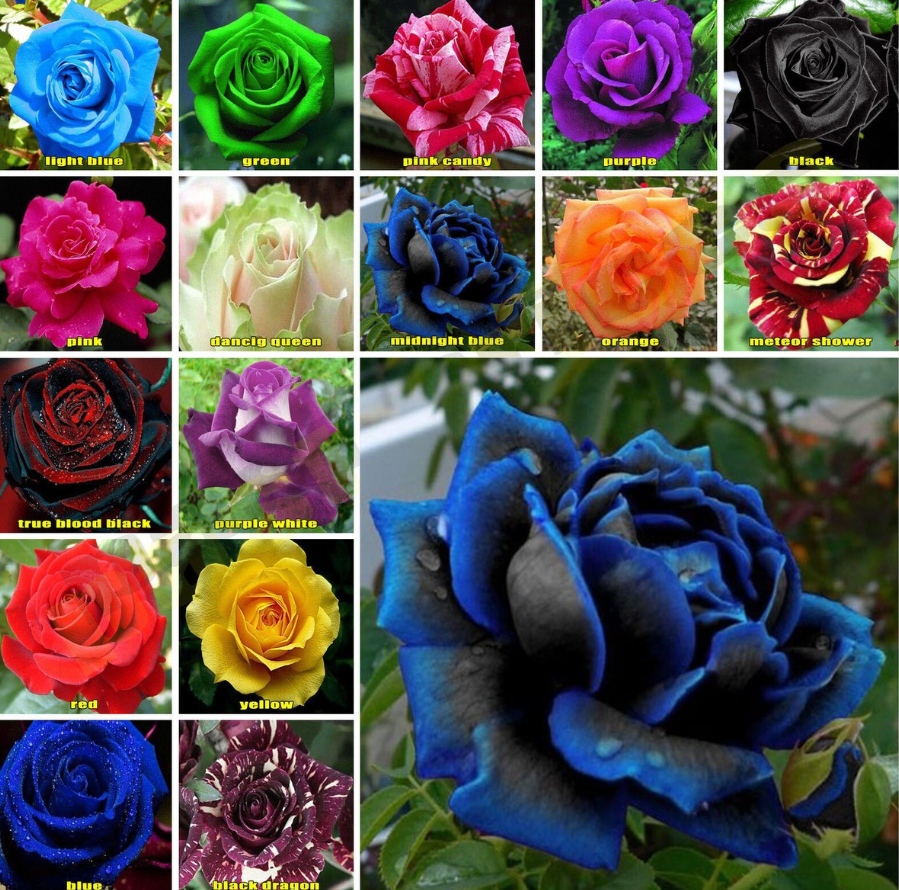
“Rose seeds” and “rainbow seeds” are two of the more common types of fake plants promoted with AI-generated images, probably because the rainbow-colored leaves and bushes are eye-catching. To me, they seem obviously, laughably AI-generated, but their popularity and public facing data from some online retailers indicate people have bought them thousands of times. This is reflected not only in user reviews who claim the sellers are scammers, but also by the number of units sold, which is sometimes shown on eBay. 

🌸
Do you know anything else about these seed scams? I would love to hear from you. You can message me securely on Signal at ‪@emanuel.404‬. Otherwise, send me an email at emanuel@404media.co.

In 2024 I wrote a story about Google serving users AI-generated images of mushrooms, which could potentially have dangerous consequences for users who are using Google to decide whether a mushroom is safe to eat. A moderator of the r/mycology Reddit community told me at the time that at some point, scams for exotic rose seeds were so common that Google image search results for that term turned up AI-generated or photoshopped images of fake flowers almost exclusively. 

Seeds for these clearly fake, colorful roses sold 37,271 times on eBay before eBay banned the seller:
Scammers Sell Seeds for Exotic AI-Generated Flowers That Don’t Exist

Seeds for these gigantic, fake teddy bear sunflowers sold 1,301 times (AI-generated grandma not included):

Scammers Sell Seeds for Exotic AI-Generated Flowers That Don’t Exist


“These listings have remained unchanged for years. It is a profitable business to sell fake seeds since there is no cost involved beyond an envelope and postage, a plastic bag and a few hours to collect random seeds,” the r/mycology moderator told me at the time. “The selling price may be low but enough people buy them to make it add up.”

The fake seed scam is not limited to the dominant online retailers either. On Reddit and Facebook, plant enthusiasts warn each other about shady sites dedicated to selling seeds that offer the same fake plants.

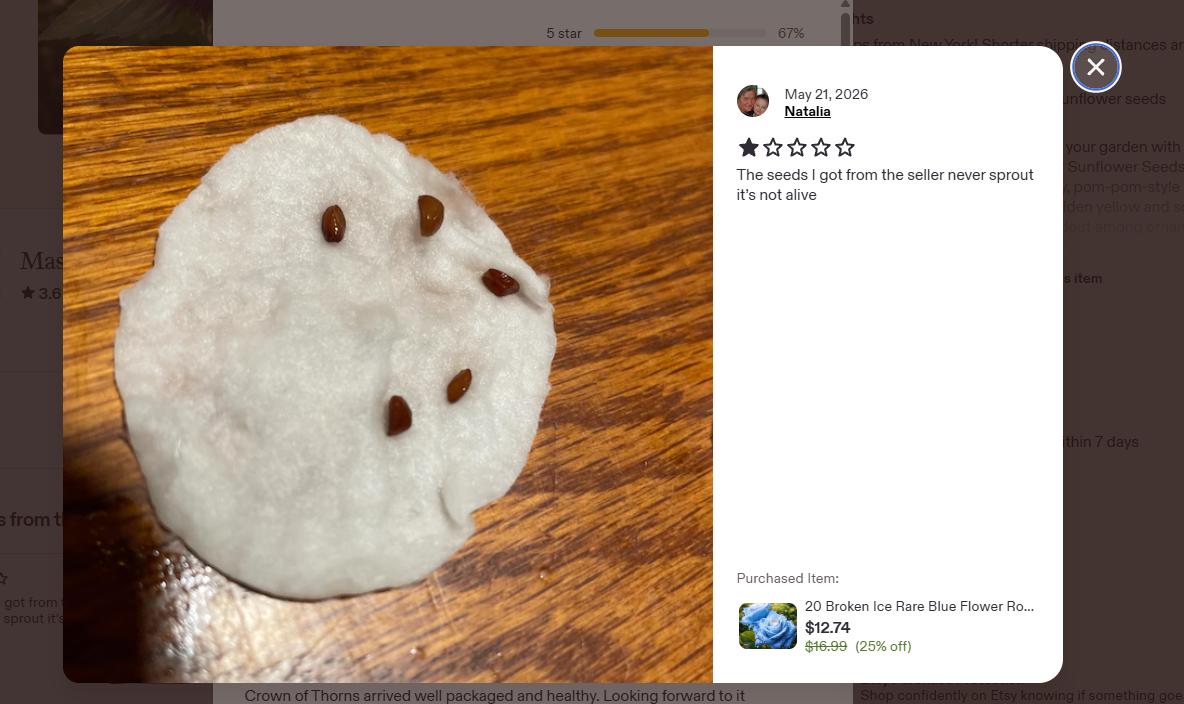
In addition to confusing search engines about what real plants look like, the risk to people ordering seeds for a fake plant is that they’re not going to get what they want and waste their money. The seeds might sprout an entirely different plant than the one advertised, or not sprout at all. 
Scammers Sell Seeds for Exotic AI-Generated Flowers That Don’t Exist

The bigger problem is that if people don’t realize that they’re planting seeds for an entirely different plant than the one they ordered, they could unknowingly introduce invasive species to their environment. Last year, three states issued warnings against planting seeds they received in the mail as part of a widespread scam popularized around 2020, in which people were sent unsolicited packets of mystery seeds that sellers then used to write bogus online reviews for unrelated items.

“Trust is foundational to eBay’s marketplace and we have policies and controls in place to help detect and prevent fraudulent activity on our marketplace, including misleading AI-generated images that violate our listing practices policy,” an eBay spokesperson told me in an email. “We work diligently to prevent and remove non-compliant listings through seller compliance audits, block filter algorithms, AI-supported monitoring by in-house specialists, and through close partnerships with regulators. We continue to invest in tools and technologies and we encourage users to report suspicious activity and, where we identify behavior that violates our policies, we take appropriate action.”

Etsy and Amazon did not respond to a request for comment.


Companies Are Making Claude and Codex Talk Like Cavemen to Stop AI’s Soaring Costs

Companies Are Making Claude and Codex Talk Like Cavemen to Stop AI’s Soaring Costs

Companies are deliberately making their AI tools speak like cavemen in an attempt to stop burning through AI tokens and curb their massive expenditure on AI, 404 Media has found. The tool turns the usually verbose outpost of LLMs like Claude Code, Codex, or Gemini into a much more to the point answer. Think less “you’re right to push back, I was wrong,” and more “Hulk smash.”

Use of the caveman plugin is in direct response to the skyrocketing and unpredictable cost of AI. As 404 Media previously reported, companies are scrambling to stop spending so much on AI, with consulting giant Accenture finding much of the “soaring token spend” is thanks to people using AI to convert PDFs to presentations. People using caveman include developers at OpenAI, Nvidia, and GitHub, according to the tool’s creator. A senior OpenAI employee has even contributed code to the project, adding support for OpenAI’s Codex tool.

💡
Do you know anything else about token spend inside companies? I would love to hear from you. Using a non-work device, you can message me securely on Signal at joseph.404 or send me an email at joseph@404media.co.

“I made Caveman back in early April because I was using Claude Code heavily and noticed a lot of my token spend was going to unnecessary prose: pleasantries, hedging, transitions, and chatty language that does not really matter inside an agent loop,” Julius Brussee, the creator of caveman, told 404 Media. 

One company using caveman is electrical and digital infrastructure giant Legrand which, ironically, has entered the data center business. An internal Legrand memo shared with 404 Media tells employees “since the billing system changed and the new quotas were implemented, we all need to be mindful of our usage of AI so we don’t use up our entire budget allowance too quickly.” It goes on to list four things that will produce “high impact”: not always using the most powerful model; not always using high reasoning settings for the LLMs; using different more appropriate models for different tasks; and finally “use ‘caveman skill’ to reduce output consumption (without impacting code).”

In 404 Media’s tests of caveman with Claude Code, the plugin does make the LLM’s answers much more to the point. “Want changes to it?” the LLM asked after I told it to review some previously written code. “Uses official API, not scraping,” the LLM added, describing how the code worked. When I double checked caveman was installed Claude outputted, “Already active. What you need?”

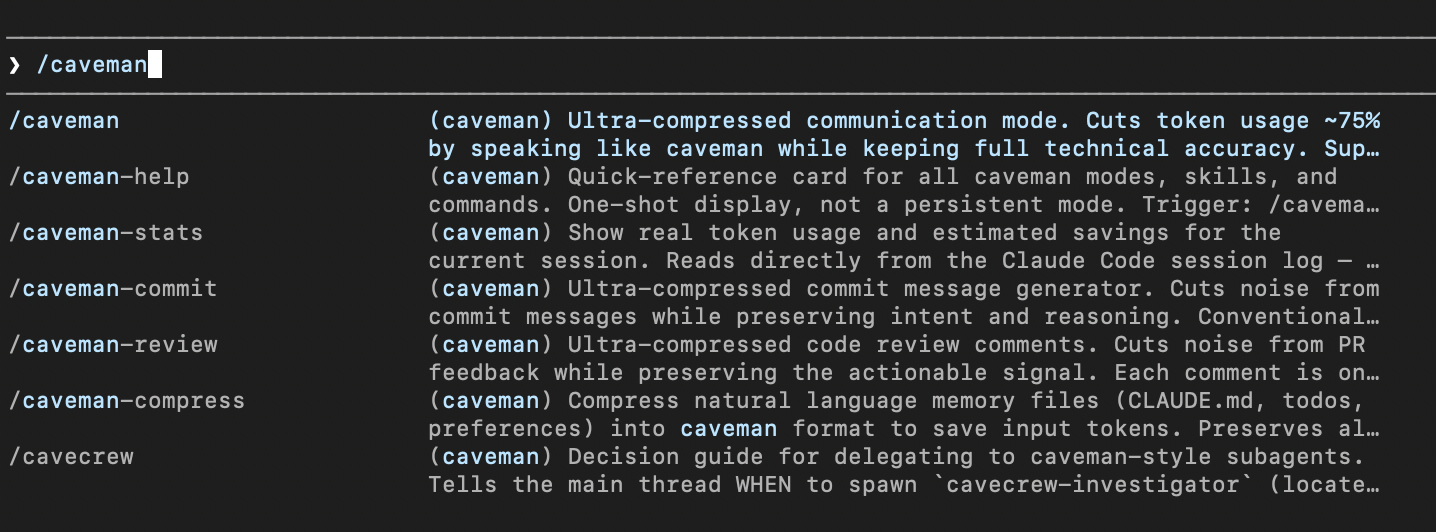
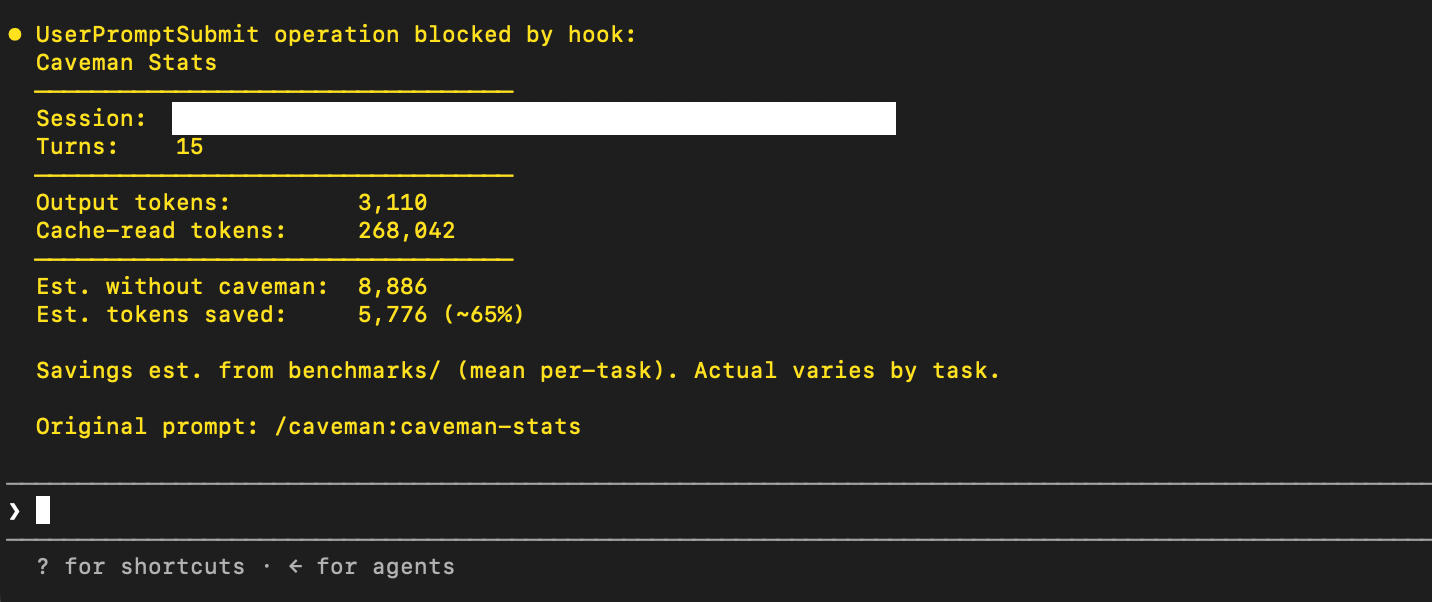
Caveman can also display what it says is the total number of tokens saved. In my case, caveman said it had saved me around 5,800 tokens, or 65 percent. 

Companies Are Making Claude and Codex Talk Like Cavemen to Stop AI’s Soaring Costs
A screenshot of caveman in action.

“It makes the model speak less like a polite chatbot and more like a terse tool,” Brussee said. “Same substance, fewer words. In my evals, Caveman cut output tokens by roughly 65–75 percent versus default verbose output, and still beat a normal ‘be concise’ instruction. That number varies by workflow, but the effect was clear.”

Caveman users can pick their level of “grunt”: lite, full (which is the default setting), ultra, or Wenyan, which translates the output into classical Chinese characters (I verified this works and now have no idea what the Claude output says).

“The goal was to reduce output tokens without touching the parts where exactness matters: code, commands, paths, URLs, numbers, function names, and technical details. Caveman mostly compresses the surrounding language,” Brussee added.

Records on GitHub show that Shayne Sweeney, director of engineering at OpenAI, has contributed code to caveman. A commit a couple of months ago says, “Add Codex plugin support.”

Companies Are Making Claude and Codex Talk Like Cavemen to Stop AI’s Soaring Costs
A screenshot of caveman in action.

Caveman also offers a whole agent that condenses everything down to caveman language. “caveman-code shrink everything — full terminal coding agent, caveman top to bottom. ~2× fewer tokens than Codex on identical tasks. 20+ providers · plan mode · autopilot goal loop · MIT,” caveman’s GitHub repository says. Caveman can also be used with OpenClaw, the agentic AI tool that went massively viral earlier this year.

The plugin is obviously pretty funny but comes in response to a very real problem. In April, GitHub announced it was going to start charging customers per token rather than a flat subscription fee. Uber capped employee’s use of AI tools and the company’s CTO says Uber blew through its entire AI budget in just four months. Walmart also capped AI tool usage. And now you have companies using caveman.

“I’ve heard from many individual developers and engineers inside companies using or testing it, including people at OpenAI, NVIDIA, GitHub, and DEPT,” Brussee said.

In leaked audio obtained by 404 Media, Accenture positioned itself as the cure to this problem, even though it encouraged clients to adopt AI as quickly as possible in the first place. In that audio a senior employee said Accenture had a new opportunity with its clients “to really think about token economics.”

Last year OpenAI CEO Sam Altman suggested that people extending their own pleasantries to LLMs, like “please” and “thank you,” cost OpenAI tens of millions of dollars in electricity costs.

Legrand, OpenAI, Nvidia, and GitHub did not respond to requests for comment on their caveman use.

Caveman’s GitHub repository says near the end: “Caveman save you token, save you money.”


Divett Mews (former Goode, Durrant & Co. Stables)

Darren Schiller has added a photo to the pool:

Divett Mews (former Goode, Durrant & Co. Stables)

The warehouse was built in 1890 for Goode Durrant & Co., Ltd. which was then one of
Adelaide's leading merchant firms. The company was represented throughout South
Australia, with branches in London, Broken Hill, Perth and Kalgoorlie.
The company was formed soon after Charles H. Goode's arrival in 1849. In partnership with
his friend Thomas Good he opened up a general softgoods business in Kermode Street, North
Adelaide. They became brothers-in-law when each married the other's sister. Charles Goode
is said to have been South Australia's first commercial traveller. When the American Civil
War reduced the supply of cotton to Australia he decided to go out on the road to find more
business. When Thomas Good retired, Charles' brothers Samuel and Matthew joined the
business and it steadily expanded. Warehouses were established in Rundle Street, Stephens
Place and Grenfell Street. Charles Goode was elected to parliament in 1865, representing East
Torrens in the House of Assembly. In 1882 the business became known as Goode, Durrant
and Co. when W.H. Durrant joined the firm.
These premises, comprising bulk store, stabling and a dwelling, were designed by Charles' son
Charles Thomas Goode who was sent to England by his father for his architectural training.
He was articled to Osborn & Good of Birmingham and this was followed by a year in London
with George Vigars. The plans for the complex were approved by Council in May 1890.
The complex is important architecturally due to the combination of warehouse, residence and
central service archway leading to a courtyard at the rear. This is one of the best surviving
examples of this type of building, which was formerly characteristic of business activities in
the city. The building is well constructed of bluestone, with stuccoed and red-brick dressings.
The coved plaster soffit to the eaves is unusual.
The basic integrity of the complex is high although new doors and windows have been
provided to suit present day office accommodation requirements.

A Stack of History

Darren Schiller has added a photo to the pool:

A Stack of History

John Mentz (the original spelling) and Magdalena Lass arrived in Adelaide aboard the
Steinwaerder from Hamburg in January 1849 and married in May at Holy Trinity Church. In
about 1850 they set up a grocery and bakery shop in Wakefield Street, living in a two room
brick house at the rear. Ten years later John died, but, like many other colonial widows,
Magdalena managed the business until her sons could accept the responsibility. William took
over in 1867 and was joined by his brother August eleven years later.
Under their management the business made major changes. In 1878 a large shop was built at
the corner of Wakefield Street and Divett Place. Continuing success was reflected in
expansion of the factory and purchase of the Goode and Durrant warehouse in Divett Place
and the Wheelwright's Arms Hotel in Roper Street. In the 1880s the business moved into the
biscuit trade and closed the grocery section.
By the 1890s the firm operated under the trading name of W. Menz & Co. which became a
limited company in 1919. This became a public company in 1951 and by 1979 was part of
Arnott-Motteram-Menz.
Menz became a household name in South Australia. The family business and the company
were associated with the Wakefield Street premises for more than a century. All biscuit
production was transferred to premises at Marleston in 1953, followed by the offices, then the
remaining operations by 1979.
Besides these historical connections, part of the old factory is of architectural significance; the
two storey Italianate block extending along Wakefield Street from Divett Place to Roper
Street. The original section at the western corner dates from 1878. Major additions were
made by architects F.W. Dancker in 1911-12 and McMichael and Harris in 1946.
The complex includes a chimney at the rear which emphasises its important industrial role
and, more broadly, reflects the city's pre-eminence as an industrial centre in the nineteenth
and early twentieth centuries. Industry is a vital theme in the historical development of the
city: an 1876 S. Calvert engraving reveals more than thirty such chimneys in Adelaide. Now
there are only three. The factory interior has been frequently altered, once after a large
section was gutted by fire. Recent conversion and adaption have restored the original shop
front and balconettes on the Wakefield Street/Divett Place corner.
The complex is a significant element in Wakefield Street, pairing the two storey scale of the
Wakefield Hotel on the opposite side of Divett Place. Despite the construction of much larger
public buildings nearby during the 1970s, the Menz Biscuit Factory and the Wakefield Hotel
provide a valid reminder of Wakefield Street's nineteenth century scale of development and
visual character.

Aussie in Wyatt Street

Darren Schiller has added a photo to the pool:

Aussie in Wyatt Street

These Aussie artworks have been popping up all over Adelaide.
Since 2015, Peter Drew has used public walls and screen-printed posters to provoke national conversations through his Real Australians Say Welcome and Aussie street art poster series. Repurposing Australian National Archive photographs of early migrants, Drew’s posters are in direct response to Australia’s controversial immigration history.

The Guardian

Latest news, sport, business, comment, analysis and reviews from the Guardian, the world's leading liberal voice

Burnham’s No 10 North ‘will be based on brownfield site on edge of Manchester’

Prime minister-in-waiting is seeking an interim base in the city centre before Ancoats site is completed in 2028

A civil service base that is under construction in Manchester has been earmarked for Andy Burnham’s No 10 North, according to reports.

The northern centre of government will be in Ancoats, on the outskirts of Manchester city centre, but the site is not due to be completed before 2028, according to the Manchester Evening News.

Continue reading...

Number of billionaires globally soars by 13% amid AI shares boom

Billionaires’ wealth grew by 25% on average in the year ended in April, research from Swiss bank UBS finds

The number of billionaires in the world has jumped by 13% to a record 3,302 people, new figures show, as the super-rich accumulate wealth at an accelerating rate.

Billionaires’ wealth grew by 25% on average in the year ended in April, compared with a 10.8% rise in average personal wealth around the world, the Swiss bank UBS found.

Continue reading...

A lotus ball

Teruhide Tomori has added a photo to the pool:

A lotus ball

Location : Lotus pond, Toji, Kyoto.

ハス / 京都 東寺内堀

Lotus

Teruhide Tomori has added a photo to the pool:

Lotus

Location : Lotus pond, Toji, Kyoto.

ハス / 京都 東寺内堀

VK: Voorpagina

Volkskrant.nl biedt het laatste nieuws, opinie en achtergronden

‘Als het even meezit, wordt de Krim voor Poetin een molensteen om zijn nek’