The Guardian

Latest news, sport, business, comment, analysis and reviews from the Guardian, the world's leading liberal voice

The Guardian view on how culture is taking on tech: the ultimate handheld device | Editorial

Transcription, the winner of the Orwell prize for political fiction, and Toy Story 5 show life before smartphones and screen time

In the opening pages of Ben Lerner’s novel Transcription, the unnamed narrator mentions his mobile phone more than 25 times. He is on a train to Providence in the US to visit a German intellectual called Thomas, who has just turned 90. The narrator worries that he will fail to record the interview on his phone; he texts his wife; the guard scans his ticket; he takes a photo; he FaceTimes his daughter; he uses Google Maps for directions to his hotel. He even dreams about his phone. Then he accidentally drops it in the sink.

The novel is set during Covid, but there is no mention of Donald Trump or Joe Biden. Last month Transcription was awarded the Orwell prize for political fiction. “The question of how certain forms of media flatten or monetise our attention – I do think that’s political territory,” the author said of his win. With its shiny black cover and stark white typeface, this slim novel is designed to remind to us that the book is also a handheld portable device. It invites us to consider the relationship between art and technology. The smartphone has rewired us. “I was glitching, craving my cellular phone on a cellular level,” the narrator confesses.

Do you have an opinion on the issues raised in this article? If you would like to submit a response of up to 300 words by email to be considered for publication in our letters section, please click here.

Continue reading...

Relieved Djokovic finds a way to battle past Rinderknech and keep quest for 25 alive

  • Seventh seed digs in to win 7-5, 6-4, 1-6, 7-6 (4)

  • ‘It took a bit of luck and skill in the end,’ says Djokovic

In the dying embers of this pulsating match, Novak Djokovic morphed into a young Boris Becker, flying through the air to hit a diving backhand lob volley at match point. At this juncture his opponent, Arthur Rinderknech, was also on the floor after slipping at the net. And Centre Court? All 15,000 of them on their feet. And no wonder. Because this was a first-week mini-classic.

There was little in Rinderknech’s grass court record of 15 wins and 18 defeats to suggest he could put the greatest player in history through the ringer, save for his victory over Alexander Zverev at last year’s Wimbledon. Yet his 6ft 5in frame, booming serve and surprisingly soft hands gave Djokovic all he could handle.

Continue reading...

Lewis Hamilton delights home crowd with pole position for British GP sprint race

  • Ferrari driver qualifies first ahead of Kimi Antonelli

  • Hamilton: ‘I love this place, I love this crowd’

Lewis Hamilton gave the home crowd reason to roar as he took pole position for the sprint race at the British Grand Prix for Ferrari, beating the Mercedes of Kimi Antonelli into second, with Red Bull’s Max Verstappen in third.

The pole for the short format race to be held on Saturday morning at Silverstone must be considered somewhat against the odds, as Ferrari had been expected to be somewhat on the back foot to Mercedes, at the power dominated track.

Continue reading...

Reform UK-led council fails to attract any sponsors for union flag scheme

Party had justified plan to hang flags in Nottinghamshire on basis that local businesses would foot £75,000 bill

A £75,000 scheme by a Reform-led council to hang union flags at sites across the county, which the party said would “not cost the taxpayer a single penny” as it would be sponsored by local businesses, has failed to attract a single sponsor, it has emerged.

The plan to attach the flags to brackets on about 180 lamp-posts and other places was agreed in the autumn by Nottinghamshire’s council, won by Nigel Farage’s party in last year’s May elections.

Continue reading...

Facing Mexico at the Azteca? Suddenly our expectations of England are unusually realistic | Max Rushden

Thomas Tuchel’s side have problems aside from the altitude: defeat in a Mexican haze would be no embarrassment

It’s a warm June afternoon in 2009. The teams look uneven. At 30, I am the second-oldest player in our lineup. Lloyd, Nathan and Ben are early 20s – they can all play. Micky the German isn’t in top condition, and at 34 is past his peak. But at a conservative estimate every member of the opposition has two more decades in their legs. A couple of them might be pushing 70. We’re in kit. They are in jeans. We have trainers. They’re in boots – working boots, not “cleats”. And yet after an hour we have been beaten to a pulp. The final score evades my memory, but it might be the only six-a-side I’ve ever played in where “next goal wins” wasn’t a vaguely justifiable way to end things.

How had this team of old men beaten us? A word you may have heard more often than usual in the last three days: altitude. In a village somewhere near Lake Titicaca, just shy of 4,000m above sea level, a motley selection of Bolivian farmers had toyed with us. As someone who lets the ball do the work, even a five-yard burst left me breathless. It was not a neutral venue.

Continue reading...

João Fonseca departs Wimbledon with a whimper but deafening hype army roar on

Roman Safiullin ousts Brazilian but fails to dampen the relentless noise that follows the 19-year-old

The first chants of “FON! SE! CA!” started up shortly before noon, and it’s fair to say João Fonseca was in need of all the encouragement he could get. For half an hour the Brazilian No 24 seed had been slapped around to the point of mockery. The world No 132 Roman Safiullin of Russia, a quarter-finalist here in 2023, was standing daringly close to the baseline, taking the ball early, teasing him with immaculate drop shots. Now he was 5-3 up and serving for the first set, but three set points had come and gone. Right on cue, with the match at its first moment of crisis, the aural cavalry made its move.

And whenever Fonseca plays, wherever he happens to be, noise tends to follow. Ever since early 2024, when the Rio de Janeiro native reached the quarter-finals of his home tournament at the age of just 17, a kind of madness has built around him: a travelling army of Brazilians and Brazilian expats filling the world’s tennis arenas with the fervour of the football terraces. They call it fonsequismo, and from Melbourne to Miami, no court in the world is immune.

Continue reading...

The Register

Biting the hand that feeds IT — Enterprise Technology News and Analysis

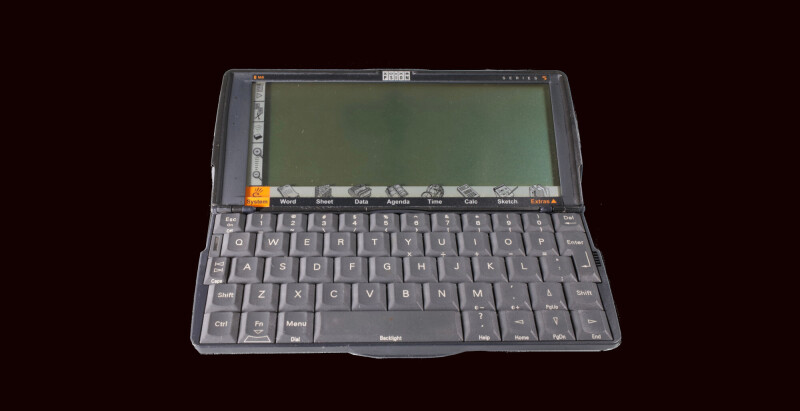
David Potter, the man who put Psion in the palm of your hand, logs off at 82

OBITUARY South African-born pioneer of the British tech industry David Potter, the man behind the iconic Psion pocket computers, passed away on 28th June, six days before his 83rd birthday. Potter was the founder of the company of the same name, a pivotal firm in the British technology industry from the 1980s to the 2000s. Psion supplied software for the early computers from Sinclair Research, the ZX80 and the ZX81, including a Flight Simulator that you can play online. In 1982, Psion supplied the bundled software with the Sinclair ZX Spectrum, and the later, the XChange suite for the Sinclair QL, later available for DOS under the name PC-Four – a deal The Register reported in detail for the QL’s 30th anniversary. In 2016, Potter was interviewed by the Archives of IT, which you can watch online: There’s also a corrected transcript [PDF], plus some edited highlights of the interview. A bold 1983 advertisement claimed: “The best software on earth comes from Psion.” However, Potter realized early on that the instability of the rapidly moving home computer market posed a problem for the company, as he explained in a 1991 interview in Personal Computer World: “What’s the longevity of this market, what’s the utility of these products, where’s it going to? And the more we asked these questions the fewer answers we could get. And we came to the conclusion that these products were of tremendous educational value, a lot of fun, but there was no real long-term utility and the market was not long term because of that. So we decided to diversify and put a lot of our development resources into two very new areas for us. One was applications software. The second area was quite a new, radical concept of a handheld computer”. This led it to create the first of the multiple ranges of pioneering hand-held pocket computers for which it is better remembered today. In 1984, Psion launched the Organizer range, and in 1986, its successor the Organizer II, which came with two slots for what were arguably the computer industry’s first replaceable SSDs. In 1989, Psion introduced all-solid-state MC laptops. Although unsuccessful, the MC’s hardware was miniaturized to create the pocket-sized Psion Series 3 in 1991, and Psion’s bespoke GUI OS became EPOC16. The machines sold in the millions, which in turn led to the Psion 5 and netBook. The Register’s magisterial history of the development of the Series 5, Psion: the last computer, covers this evolution in depth. For the Series 5, Psion designed and implemented EPOC32, a realtime-capable 32-bit Arm OS in C++. Later, EPOC32 was renamed Symbian and powered the first wave of smartphones, as The Reg covered in depth in 2010 in a two-part history: Symbian, The Secret History: Dark Star, followed by Symbian’s Secret History: The battle for the company’s soul. The Reg has reported on Potter too many times to link. We first quoted him in 1998, and most recently in 2017 when he invested in Planet Computers, becoming Honorary chairman of the company. Planet produced the Gemini pocket computer whose keyboard was licensed from Psion. In 2000, Potter sold £12.6 million worth of Psion shares, only to see them quadruple in value within months. In an interview with Management Today, he said he had a knack for badly timed share deals: “It’s always the case. I always joke that the best buying signal for Psion shares is when I sell. If you look back over the years there is a correlation between my selling and the price going up.” Reg readers would have already had an inkling: the year before, he had told us that he thought Amazon might flop, but that he was bullish about Psion’s future. By 2004, Psion sold its stake in Symbian to Nokia. Some shareholders were unhappy, but he told them Linux was a growing threat. (He certainly got that right.) Subsequently, Microsoft bought Nokia’s phone unit – then killed it as a tax write-off. Its outstanding and unique OS is FOSS now. Dr David Edwin Potter was born in East London on July 4, 1943 – but not the East London that Psion enthusiasts might expect: the East London in the Eastern Cape Province of South Africa. His father died when he was young, and as his mother had to work, he and his sister were raised by their grandmother. By the time Potter was 10, their mother remarried, and the family moved to what is now Zimbabwe. After a year (two terms) at the University of Cape Town, at 18, Potter went to Cambridge University thanks to a Beit scholarship. There he studied the Natural Sciences Tripos, followed by a PhD in Mathematical Physics at Imperial College. In 1969, he married a fellow South African, journalist Dr Elaine Goldberg [PDF]. He stayed on at Imperial, and from 1970 taught applied physics. This led him towards develop software to model non-linear phenomena on the university’s early mainframes: “I began to use these behemoths, these ludicrous machines, which didn’t remotely have the power of Psion Revo, for example. And they cost millions of pounds. I became something of an expert in them and designed substantial software systems.” This led to his interest in the then-new microprocessors: “If there are opportunities in the world you need to grasp them. I was fortunate enough to be in an area that was really going to change the world in a huge way.” In 1974, he and Elaine moved to Los Angeles, where he became an Assistant Professor at UCLA. From there, they watched the British economy go into a massive decline. He told the Archives of IT: “I saw this happening from afar, and thought, this is mad… So somebody said recently, you know, when there’s a sale on, it’s quite a good idea to buy things. So I had savings of about £3,000, and I wrote to my bank manager and I said, ‘Please invest them in the following six companies,’ which I didn’t know very much about – but I knew about Racal Electronics, about GEC, Arnie Weinstock’s great company. And anyway, four others. And, then I forgot about them, went on with my academic business. In 1975, with Elaine expecting their first child, they came back. “When I returned to Britain everything had more than doubled, and of course there was the beginning of the recovery in 1975. So, that taught me a little bit about, if you research things enough, and I was capable of research, maybe there were opportunities.” Emboldened, he moved to his next investment effort: “We had our first child in 1975. And, just to have a break I went skiing – on a packet tour down to Austria I think, and I had a very pleasant four or five days. I came back on a newish aeroplane carrying people – I used to go by train. And I looked around as we were flying back, and I thought to myself, all these Brits have been skiing, and sleeping under duvets. And so, clearly they’re going to come home, they’re going to throw away their blankets and buy duvets… So I researched whether there was a duvet supplying company in Britain, and I found one… The company was called E Fogarty.” E Forgarty & Co was a major employer in Boston, Lincolnshire, but after a hot summer, went under in 2018. “I researched it and found it had just built a new factory, and then I had the chutzpah to go and interview the chairman. I told him I was a potential investor but not how little I was planning to invest. Then I sat in the pubs outside the factory in the evening and chatted to the workers about overtime etc, and got a complete picture of what was going on. I could see the opportunity and put 40 per cent of my capital into Fogarty. The price tripled in 18 months. That was how I got my education in business and company matters, and some of the capital to start Psion.” In 1980, he bought an off-the-shelf company called Red Cheer and renamed it. He wanted to call it “Potter Scientific Instruments”, whose initials spell the Greek letter PSI (Ψ). However, the acronym was already taken, so he added “Or Nothing” to yield the name PSION. Potter was awarded [PDF] the Mountbatten Medal by the Institution of Engineering and Technology in 1994. In the 1996 New Year Honours, he was awarded a CBE – Commander of the Order of the British Empire – for “services to the manufacturing industry.” He served on the Dearing Committee for its 1997 report on Higher Education. In 2001, he became a Fellow of the Royal Academy of Engineering, and that year was also a notable Labour Party donor. He also held multiple honorary doctorates. In 2009, Potter retired from the company he founded. His other efforts have included with the charity the couple started, The David and Elaine Potter Foundation. One aspect of his activities we did not know about – apart from being a duvet entrepeneur – was that he not only contributed to the openDemocracy organization, but that in 2013, he saved it from bankruptcy. OpenDemocracy published an obituary for him before any tech industry outlet: Remembering David Potter: Industrialist, physicist, philanthropist. The Register received plaudits from a number of ex-Psion people. “Psion was a company that had a tremendous and friendly culture. It was a joy to build new technology products that were at the forefront of innovation. “All Psion handhelds included their own software, apps and operating system developed in-house from the ground up. This is extremely unusual. The devices also usually included custom silicon to improve power efficiency and performance. The teams developing these products knew they were at the leading edge, and this attracted the best talent which stayed because of the highly collaborative and friendly culture.” – Ian Fogg “At the peak of his powers, David Potter was the man who kept Microsoft’s Bill Gates awake at night. “Psion started in a small office above an estate agent in Maida Vale and grew rapidly into a FTSE-100 company. “On a personal level, David was a deep thinker, a good listener, and a genius. It was a pleasure simply to be in his orbit and he inspired a generation of leaders who are still at the top of their game.” — Anthony Garvey ® Bootnote In February this year, East London was officially renamed KuGompo City.

Wel.nl

Minder lezen, Meer weten.

Twee verrassende duurzame alternatieven voor wasmiddel: wasnoten en een Eco Egg

Een Nederlands huishouden draait gemiddeld vijftien keer per maand een wasje. Dit kost veel energie en loopt bij de huidige stroomprijzen aardig in de papieren. Hierbij enkele milieubesparende tips voor de was, zonder in te leveren op de schoonheid, frisheid en zachtheid.

Als het wasgoed niet vol zit met moeilijke vlekken of bacteriën dan volstaat een wasprogramma van 30 graden. Kleding die maar één dag is gedragen, hoeft sowieso niet in de was. Het is meestal goed genoeg om een trui of broek even uit te hangen aan de lijn. Handdoeken en beddengoed kunnen beter wel op een hetere stand worden schoongemaakt.

Een kort wasprogramma is, in tegenstelling tot wat veel mensen denken, niet goedkoper of beter voor het milieu. De wasmachine moet harder werken en verbruikt meer energie. Daarnaast verbruikt een wasprogramma voor katoen veel minder water en stroom dan een fijnwasprogramma. Langer en kouder wassen is dus de betere keuze.

Zeepnoten en Eco EggsEr zijn twee verrassend goedkope duurzame alternatieven voor regulier wasmiddel. Een zakje met vijf wasnoten gaat drie keer mee in een 30 of 40 graden was. Dit zijn echte noten, die groeien aan de zeepnotenboom. Ze bevatten de reinigende en antibacteriële stof saponine, dat net zo werkt als zeep wanneer het met water in aanraking komt. Na gebruik kunnen de noten in de biobak of op de composthoop.

En dan zijn er nog de Eco Eggs, bestaande uit donkere toermalijnballetjes die het vuil losweken en witte bolletjes, die de zuurstofmoleculen ioniseren en het vuil verwijderen. Deze milieuvriendelijke minerale parels zorgen er ook nog eens voor dat de pH-waarde van het waswater hoger wordt, waardoor de was een stuk zachter uit de machine komt (zonder toegevoegde wasverzachter).


Rotterdam - FediMeteo (@rotterdam@nl.fedimeteo.com)

Weer voor de stad Rotterdam Deze bot wordt beheerd door het FediMeteo-project. Voor informatie en contact kunt u de pagina https://fedimeteo.com raadplegen.

Weer voor Rotterdam ☁️ - 03-07-2026 19:15 CEST...

Weer voor Rotterdam ☁️ - 03-07-2026 19:15 CEST

In één oogopslag:
• 19.5°C · Bewolkt ☁️ | Min 16.4°C / Max 21.6°C

Verwachting voor vandaag:
• Min 16.4°C, Max 21.6°C (Bewolkt) ☁️, 🧭 1027.5 hPa ➡️ 0.0 hPa/24h, Windsnelheid: 15.5 km/u (4.3 m/s), richting: → 287°

Uurlijkse voorspelling voor de komende 12 uur:

20:00: 18.9°C (Bewolkt) ☁️, 🧭 1027.5 hPa ➡️ 0.0 hPa/1h, Windsnelheid: 10.1 km/u (2.8 m/s), richting: ↘ 311°
21:00: 18.5°C (Bewolkt) ☁️, 🧭 1027.6 hPa ➡️ 0.0 hPa/1h, Windsnelheid: 7.9 km/u (2.2 m/s), richting: ↘ 304°
22:00: 18.1°C (Bewolkt) ☁️, 🧭 1027.4 hPa ➡️ 0.0 hPa/1h, Windsnelheid: 8.3 km/u (2.3 m/s), richting: → 288°
23:00: 17.8°C (Bewolkt) ☁️, 🧭 1027.5 hPa ➡️ 0.0 hPa/1h, Windsnelheid: 7.9 km/u (2.2 m/s), richting: → 286°
00:00: 17.6°C (Helder) 🌕, 🧭 1027.6 hPa ➡️ 0.0 hPa/1h, Windsnelheid: 10.1 km/u (2.8 m/s), richting: → 261°
01:00: 18.0°C (Bewolkt) ☁️, 🧭 1027.5 hPa ➡️ 0.0 hPa/1h, Windsnelheid: 9.4 km/u (2.6 m/s), richting: ↗ 224°
02:00: 18.1°C (Bewolkt) ☁️, 🧭 1027.1 hPa ➡️ 0.0 hPa/1h, Windsnelheid: 11.9 km/u (3.3 m/s), richting: ↗ 224°
03:00: 17.9°C (Bewolkt) ☁️, 🧭 1026.5 hPa ↘️ -0.6 hPa/1h, Windsnelheid: 15.1 km/u (4.2 m/s), richting: ↗ 203°
04:00: 17.8°C (Bewolkt) ☁️, 🧭 1026.1 hPa ➡️ 0.0 hPa/1h, Windsnelheid: 16.2 km/u (4.5 m/s), richting: ↑ 202°
05:00: 17.3°C (Bewolkt) ☁️, 🧭 1025.7 hPa ➡️ 0.0 hPa/1h, Windsnelheid: 18.0 km/u (5.0 m/s), richting: ↗ 208°
06:00: 17.3°C (Zonnig) ☀️, 🧭 1025.3 hPa ➡️ 0.0 hPa/1h, Windsnelheid: 16.9 km/u (4.7 m/s), richting: ↗ 219°
07:00: 17.7°C (Zonnig) ☀️, 🧭 1025.1 hPa ➡️ 0.0 hPa/1h, Windsnelheid: 16.2 km/u (4.5 m/s), richting: ↗ 229°

Voorspelling voor de komende dagen:

zaterdag 04 juli: Min 17.3°C, Max 23.7°C (Bewolkt) ☁️, Kans op neerslag 2%, 🧭 1024.8 hPa ↘️ -2.7 hPa/24h, Windsnelheid: 22.0 km/u (6.1 m/s), richting: → 259°
zondag 05 juli: Min 18.5°C, Max 21.8°C (Lichte motregen) 🌦️, Neerslag 0.2 mm, Kans op neerslag 20%, 🧭 1022.4 hPa ↘️ -2.4 hPa/24h, Windsnelheid: 16.2 km/u (4.5 m/s), richting: ↘ 298°
maandag 06 juli: Min 18.5°C, Max 22.1°C (Bewolkt) ☁️, Kans op neerslag 8%, 🧭 1017.4 hPa ↘️ -5.0 hPa/24h, Windsnelheid: 17.5 km/u (4.9 m/s), richting: → 276°
dinsdag 07 juli: Min 17.1°C, Max 21.5°C (Bewolkt) ☁️, Kans op neerslag 23%, 🧭 1015.2 hPa ↘️ -2.2 hPa/24h, Windsnelheid: 20.9 km/u (5.8 m/s), richting: ↘ 300°
woensdag 08 juli: Min 15.5°C, Max 22.1°C (Bewolkt) ☁️, Kans op neerslag 1%, 🧭 1021.0 hPa ↗️ +5.8 hPa/24h, Windsnelheid: 11.0 km/u (3.1 m/s), richting: ↓ 343°
donderdag 09 juli: Min 16.3°C, Max 26.6°C (Zonnig) ☀️, 🧭 1019.9 hPa ↘️ -1.1 hPa/24h, Windsnelheid: 7.1 km/u (2.0 m/s), richting: ↙ 67°

Details:
• 🌡️ Huidige temperatuur (om 19:15): 19.5°C (Bewolkt)
• 🤚 Gevoelstemperatuur: 16.9°C (-2.6°C)
• 💨 Windsnelheid: 13.0 km/u (3.6 m/s), richting: ↘ 312°
• 🌬️ Windstoten: 28.8 km/h (8.0 m/s)
• 💧 Luchtvochtigheid: 49%
• 🧭 Luchtdruk: 1027.5 hPa ➡️ 0.0 hPa/3h
• 👁️ Zichtbaarheid: 31.7 km
• ☀️ UV-index: 1.5
• 🌅 Zonsopgang: 05:28 · 🌇 Zonsondergang: 22:04

Luchtkwaliteit:
• AQI: 35 🟢 (Goed)
• PM2.5: 5.8 μg/m³
• PM10: 10.3 μg/m³

Gegevens geleverd door Open-Meteo


VK: Voorpagina

Volkskrant.nl biedt het laatste nieuws, opinie en achtergronden

De Boléro van Ravel, aandachtig publiek en perfect festivalweer: eerste indrukken op Down The Rabbit Hole