
Thomas Hawk posted a photo:

Thomas Hawk posted a photo:
BAMAKO (ANP/AFP) - Jihadisten hebben op meerdere plekken in Mali aanvallen uitgevoerd, meldt de Malinese krijgsmacht. Aanvallen werden onder meer gemeld in noordelijke steden en een gevangenis in Kenieroba, vlak bij de hoofdstad van het Afrikaanse land.
De Azawad Liberation Front (FLA) zegt betrokken te zijn bij de aanvallen. De rebellengroep bestaat voor een groot deel uit Toeareg, een etnische groep die onafhankelijkheid wil in het noorden van Mali.
Sinds de staatsgrepen in 2020 en 2021 wordt Mali bestuurd door een militair regime, dat beloofde het land veiliger te maken. De afgelopen tijd heeft de junta nauwer contact gezocht met de Amerikaanse regering, die eventueel wil samenwerken op het gebied van veiligheid en de mogelijkheden voor mijnbouw wil onderzoeken.
Volgens persbureau Reuters wordt er onder meer gevochten in Anefis, waar zich Russische militairen zouden bevinden.
Prime minister holds no ‘personal animosity’ toward likely successor and stresses he has a platform to build on
Keir Starmer has said Labour “should go on to win the next election” under his likely successor, Andy Burnham, based on what the prime minister had already achieved.
In his first interview since he announced he would stand down, Starmer also said he held no “personal animosity” toward Burnham, who is expected to succeed him.
Continue reading...Updates as the Wallabies welcome Ireland to Sydney
Kick-off time is 8.10pm AEST/11.10am IST and BST
Any thoughts? Get in touch with an email
Really keen to see how the midfield battle plays out.
Len Ikitau is one of the elite ballers in the game and Stuart McClosky was the best centre of the Six Nations (imo).
Continue reading...Scholars will somedy wonder how the richest country in history chose to throw it all away. But the crisis has been there since the beginning
The 250th anniversary of the Declaration of Independence has arrived at a moment of some embarrassment for the Republic. The United States of America, established to overthrow a mad king, has elected, 250 years later, a mad king of its very own. America is setting itself on fire at its birthday party. It always had a dramatic streak.
In 30 or 40 years, scholars of history, if they exist, will want to know how the richest country in history, with the world’s most powerful alliance network, and a scientific and research capacity fuelled by the talent of the world, chose to throw it all away.
Continue reading...The Indian photographer dunked his iPhone underwater to get this shot of his pet
Rashid Sheriff’s fascination with photography and drawing originated in his school days, though “due to various limitations and circumstances, I couldn’t pursue those interests”, he says.
For the past 18 years, Sheriff, who is from Kerala, in south-west India, has been working in Qatar as an auto electrician. Smartphones, however, have allowed him to return to his passions once again.
Continue reading...Jonathan met Sadie when she was dating his wife. Now the two women share him – but he insists that they are the ones in control
• How do you do it? Share the story of your sex life, anonymously
When he suggested we stop seeing each other because he developed feelings for me, I told him: ‘This is too special to give up’
Continue reading...
Welcome back to the Abstract! Here are the studies this week that glimpsed a bygone world, caught an 80-foot fish, outshone the stars, and declared scientific independence.
First, a mysterious group of extinct human relatives were probably not as advanced as once thought, a finding that sheds light on their possible lineage. Then: a gem from the paleontological lost-and-found, megaconstellations versus stellar constellations, and oh-say-can-you-see 250 years of American science history?
As always, for more of my work, check out my book First Contact: The Story of Our Obsession with Aliens, or subscribe to my personal newsletter the BeX Files.
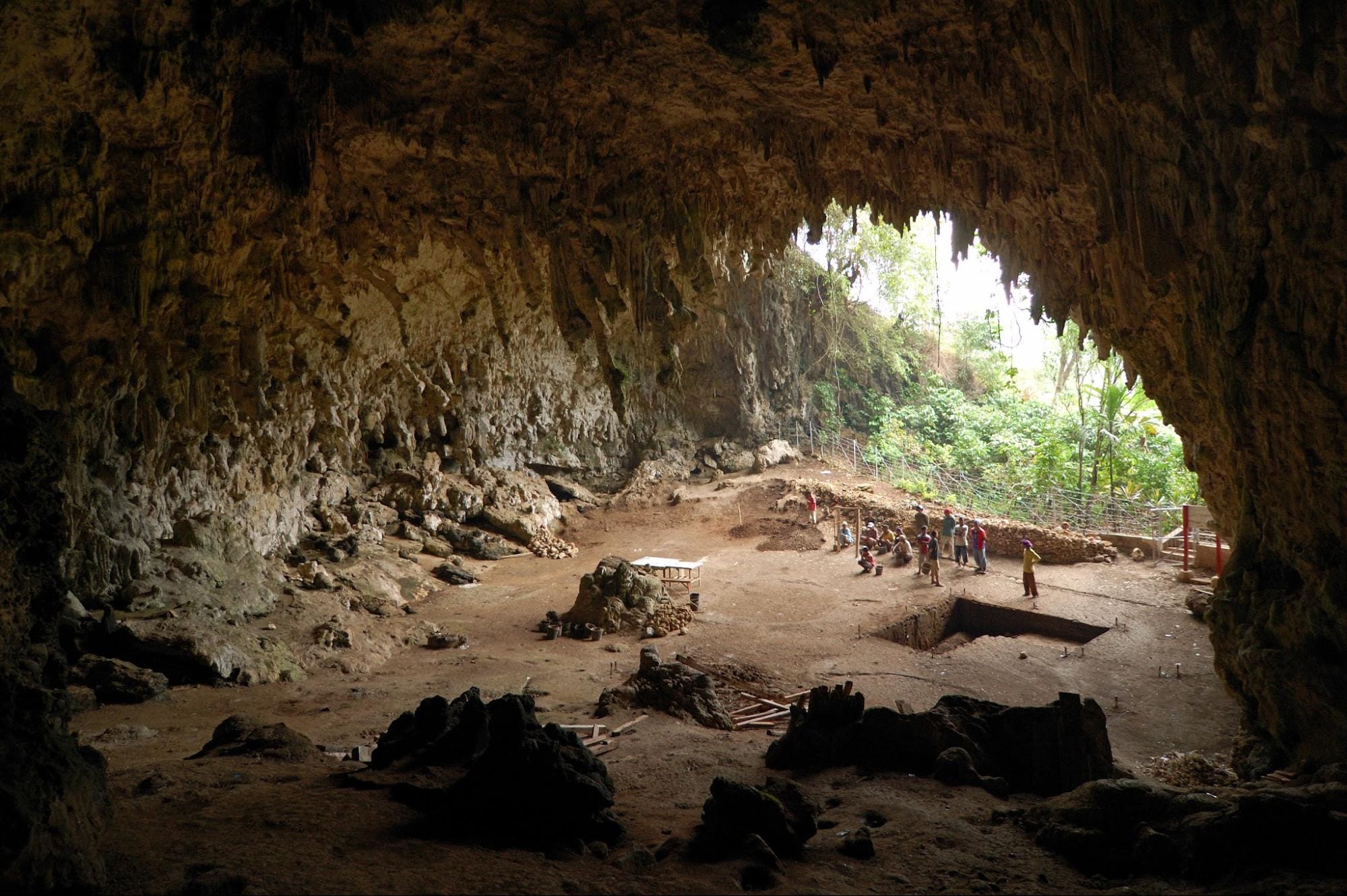
A long time ago on a lush tropical island, a population of “hobbits” ventured into a cave to scavenge the kills of dragons. This is not a Tolkien tale—it’s the upshot of a new study about the short-statured human relative Homo floresiensis, which lived for more than a million years on the Indonesian island of Flores alongside Komodo dragons.
Colloquially known as hobbits for their short 3.5-foot stature, H. floresiensis arrived on Flores about 1.27 million years ago and vanished around the same time as the arrival of modern humans some 50,000 years ago.
The hobbits have inspired much debate over their possible ancestry and whether they were capable of making fires or hunting big game, based on the discovery of charred and butchered bones of the extinct proboscidean (elephant relative) Stegodon in the expansive Liang Bua cave, which also contains many hobbit remains.
Now, researchers have cast doubt on the hobbits as hunters and fire-wielders, suggesting instead that they likely scavenged Stegodon carcasses that had already been killed by Komodo dragons. Though the hobbits left marks on the bones with butchering tools, the team concluded that they consumed the flesh raw. The charred remains, meanwhile, were likely left by late-arriving modern humans.
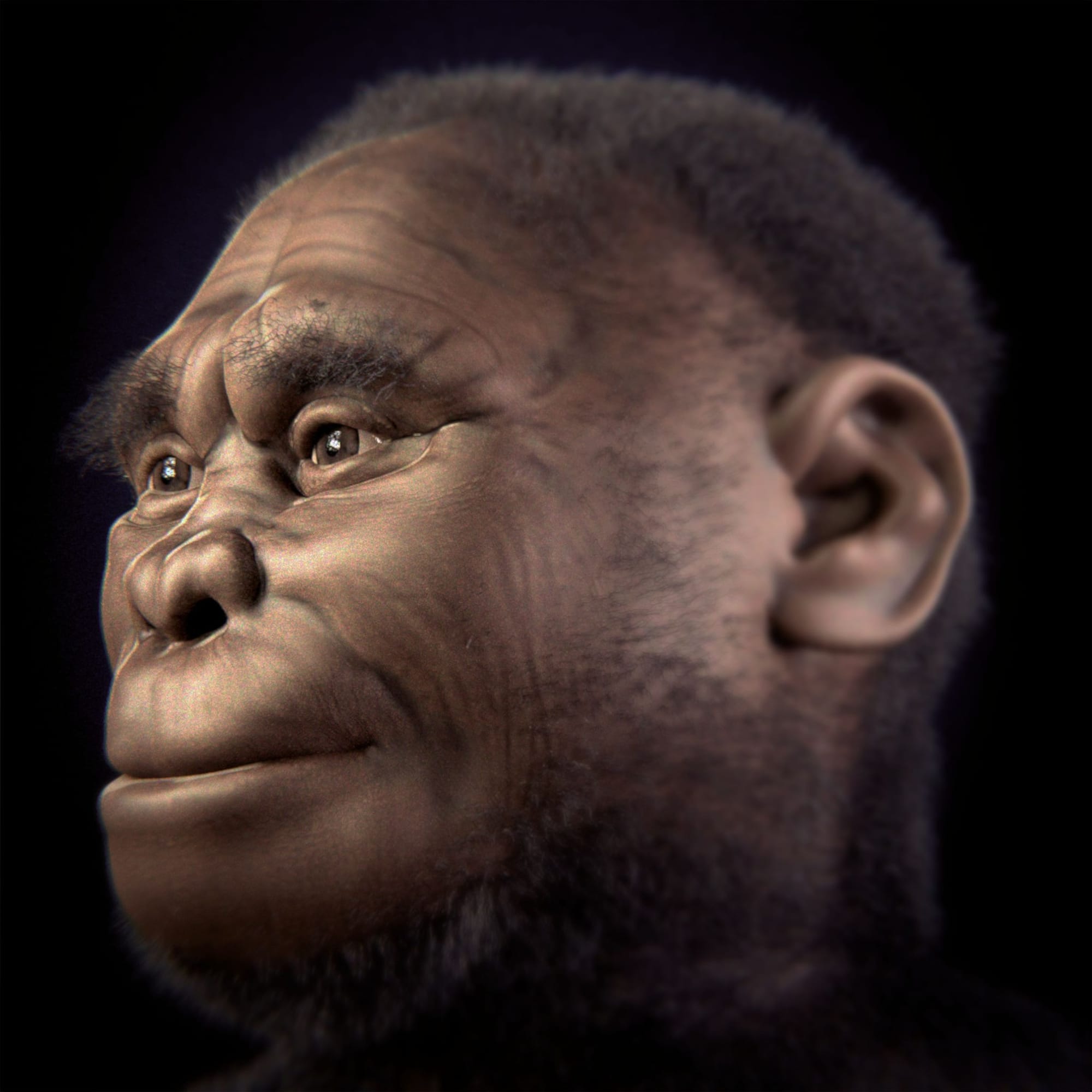
“Komodo dragons likely had primary access to these remains leaving behind only low-utility elements for H. floresiensis to scavenge,” said researchers led by E. Grace Veatch of the National Museum of Natural History, Smithsonian Institution. The team added that the bodily proportions of the hobbits are “unconducive for running and throwing that would make the act of hunting large game (in the traditional sense) quite difficult.”
I guess these people have never seen Merry Brandybuck help take down the Witch-king of Angmar. In all seriousness, the study has implications for unraveling the mysterious lineage of these hobbits, as it may mean they descended from hominins that never achieved fire making or big-game hunting.
The team noted that the elephant relatives may have been attracted to Liang Bua not just to “seek relief from heat and/or for sources of water, salt, and minerals” but as “a place to mourn deceased individuals.” Grieving proboscideans, halflings, and venomous dragons? It’s enough to make one a Middle Earth truther.
In other news…
Ever misplace an important item like a wallet, or heirloom, or the backbone of an extinct giant shark? We’ve all been there. But scientists have good news on the latter front: a long-lost vertebrae of a Megalodon—the biggest shark in history and star of The Meg—has been rediscovered after it went missing in 1989 during a move between facilities.
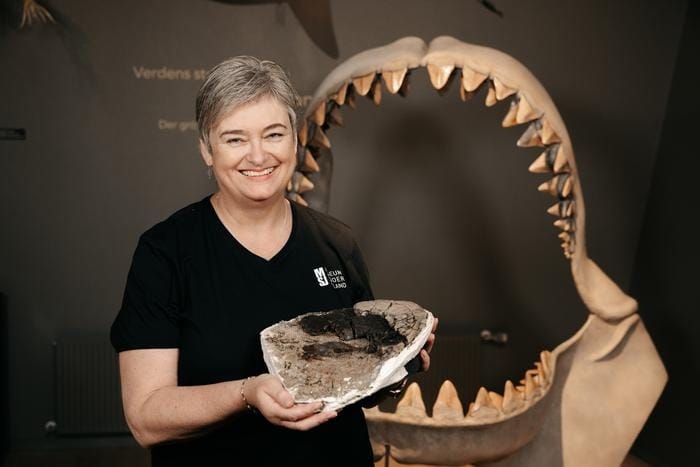
“An attentive collection manager at [National History Museum of Denmark] recently rediscovered a small portion of the vertebral specimen, which is now formally cataloged as NHMD 157890,” said researchers led by Kenshu Shimada of DePaul University. “We report on the rediscovery of the specimen, which was thought to be lost.”
The resurfacing of NHMD 157890, which belonged to a Megalodon that lived nearly 11 million years ago, confirms that this animal could have grown as large as 80 feet, perhaps even bigger.
The fossil measures nine inches across, making it “the largest shark vertebral specimen known to date, and quite possibly even the largest non-tetrapod vertebrae ever recorded.”
Once again, a killer shark has arrived just before the Fourth of July weekend. We’re lucky that, unlike the shark from Jaws, this Meg is very dead.
The age of the Megalodon is over. The time of the megaconstellation has come. Space is rapidly becoming populated by these immense satellite networks, prompting astronomers to raise alarms about their impact on our view of the night sky.
In a new study, a scientist warns that current plans to launch upward of 1.7 million satellites in the near future would “have a devastating impact on astronomical observations” because satellites “photo-bomb” images and also produce light pollution and radio interference.
Of particular concern are extremely bright objects, such as the large orbital data centers proposed by SpaceX or the mirror-like satellites proposed by the startup Reflect Orbital, which aims to provide sunlight to Earth at nighttime.
“A large constellation such as SpaceX’s Orbital Data Center…would place thousands of satellites above naked-eye visibility—comparable to the number of natural stars visible in a dark sky,” Hainaut said. “Reflect Orbital would produce more than 100 Venus-bright satellites by 2030 and over 1,000 by 2035…In light-polluted regions, one could effectively see only artificial satellites at night.”
“Beyond astronomy, they raise concerns about orbital crowding, space debris, and atmospheric pollution from launches and re-entries,” he added. What’s more, these megaconstellations also get in the way of traditional skywatching, a cross-cultural practice that dates back tens of thousands of years. Without regulatory measures on this infrastructure, the night sky that we’ve gazed upon for countless generations may have vanished within our lifetimes.
Wellerstein, Alex et al. “American science at 250.” Science.
Cookouts. Fireworks. And 250 years of wild, spectacular, and frequently ill-advised science. If you’re looking for some Fourth of July brainfood, check out this week’s special issue of Science which reflects on America’s scientific legacy on this semiquincentennial.
“The scholars writing here do not shy away from grappling with paradoxes in US science history, confronting the complexities of six notable moments: the Manhattan Project, the unrecognized contributions of enslaved people to early agricultural knowledge, the rise of Silicon Valley, the advent of biotechnology, the eugenics movement, and the space program,” said Valerie Thompson, the books and culture editor of Science.
“In doing so, they invite science lovers, critics, and everyone in between to contemplate the past and future of the US scientific enterprise and related questions about democracy, representation, and state support for research.”
Happy contemplating! See you next week.
