Charles Leclerc finally ended his win drought last weekend at the British Grand Prix, returning Ferrari to the top step at Silverstone once again.

In Pioche, Nevada, a movie theater built in 1937 stands in tribute to the immense changes in technology and style over nearly a century. A bold portrait set against a black background by photographer Kevin Boyle captures not only the aging building but a mid-20th-century pastime that taps into nostalgia and small town identity. (Amid preservation efforts, the theater is currently being rehabilitated.) It’s just one of the works in the artist’s ongoing Movieland series, which won the Architecture category in this year’s Hasselblad Masters 2026 contest.
Additional categories in the prestigious competition include Wildlife, Landscape, Art, Portrait, Street, and Project//21, which highlights work by entrants aged 21 or younger. This year, photographers in 160 countries submitted more than 108,000 images, which were narrowed down to 70 finalists.

In addition to their technical aptitude, the artists illuminate lesser-known pockets of the world by examining distinctive social issues, nature, and geographies. The winning photos are atmospheric and even surreal, such as Rohan Reilly’s low-exposure Ephemeral Visions series of rows of trees and Gosse Bouma’s misty depictions of Netherlandish market stalls in Morning Ritual.
Svetlana Jovanovic turns her lens to bold dual portraits of identical twins, and Alfred Minnaar’s otherworldly captures of underwater vitality topped the Wildlife category. Panitbhand Paribatra Na Ayudhya, winner of the Project//21 category, is a 14-year-old scuba diver from Thailand who explores the beauty, fragility, and biodiversity of the ocean in beautiful portrayals of marine life.
Hasselblad Foundation executive director Kalle Sanner says, “Across categories, the strongest work operated on more than one level simultaneously: legible on first encounter, yet resistant to easy interpretation. These are images that require attention, that continue to unfold the longer you stay with them.” For example, Yudha Kusuma Putera’s uncanny photographs of huddled cows’ backs nod to the unseen. What we don’t see is as significant as what we do, as these animals are actually grazing on heaps of trash in a dump on the outskirts of Yogyakarta, Indonesia. Exploring notions of labor and visibility, Putera takes a visually literal approach to “out of sight, out of mind.”
See all the winning images on the Hasselblad Masters website.


Do stories and artists like this matter to you? Become a Colossal Member today and support independent arts publishing for as little as $7 per month. The article Atmospheric Scenes and Layered Interpretations Top the 2026 Hasselblad Masters Contest appeared first on Colossal.
Social
Ja dit hadden we effe gemist bij de logistiek & supply chain koning W.P.V.A. maar gelukkig zagen we het nog bij de Taaldokter: Amsterdam heeft dus een nieuwe cateraar. Nu is Amsterdam typisch zo'n gemeente met een beleidsdocument 'Kaders voor het organiseren van catering binnen de gemeentelijke locaties van Amsterdam 2026-2034' en daarin beschreven staat dan een voorbeeld van 'lunch halen in 2030'. Dat gaat zo: "Voor een projectbijeenkomst bestelt een team een lunch of borrel via de banquetingmap. Alles is standaard vegetarisch en minimaal 50% plantaardig, waarbij vlees en vis alleen op verzoek beschikbaar is. Bestellen gaat eenvoudig via de online banquetingmap van de cateraar. Ook op locaties zonder vaste cateringvoorzieningen is banqueting mogelijk, waarbij handmatig bestellen en declareren verleden tijd is: via een digitaal bestelplatform kunnen gebruikers direct bestellen. Het platform faciliteert co-creatie en maakt samenwerking met lokale aanbieders en sociale initiatieven eenvoudig en transparant." Tering!
Welnu, die malle Hendrik-Jan de Boerkaman heeft in een raadsbrief (PDF) reeds medegedeeld dat Amsterdam een nieuwe cateraar heeft aangewezen. Mede vanwege: "- Investeringen in innovatie, gedragsverandering en bewustwording, - Transparantie over de impact op CO2 en de echte prijs (True Price). Banqueting speelt een belangrijke rol in de duurzame voedseltransitie. De cateraar gebruikt gedragsverandering, verhalen en transparantie om gebruikers bewuster te maken." Jezus man kunnen we godverdomme gewoon een BROODJE KAAS krijgen?
De catering voor toeristen in Amsterdam:
They suck up energy and water, and blast out heat. Just who is better off from all this investment – aside from tech bros?
The two great existential threats of our time – the climate crisis and AI – come hurtling together in the explosion of datacentres across Australia and around the world.
You can hardly avoid hearing about them these days, either with awed reverence of the promised benefits to humankind or with fear and anger given the implications for the climate, inflation, jobs and even housing affordability.
Continue reading...Johnson reprises his role from the original animation and has fine rapport with his young co-star Catherine Laga’aia, but the whole enterprise feels cynical and pointless
Disney’s animated super-hit Moana from 2016 – having been followed up by a dull sequel two years ago – now gets a competent but basically pointless and unexciting back-to-basics live-action remake. Screenwriter Jared Bush modifies his original script, Broadway stage veteran Thomas Kail makes his movie directing debut and Lin-Manuel Miranda’s songs are revived. Nineteen-year-old Australian Samoan actor Catherine Laga’aia takes the role of Moana, the headstrong teen daughter of a Polynesian chief; her wise and kindly grandma Tala, who recognises Moana’s heroic leadership destiny, is played by New Zealand actor Rena Owen.
Moana has to go on a quest to restore the heart of the goddess Te Fiti, the lack of which is causing an eco-crisis on her home island of Motunui. To do this, she must join forces with the swaggeringly arrogant demigod Maui, in which role Dwayne Johnson returns in his own actual person, which is almost as cartoonishly muscly and vast as the animated version. Maui has a spurious quest of his own, to retrieve the hook which is the source of his power and to do this he must confront his own nemesis. This is the giant crab Tamatoa, which as before is voiced by Jemaine Clement and is a character which is of course just a 3D animated version of the 2D cartoon original, like Heihei, Moana’s less-than-hilarious pet chicken.
Continue reading...
Hij is nog steeds de eigenaar van twee filialen van New York Pizza. Maar de kans is klein dat de vestigingen in Keizerswaard - vorige week vanwege een rattenfilmpje in het nieuws - en aan de Groene Hilledijk in Rotterdam-Zuid nog onder zijn leiding opengaan. Dat blijkt woensdag tijdens een rechtszaak, waar de Rotterdamse franchisenemer ten einde raad is.
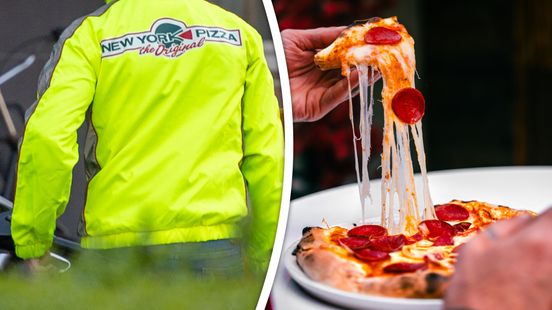
Hij is nog steeds de eigenaar van twee filialen van New York Pizza. Maar de kans is klein dat de vestigingen in Keizerswaard - vorige week vanwege een rattenfilmpje in het nieuws - en aan de Groene Hilledijk in Rotterdam-Zuid nog onder zijn leiding opengaan. Dat blijkt woensdag tijdens een rechtszaak, waar de Rotterdamse franchisenemer ten einde raad is.

Grote en kleine stukken van de aardkorst zijn voortdurend in beweging. Geofysici hebben nu live gezien hoe zulke platentektoniek werkt. „Soms krijg je een cadeautje.”
/s3/static.nrc.nl/wp-content/uploads/2026/07/08141449/080726WET_2035027426_boot.jpg)
Duizenden jaren lang hebben inheemse volkeren kennis opgebouwd over nuttige planten in het Amazonegebied. Veel van die planten dreigen verloren te gaan.
/s3/static.nrc.nl/wp-content/uploads/2026/07/08121647/080726WET_2034989428_1.jpg)