The Register

Biting the hand that feeds IT — Enterprise Technology News and Analysis

Singaporean sovereign wealth fund Temasek thinks AI has a future

Singapore’s sovereign wealth fund Temasek, one of the world’s largest investment houses, intends to massively increase its investment in AI over the next five years – both for its own use and across its portfolio. Temasek holds over $400 billion in assets and around six percent of those are currently tied up in AI companies, including OpenAI. At its annual review meeting yesterday, the fund announced it intends to increase its exposure to AI until it reaches 15 percent in 2031. Temasek said it will target five areas: energy and data centres, semiconductors, cloud services providers, foundation models, and AI applications & software infrastructure. Temasek also sees rising demand for AI as one reason to grow its investment in infrastructure from one percent of its portfolio to five percent. “We see compelling opportunities in ageing infrastructure and grid modernisation, renewable and nuclear energy, energy storage, and breakthrough decarbonisation technologies, underpinned by rising electrification demand and AI-driven data centre growth,” the fund said. The fund is eating its own dog food, too, by “embedding AI into how we invest and operate, augmenting human decision-making, sharpening workflows, and enhancing productivity across the firm.” Temasek’s decision means it’s likely to invest at least an additional $36 billion in AI outfits over five years. Hyperscale players alone already intend to invest over $1 trillion in AI, so Temasek’s contribution won’t dominate spending. Yet the fund’s decision is notable because it exists to grow wealth for Singapore and last year achieved 10.5 percent total shareholder returns, another year of success that has seen it deliver 6.8 returns over 20 years. The firm now clearly sees increased investment as essential to keep that kind of performance going. The intention to invest more in AI may therefore soothe investors who are nervous that the technology may not pay off. Temasek thinks it can also steer AI so "people [are] at the centre of this transformation." CFO and president Ms Png Chin Yee said the fund invests to accelerate adoption of AI "while keeping people at the heart of workforce upskilling.” Temasek’s past tech investments include Alibaba, OpenAI, and Tencent. In 2016 the sovereign wealth fund helped Dell to buy storage company EMC and structured the deal to make it a lucky one, using the precepts of Chinese numerology. ®

Rijnmond - Nieuws

Het laatste nieuws van vandaag over Rotterdam, Feyenoord, het verkeer en het weer in de regio Rijnmond

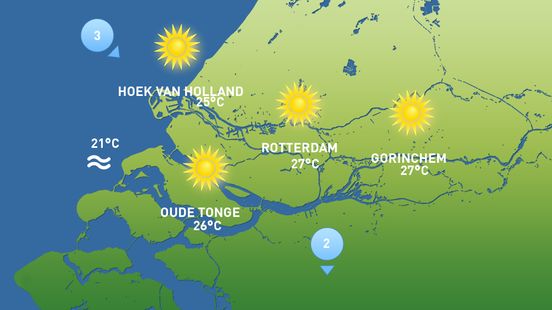
Het weer van vandaag: zonnig en warm

Vanaf vandaag volgt een reeks zonnige en (zeer) warme dagen in het Rijnmondgebied en het blijft overal droog. De temperaturen lopen daarbij vanmiddag op naar een zomerse 25 graden op de stranden tot rond 27 graden dieper de regio in. De wind stelt weinig voor en waait zwak tot matig uit het noorden tot noordoosten. Langs het strand zou vanmiddag een wind van zee wat verkoeling kunnen brengen.

Wel.nl

Minder lezen, Meer weten.

Zwitserland op kop> In deze landen betaal je het meest voor een etentje

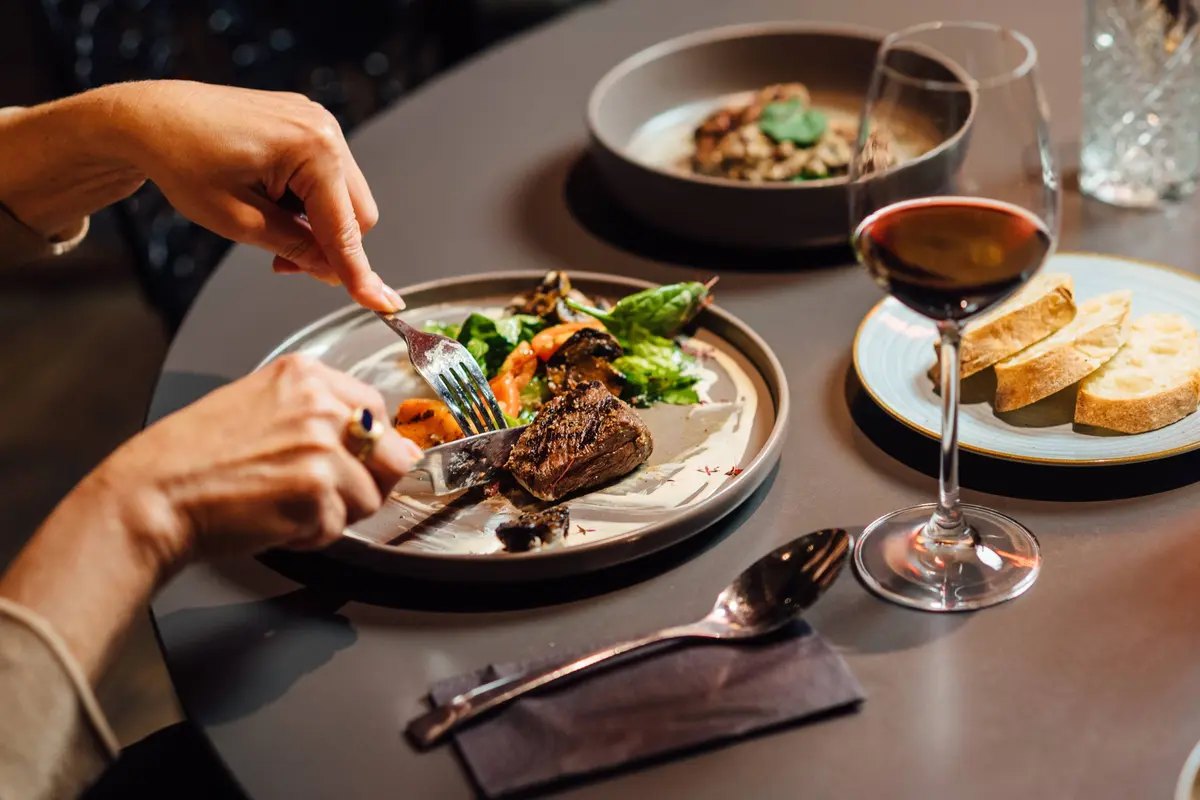
Zwitserland is op dit moment met afstand het duurste land van Europa om uit eten te gaan, gevolgd door vooral Noordwest‑Europese landen als Denemarken, Luxemburg, Noorwegen en Nederland.

Volgens het jaarlijkse prijsoverzicht van reissite FerryGoGo kost een driegangendiner voor twee personen in Zwitserland gemiddeld ruim 107 euro, exclusief drank. Denemarken volgt met circa 94 euro, terwijl Luxemburg en Noorwegen rond de 90 euro uitkomen. Nederland hoort met ongeveer 80 euro tot de top van duurste landen, in het gezelschap van Ierland, Finland en België. Gemiddeld betalen Europeanen zo’n 56 à 57 euro voor een driegangendiner voor twee in een middenklasse restaurant, waardoor Zwitserland en Scandinavië ver boven het Europese gemiddelde liggen en soms ruim twee keer zo duur zijn als de goedkoopste landen.

Die verschillen hebben weinig te maken met een net iets betere biefstuk, maar bijna alles met loonkosten en levensstandaard. In Zwitserland verdient een horecamedewerker al snel 4000 tot 4500 euro per maand, fors meer dan in Nederland, waar een ongeschoolde kracht in de horeca rond de 2500 euro bruto zit. Dat jaagt de prijs per geserveerd bord sterk op. Opmerkelijk genoeg ligt de btw op eten in een Zwitsers restaurant met 8,1 procent zelfs lager dan de 9 procent in Nederland, maar dat belastingvoordeel valt volledig in het niet bij de hogere lonen. In goedkopere landen als Portugal is het precies andersom: het minimumloon ligt daar rond de 920 euro per maand, waardoor de arbeidskosten per maaltijd veel lager zijn.

Voor vakantiegangers die graag buiten de deur eten, is Noordwest‑Europa dus slecht nieuws voor de portemonnee. Wie naar de zon wil en niet meteen blut wil raken op het terras, komt al snel in Zuid‑Europa uit: in Portugal betaal je ruwweg 40 à 45 euro voor twee personen, in Spanje en Griekenland ongeveer 50 euro en in Frankrijk rond de 60 euro. Helemaal onderaan de prijslijst staan Balkanlanden als Kosovo, Noord‑Macedonië en Moldavië, waar je voor 20 tot 30 euro met zijn tweeën drie gangen eet.


The Guardian

Latest news, sport, business, comment, analysis and reviews from the Guardian, the world's leading liberal voice

Is male testosterone in freefall? – podcast

Men’s average testosterone levels have halved over the past 50 years, according to scientists who say society is facing a male fertility crisis. Rising levels of obesity and diabetes are expected to play a part, but the team behind the work suggest that environmental factors such as endocrine-disrupting chemicals – which can be found in various household items – and global heating could also be factors in the apparent striking decline. Ian Sample speaks to science correspondent Hannah Devlin to find out how the work has been received and what the researchers want to see happen in response to their finding

Men’s average testosterone levels have halved in last 50 years, say scientists

Support the Guardian: theguardian.com/sciencepod

Continue reading...

Populism unites Le Pen and Farage. But she is a step closer to power

Marine Le Pen is a convicted criminal. But now she’s running for office and there is still no credible candidate to oppose her

As the judge read out the verdict in Marine Le Pen’s appeal trial for embezzlement, the same conversation was playing out in living rooms and WhatsApp groups across France. What? Does this mean she can run for the Élysée after all? But what about the prison sentence? And the electronic tag (which Le Pen had promised she would not campaign wearing)? And what about her protege Jordan Bardella?

For a few hours, it looked as though the court of appeal had unexpectedly played a masterful hand by unequivocally upholdingthe far-right National Rally (RN) figurehead’s conviction for misappropriation of public funds. It handed her a fine of €100,000 (£85,000) and a commuted prison sentence, the remaining year of which would be served by Le Pen being electronically tagged.

Catherine Fieschi is a visiting scholar with Carnegie Europe and the author of Populocracy: The Tyranny of Authenticity and the Rise of Populism


Continue reading...

Western Europe records hottest-ever June as heatwaves intensify

Temperatures across ravaged region 3C above average as scientists warn of risks for people, ecosystems and infrastructure

Western Europe has been scorched by its hottest June on record, scientists have said, as the UK enters its third heatwave of the year and wildfires ravage France and Spain.

Inflamed by carbon pollution, the deadly June heatwave helped push surface air temperatures for the region 3.06C above their average from recent decades, according to the EU’s Copernicus climate monitoring service.

Continue reading...

‘I was a self-centred, entitled little horror ... arguably I still am’: cult psych rocker Robyn Hitchcock talks to Stewart Lee

Armed with a new album inspired by ‘dead English blokes’, the revered musician discusses writing nasty songs about his neighbours and how he’s finally made it in Nashville aged 73

‘I owe a lot to a dead man’s cock.” So begins the first song, a propulsive piece of Lennonesque powerpop called I Am This Thing, on The Confuser, the latest album by the 73-year-old English gentleman survivor of the 60s/70s frontline, Robyn Hitchcock. The album has been recorded by a crack team of session guys in Nashville, where Hitchcock lives and runs a boutique record label with his second wife, the Australian singer-songwriter Emma Swift.

“I’m not just some sort of old public school dilettante floating around the South Bank or whatever,” Hitchcock protests, unbidden. “Making it work in Nashville means I actually am a real musician songwriter in the real musician songwriter town. And I think, ‘OK, I actually did do this!’ I wanted to go to Nashville when I, as a 13-year-old boarding school boy, heard those Dylan records he made here. And a mere 60 years later, here I am!”

Continue reading...

‘It makes your heart sing’: can a pioneering project show that rewilding really works?

Intensive farming has all but destroyed England’s ancient woodlands and freshwater wetlands. On a farm in Lincolnshire a radical aristocrat hopes to show there’s money in protecting nature

• The summer issue of the Long Read magazine is out now. Click here to order

In the silent countryside south of Grantham, three vast steel barns rattled in the breeze. Gathered in a loose circle beside them were 15 landowners, land agents and a couple of young investors; all expensively dressed men, many with a sceptical mien. It was June 2022, and Sir Charles Raymond Burrell, 10th Baronet, was explaining how the purchase of 1,525 bleak acres (617 hectares) of prairie fields of wheat and beans could revolutionise farming and nature conservation, not just in South Lincolnshire but across Britain and beyond.

Burrell, known by everyone as Charlie, led the group on a walk from the barns beside the unlovable modern farmhouse, a red-brick behemoth with small windows like piggy eyes. We began by crossing a field of broad beans. Less than a century ago, it had been a patchwork of 10 fields. As we walked over the hard, cracked ground, we encountered not a single insect. Later, by a verge, a couple of butterflies flew. As for humans, we didn’t meet a single other person in our two-and-a-half-hour stroll across a range of footpaths and field edges. “This is a ruined landscape,” said one of the guests, the architectural historian Matthew Rice. “Not because of the soils. Because there are no people here. I’m sorry there are not enough stoats but I’d like there to be some children here, too.”

Continue reading...

My holiday from hell: I went to Ibiza at 16 - and am still haunted by what I saw in a bathroom sink

I didn’t see being a couple of years away from technically qualifying for an 18-30s jaunt to be a problem. But the booze, humiliation and a ‘mystery pooer’ made me rethink my entire life

‘First the bad news,” yelled our lairy Irish club rep as the coach drove us from Ibiza airport to our hotel. “All the great clubs: Amnesia, Space, Pacha … they’re CLOSED!”

A confused silence descended. “But the good news?” he yelled. “We’re gonna have a fucking amazing time anyway!!!”

Continue reading...

Teatime in Tbilisi: Georgia’s Soviet-era plantations brew up a renaissance

Georgia’s tea industry collapsed alongside the Soviet Union but is now reaching a luxury market

Rainclouds shroud the Caucasus mountains as the day’s harvest begins on a rural estate in western Georgia. A tea picker moves quickly between bushes with confidence, her hands plucking only the greenest, most recent growth on each plant.

When Pati began picking tea leaves as a teenager this was a collective farm in the Soviet Union – following its collapse it was abandoned and the bushes swallowed by the surrounding forest until new growers began cutting them free in the 2010s.

Continue reading...