The Register

Biting the hand that feeds IT — Enterprise Technology News and Analysis

Web app turns your old phone into a new smart display

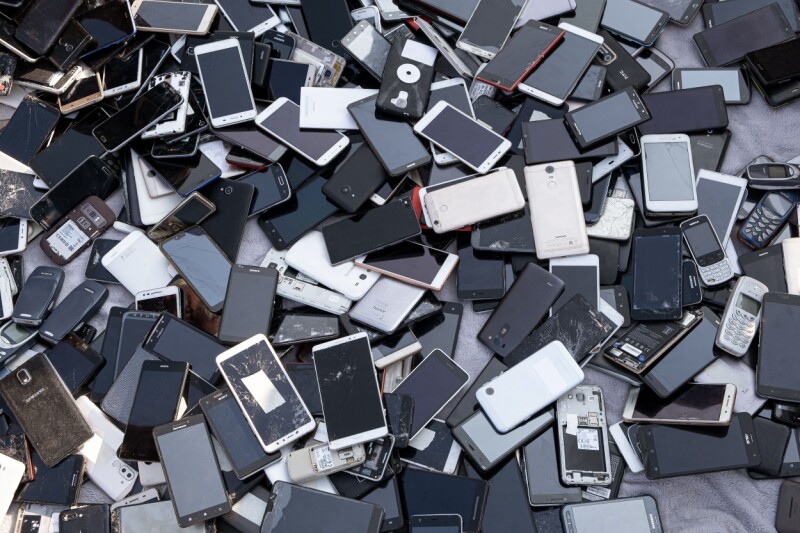
HANDS ON If you've got a drawer full of old phones, unloved tablets, or even an ancient monitor, you can now give those devices new life in your home by turning them into wall-mounted status boards, clocks, weather stations, or photo frames. ScreenWall is a web platform developed by German software engineer Tuan Anh Bui that’ll turn any compatible device with an internet connection into a widget display without the need to install anything. If you can scan a QR code, you can have that old device displaying any number of things in no time. “Use it to build clocks, status boards, ambient screens, signage, and shared walls from the hardware you already have, without asking people to install anything first,” Bui says on the app’s website. Currently in beta and free for users (with some restrictions on the number of widgets one can deploy), ScreenWall comes with a number of demo widgets, like a clock, weather display, and a split-flap screen able to display various types of information. You can customize pre-existing widgets with some JavaScript tweaks, which is how new ones are written as well, and you can connect data sources via JSON files. Placing a widget, whether preconfigured or homemade, is simple: Add it to a workspace (called a “wall”), and it’ll sit waiting for a display to be paired with ScreenWall, which is done by either scanning a QR code from a device with a camera, or clicking on a link and inputting a six-digit code for devices that lack one (like an old monitor paired to a thin client, no matter how ancient). Once paired, ScreenWall detects the device’s resolution and shows it on the wall as a blue square. Drag it over the widget you want it to display, and that’s that. The screen won’t go to sleep or shut down as long as the ScreenWall widget is present, as it uses the standard Screen Wake Lock API baked into modern browsers. Just connect it, get the widget fitting properly on the screen, and set the device up wherever you want - preferably somewhere with access to a power outlet. What it offers in simplicity and device reusability, ScreenWall also lacks in terms of seamlessness that might make it a tough sell to replace that ticket status board that might be getting long in the tooth. Devices connect via a web link and are presumably running a full-fledged OS, so any reboot of a system means the device has to be re-paired in order to function. When testing at home, closing the ScreenWall tab on my iPad showed the device as offline on my wall, and the only way I could figure out to reconnect it was to scan the QR code again. Because the code is randomized each time you open the screen, reconnecting my iPad meant adding a third display to my wall, creating a bit of chaos as it re-created the clock widget I had displayed on my iPhone, dropping it on top of the picture of my chipmunk friend and necessitating some manual adjustment. When I put my iPhone to sleep without closing the ScreenWall tab, it similarly said that the display was disconnected. Unlocking my phone and navigating to the ScreenWall Safari tab brought the clock widget back up. So, as long as that tab stays open, reloading the widget should work more easily. Bui confirmed to The Register that devices maintain their unique identifier as long as the tab isn't closed, so be sure you don't get rid of that if you intend to deploy a ScreenWall widget for long-term use. It’s also important to note that, if using an old smartphone, tablet, or some other smart device set up to receive notifications, those still pop up. ScreenWall doesn’t put a device into do-not-disturb mode by default - don’t forget to set that if you’re going to try this out. As Bui noted, it's on the user to ensure "do not disturb mode" is set properly. A simple web app like this one simply doesn't have that level of device control. As Bui notes on the ScreenWall website, the platform “is still in beta, which means the core experience is usable, but we are still improving stability, compatibility, and polish.” Feel free to tinker with it, in other words, but don’t go tossing those old devices on every wall you can find just yet unless you’re ready to do some legwork to keep ‘em running. Bui told us that he still hasn't come up with a monetization plan, but that he does plan to address concerns that people may have about running a hosted service. "I want to prevent people from throwing old tech away, and the tinkerer community are kinda privacy focused and want to use their beloved devices offline," Bui said in an email. "That’s why I am currently thinking of to publish a self-hosted version that users can run locally." Beyond that, he told us, he's not sure where to take the tool next. "This project was built out of curiosity and scratching an itch I had really long time ago after seeing all old phones going to waste," Bui explained. "I still don’t know who actually wants this except me." As for what might get added once stability, compatibility, and polish are addressed, that might be up to the community. "I hope to see people to do very cool things with it, while I try to extend the platform with new features." ®
this isn't happiness.

ART, PHOTOGRAPHY, DESIGN & DISAPPOINTMENT INSTAGRAM ★ ELSEWHERES

Mouth to mouth, Wesley Allsbrook


Mouth to mouth, Wesley Allsbrook

Various small fires, Jessie Homer French


Various small fires, Jessie Homer French

We know your crime, Camera Mainichi


We know your crime, Camera Mainichi

Slashdot

News for nerds, stuff that matters

Microsoft Announces Xbox Backward Compatibility For PC

Microsoft has announced Xbox Backward Compatibility for PC, a new preservation program that will let players run select classic Xbox games on Windows PCs and handhelds like the ROG Xbox Ally. Tom's Hardware reports: "This marks the beginning of a broader effort to preserve XBOX games from the past and bring them to PC over time," the company said in a blog post authored by Xbox "VP next generation" Jason Ronald. Alongside backward compatibility, the company says games will also include new features. The four titles in the announcement are: BLiNX: The Time Sweeper; Conker: Live and Reloaded; Crimson Skies: High Road to Revenge; and Fuzion Frenzy.

You can now buy all of these games on PC, and they're also included in all Xbox Game Pass plans. Anyone who already owns these titles digitally on console can also now play them on PC or handheld, with support for Xbox Play Anywhere and Xbox Cloud Gaming. Crucially, this appears to be a digital-only preservation effort, so it won't help anyone who only owns physical copies of these games. Xbox has reportedly been testing a way to digitize physical games as far back as Xbox One, but that hasn't yet materialized yet.

Alongside the preserved original gameplay, Xbox claims these games will let users customize graphics settings, with up to 4x resolution scaling, VSync support, Fullscreen and Windowed modes, anisotropic filtering, and enhanced anti-aliasing, with more features to come in the future. Notably, Xbox will add achievements to select original Xbox games on console and PC.

Read more of this story at Slashdot.

De Speld

Uw vaste prik voor betrouwbaar nieuws.

​Regen: mag het noodpakket nu aangebroken worden?

Voor het eerst in lange tijd is er weer regen gevallen in Nederland. Veel mensen zijn daar niet goed op voorbereid, maar sommigen wel. Zij haalden eerder al een noodpakket in huis en vragen zich nu af: mag dat eindelijk open?

“Ik had hier totaal geen rekening mee gehouden toen ik vanochtend in een korte broek en T-shirt op de fiets stapte”, zegt de 33-jarige Max uit Amsterdam. “Toen ik plotseling werd overvallen door de regen kwam ik in de problemen. Natte kleren, kou… wat nu? Tot ik ineens dacht: hé, ik heb een tijdje geleden een noodpakket aangelegd voor noodsituaties. Mag dat nu open?”

Max besloot uiteindelijk het risico te nemen. “Ik heb meteen een deken omgeslagen tegen de kou, een paar kaarsjes aangestoken om mijn natte kleren te drogen en de energierepen opgegeten. Die waren in mei al over de datum, dus het werd sowieso wel tijd.”

&


In praise of Scandinavia’s risky and dirty playgrounds

Kids stand to gain from a few bumps, bruises and mud-splatters.


kottke.org

Jason Kottke's weblog, home of fine hypertext products

What do America’s earliest restaurant menus teach us...

What do America’s earliest restaurant menus teach us about America? “A menu describes what a restaurant serves — but a menu also describes who is being served. They reflect the class, gender, political, technological, and environmental shifts of history.”

Colossal

The best of art, craft, and visual culture since 2010.

Debra Broz’s Kitschy ‘Superorganisms’ Are Both Familiar and Strange

Debra Broz’s Kitschy ‘Superorganisms’ Are Both Familiar and Strange

In a practice she describes as “ceramic collage,” Debra Broz delves into the world of secondhand decor and kitsch. The Seattle-based artist’s quirky sculptures are made from found figurines, which she cuts and reconfigures into playful hybrid forms. “A lot of times when I look at them, I think about if they were alive, how would they move and how would they operate?” Broz tells Seattle Channel.

In her ongoing series Superorganisms, the artist creates three-dimensional assemblages that toy with the boundary between familiarity and the uncanny. “It’s really important to me that you look at it and your first thought is, ‘That’s a figurine I’ve seen before,'” she says. “And then your second thought is, ‘Wait, that’s something I’ve never seen before.'”

a ceramic sculpture made using numerous found ceramic bird figurines, assembled together in a jumbled composition
“Biblical Angel 3” (2026), secondhand ceramics and mixed media, 19 x 14 x 8 inches

Broz often finds thematic figurines to work into larger compositions, building a jumbled mound of cats, for example, or all-white horses or rabbits. Overall, the finishes and junctions between individual creatures appear natural enough that one might think they were created that way. In the same vein, that precision works wonders in her adjacent conservation practice called Science of Restoration, which specializes in ceramics repair.

Three numbered works all sharing the title “Biblical Angel” will be on view this weekend in Antler Gallery’s booth at the Seattle Art Fair, which runs from July 23 to 26. See more of the artist’s process below in the video produced for Seattle Channel.

a ceramic sculpture made using numerous found ceramic cat figurines, assembled together in a jumbled composition
“Superorganism (Cat)” (2025), secondhand ceramic figurines and mixed media, 16 x 20 x 16 inches
a ceramic sculpture made using numerous found ceramic bird figurines, assembled together in a jumbled composition
“Biblical Angel 2” (2026), secondhand ceramics and mixed media, 18 x 11 x 9 inches
a ceramic sculpture made using numerous found ceramic white horse figurines, assembled together in a jumbled composition
“Horse Tree” (2025), secondhand ceramic figurines and mixed media, 14.5 x 9 x 5 inches
a ceramic sculpture made using numerous found ceramic dog figurines, assembled together in a jumbled composition
“Superorganism (Dog)” (2025), secondhand ceramic figurines, 16 x 17 x 14 inches
a ceramic sculpture made using numerous found ceramic bird figurines, assembled together in a jumbled composition
“Biblical Angel 1” (2026), secondhand ceramics and mixed media, 26 x 19 x 14 inches

Do stories and artists like this matter to you? Become a Colossal Member today and support independent arts publishing for as little as $7 per month. The article Debra Broz’s Kitschy ‘Superorganisms’ Are Both Familiar and Strange appeared first on Colossal.

Sargasso

Hopeloos Genuanceerd

Closing Time | Wachturm

Je krijgt ze tegenwoordig niet zo vaak meer aan de deur, maar vroeger was het wel een dingetje: de Jehova Getuigen, met hun blaadje de Wachttoren. De Duitsers van Sodom waren er niet zo van gediend.