The Guardian

Latest news, sport, business, comment, analysis and reviews from the Guardian, the world's leading liberal voice

Tuchel is clinging to an outdated English style – he must let players take risks | Jacob Steinberg

Head coach should ditch a physical approach that has rarely worked and embrace England’s gifted ball players

Only England can claim the bronze medal at the World Cup by beating France in a 10-goal thriller and end up even more annoyed with the manager. Yet emotions are still running high after the collapse against Argentina last week and it is going to take more than winning a game low on jeopardy for the criticism of Thomas Tuchel to die down.

Hiring Tuchel was centred around the promise that he would make the difference in the big games. When that fell down, all that was left was anger. It exposed the core emptiness of the appointment, of a rich federation covering up the flaws in its coaching development by trying to game the system by throwing money at an expensive outsider.

Continue reading...

‘My shirt was wringing’: National Express bus drivers speak out on 40C conditions

Drivers in West Midlands say buses ‘unbearable’ during heatwaves, raising employee and passenger safety fears

Bus drivers in the West Midlands have spoken out about the “horrendous” working conditions they have experienced during heatwaves, which led to 40C temperatures in their cabs.

The UK was hit by high temperatures and dry weather in three successive heatwaves, with temperatures topping 37C last month when the country recorded its hottest ever June day. Last week, the Met Office warned climate extremes were becoming the “new ‘normal’ for the UK”.

Continue reading...

Gangs of New Jersey: how the World Cup final descended into ugly scenes between Argentina and Spain

A blow-by-blow account of how players from both sides fought in the aftermath of Sunday’s showpiece

The World Cup final took an ugly turn at the end of extra time as Spain were crowned champions. Here’s what happened, frame by frame.

Continue reading...

Slashdot

News for nerds, stuff that matters

Hollywood Sci-fi Studio Lot Now Pitched As Site To Make Real Space-age Weapons

James Cameron filmed his Avatar sequels there. Marvel filmed Thor, Iron Man 2, and The Avengers. Manhattan Beach Studios in Los Angeles even handled Star Wars' series like Obi-Wan Kenobi and The Mandalorian, which Bloomberg points out is about "a heavily armed bounty hunter in a galaxy far, far away."

"Now lenders who are selling the property's $240 million mortgage are promoting the site to potential buyers as a hub for making real space-age weapons."

"The project is strategically positioned within Los Angeles' prominent aerospace and innovation corridor, anchored by industry leaders such as Northrop Grumman, Raytheon Technologies and SpaceX," said Cushman & Wakefield, which has the listing. "A supply-demand imbalance has emerged, driven by the growing concentration of advanced manufacturing users and a limited supply of viable space," the real estate brokerage said in a presentation. Bids are due July 28.
The marketing pitch reflects Southern California's shifting economic landscape as the movie business slumps and weapons makers seek to cash in on surging Pentagon spending... The defense boom is spurring the revival of a regional industry that once churned out World War II bombers, supersonic Cold War planes and Apollo command and service modules before shrinking after the fall of the Soviet Union... In the Los Angeles area, aerospace and defense-related tenants have accounted for 11% of new industrial real estate leases since the start of 2025, up from an annual average 2% during the preceding decade, according to a report this month by brokerage Newmark Group Inc.

Los Angeles "has always gone through transformations," Stephen Cheung, president of the Los Angeles County Economic Development Corp., told Bloomberg. "This is one of those."

Read more of this story at Slashdot.

The big festival in the city

Kyu John has added a photo to the pool:

The big festival in the city

Wel.nl

Minder lezen, Meer weten.

Statiegeld-abri's voor wandelaars op route Vierdaagse

NIJMEGEN (ANP) - Wandelaars kunnen hun lege blikjes en flesjes tijdens de Nijmeegse Vierdaagse achterlaten in speciale statiegeld-abri's. Voor het eerst worden deze abri's, met vakjes waarin flesjes en blikjes passen, op diverse plekken langs de route geplaatst. Ook enkele bushokjes langs de route veranderen in doneerpunten. Initiatiefnemer is Statiegeld Nederland, onderdeel van Verpact, dat verpakkingen recyclet.

Met deze voorzieningen belandt minder afval op de grond en kunnen mensen de lege flesjes en blikjes makkelijker verzamelen en inleveren, denkt Statiegeld Nederland. Deze organisatie zorgt ook voor extra inleverpunten in de binnenstad. "We verwachten op deze manier ongeveer 100.000 lege statiegeldverpakkingen in te zamelen," zegt directeur Jeroen Hillen.


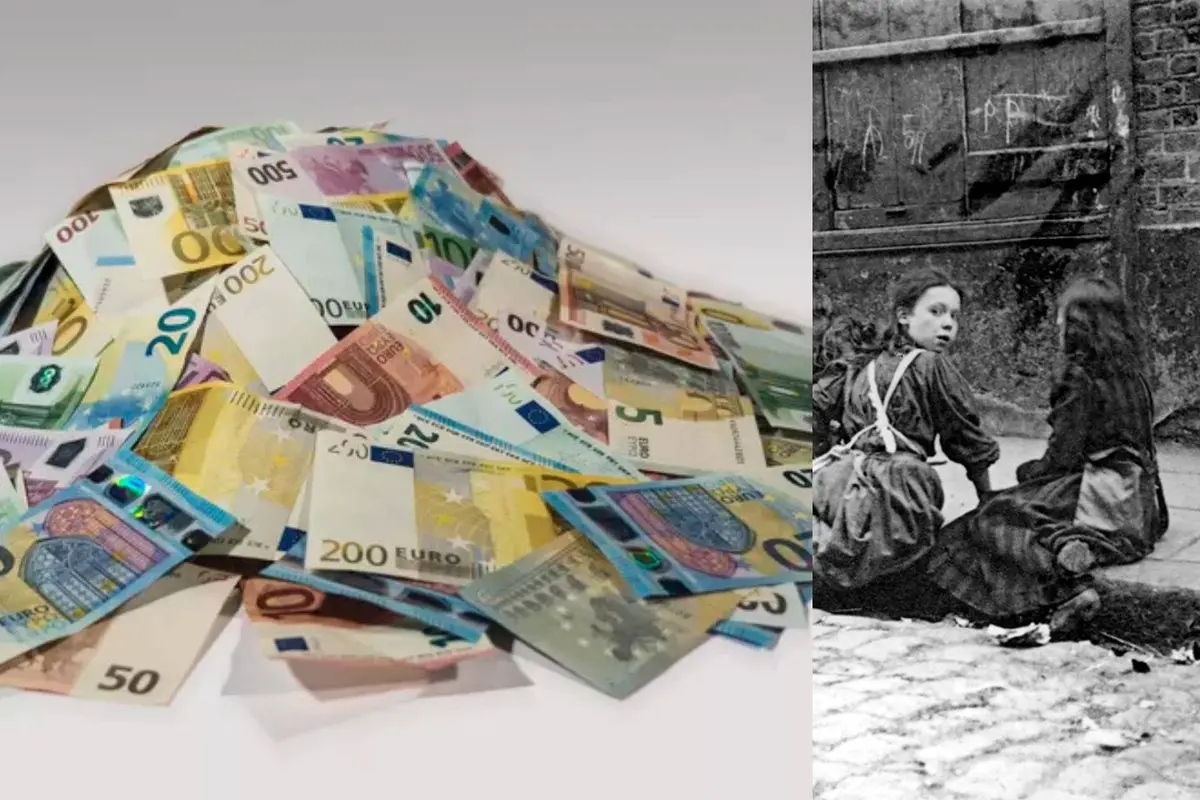
Was de gemiddelde wereldburger in 1926 rijker of armer dan die in 2026?

De gemiddelde wereldburger van 2026 is dramatisch rijker dan die van 1926 — grofweg vier tot vijf keer zo rijk in reële, voor inflatie en kosten van levensonderhoud gecorrigeerde termen. Die gegevens komen van het Madison project van de Universiteit van Groningen. Dit is een van de best gedocumenteerde bevindingen uit de economische geschiedenis.

1. BBP per hoofd van de bevolking

Jaar Wereldbevolking Wereld-BBP per capita Bron
1926 ± 1,88 – 1,93 miljard ± $1.500 – , PPP) Foreign Affairs / League of Nations 1926, 
2026 ± 8,30 miljard ± $15.200 nominaal / ± $26.800 PPP IMF WEO april 2026, UN / Worldometer

Het IMF becijfert het wereld-BBP in 2026 op $126,3 biljoen nominaal en $222,8 biljoen op koopkrachtpariteit ( IMF april 2026, Tabel A); gedeeld door 8,3 miljard mensen levert dat ± $15.200 nominaal en ± $26.800 PPP per hoofd op. (PPP=

Gemiddeld zijn we dus veel rijker geworden. Maar hoe zit dat in de arme landen, met name in Azie en Afrika?

Onafhankelijk bevestigt het Utrecht/Maddison-onderzoek dat het gemiddelde wereld-BBP per capita tussen 1820 en de jaren 2000 tien keer zo hoog is geworden — van ± $650 rond 1820 tot bijna $7.000 rond 2000, en verder gestegen sindsdien ( Utrecht Universiteit, Maddison-review).

2. Extreme armoede: een revolutie

  • In de vroege 20e eeuw leefde ongeveer drie op de vier mensen in extreme armoede.
  • In 1981 was dat aandeel gedaald tot 42 % van de wereldbevolking.
  • In 2017 nog maar 9 %, en in absolute aantallen bijna een miljard mensen minder dan in 1981 ( MDPI/Roser, 200 jaar strijd tegen armoede, Our World in Data). Dus niet alleen in welzijn is de gemiddelde wereldburger beter af, maar ook in aantallen. Of anders gezegd: terwijl de wereldbevolking in die eeuw enorm toenam, is ook in absolute aantallen het aantal mensen met wie het niet goed gaat gedaald.

Ondanks een bevolking die meer dan vier keer zo groot werd, leven er in absolute zin veel minder mensen onder de armoedegrens dan in 1926.

3. Levensverwachting

  • Rond 1900: wereldwijde levensverwachting bij geboorte ± 32 jaar.
  • 2021: ± 71 jaar ( Our World in Data — Life Expectancy).

Dat is meer dan een verdubbeling in ruim een eeuw — een verandering die economen als een groot deel van de reële welvaartswinst beschouwen: mensen leven veel langer om van hun inkomen te genieten.

4. Belangrijke nuances

  1. Ongelijkheid is óók toegenomen tussen 1820 en 1910; de kloof tussen top-10 % en onderste helft verdubbelde in die periode en bleef daarna hoog ( World Inequality Report 2022, hoofdstuk 2). Toch is de gemiddelde én de mediane wereldburger vandaag rijker dan die van 1926.
  2. 1926 was voor de westerse wereld een relatief goed jaar (Roaring Twenties, vlak vóór de Grote Depressie), dus de vergelijking is voor die tijd eerder gunstig dan ongunstig.
  3. Meting: BBP per capita mist niet-marktarbeid, milieuschade en kwaliteit van dienstverlening. Toch wijzen álle andere indicatoren — kindersterfte, alfabetisering, calorie-inname, elektrificatie — dezelfde kant op.

Over de methode: is inflatie meegerekend?

Ja — in de kerncijfers is inflatie meegenomen. Omdat een dollar of gulden uit 1926 veel meer kon kopen dan diezelfde nominale munt vandaag, gebruikt de economische geschiedschrijving constante international-dollars: één eenheid heeft in élk jaar dezelfde koopkracht, en verschillen in prijspeil tussen landen zijn eruit gerekend (koopkrachtpariteit, PPP).

  • De $1.500 – $1.800 voor 1926 en de ± $26.800 PPP voor 2026 staan beide in vergelijkbare, voor inflatie én prijsverschillen gecorrigeerde eenheden ( Maddison Project, IMF WEO 2026).
  • De "factor 10"-stijging sinds 1820 uit het Utrecht/Maddison-onderzoek is eveneens in constante international-dollars.
  • De reeks van Our World in Data is uitgedrukt in international-$ tegen prijzen van 2021.
  • De extreme-armoedecijfers (van ~75 % naar 9 %) gebruiken een vaste reële grens ($1,90/dag in 2011-prijzen, inmiddels $3/dag in 2021-prijzen) — dus óók inflatiegecorrigeerd ( Our World in Data).

Het enige cijfer in deze tekst dat niet voor inflatie is gecorrigeerd, is de $15.200 nominaal voor 2026 — dat staat er slechts ter volledigheid naast het PPP-getal en is niet vergelijkbaar met 1926. Voor de vergelijking door de tijd is het PPP-cijfer de juiste maatstaf.

Conclusie

Corrigeer je voor inflatie en koopkracht, dan is de gemiddelde wereldburger in 2026 grofweg 4 à 5 keer rijker in geldelijke termen dan in 1926, leeft hij of zij ongeveer twee keer zo lang, en is de kans om in extreme armoede te verkeren van rond de 70–75 % teruggebracht tot ongeveer 9 %.

ESA’s Mars Express meets NASA’s Psyche

europeanspaceagency posted a photo:

ESA’s Mars Express meets NASA’s Psyche

On 15 May, whilst en route to a metallic asteroid, NASA’s Psyche mission flew just 4500 km above the surface of Mars. It was using the gravity of the Red Planet to boost its speed and adjust its trajectory.

So-called ‘gravity assist flybys’ are common for interplanetary spacecraft. They make journeys to the inner or outer Solar System much more efficient. But they also provide a valuable opportunity to test a spacecraft’s science instruments. Psyche did just that, snapping photos of Mars's dusty surface in the hours before and after its closest approach.

Upon hearing of Psyche's flyby, the teams behind ESA's long-running Mars Express and its High Resolution Stereo Camera (HRSC) wondered if the paths of the two spacecraft would cross, allowing them to point at the same patch of the Red Planet.

Teams working on both missions coordinated their observation plans weeks in advance, exchanging trajectories and observation timelines to photograph the same parts of the martian surface as close in time as possible.

The image here show one of two coordinated observations. Here is the image captured by Mars Express. And here is the same landscape captured by Psyche’s camera just 1 hour and 50 minutes later.

The images show part of Noachis Terra, one of the oldest known parts of Mars’s surface. The region is scattered with craters filled with sand dunes that are shown in dark blue.

Though relatively close in time, the images were taken from very different distances and viewing angles. By the time Psyche passed over this region, about 2.5 hours after its closest approach to Mars, its altitude had increased to about 41 000 km. Mars Express, meanwhile, was at an altitude of just 6000 km; it was looking from an inclined angle, whereas Psyche was looking almost straight down towards Mars’s surface.

The two coordinated observations are not only nice visual comparisons, but could be used to help calibrate Psyche's camera. By comparing the brightness and colour recorded in each image pixel, scientists could discover small differences in how the two cameras respond to light. Though more investigation is needed into whether the observations are similar enough to be useful, these comparisons could help with checking and adjusting Psyche's camera, ensuring that it works optimally in future.


Image notes:
This image has a resolution of 800 metres per pixel. The Psyche image has a resolution of 500 metres per pixel. Though Mars Express's HRSC camera has a resolution of less than 20 metres per pixel in optimum conditions, its observation settings were adjusted to capture an image best comparable to Psyche’s image resolution at the large distance of 41 000 km.

Both images are RGB colour composites generated from the respective red, green and blue filters (Psyche image) or image channels (Mars Express image).

[Image description: A square image showing a mostly-orange patch of Mars's surface, scattered with sharp craters, many of which are blue inside. A vertical bar lets viewers slide between two views of exactly the same patch of surface. Whilst the landscape is identical, the left image is slightly more orange and the right image is slightly more blue.]

Credits: ESA/DLR/FU Berlin; CC BY-SA 3.0 IGO

ESA’s Mars Express meets NASA’s Psyche

europeanspaceagency posted a photo:

ESA’s Mars Express meets NASA’s Psyche

On 15 May, whilst en route to a metallic asteroid, NASA’s Psyche mission flew just 4500 km above the surface of Mars. It was using the gravity of the Red Planet to boost its speed and adjust its trajectory.

So-called ‘gravity assist flybys’ are common for interplanetary spacecraft. They make journeys to the inner or outer Solar System much more efficient. But they also provide a valuable opportunity to test a spacecraft’s science instruments. Psyche did just that, snapping photos of Mars's dusty surface in the hours before and after its closest approach.

Upon hearing of Psyche's flyby, the teams behind ESA's long-running Mars Express and its High Resolution Stereo Camera (HRSC) wondered if the paths of the two spacecraft would cross, allowing them to point at the same patch of the Red Planet.

Teams working on both missions coordinated their observation plans weeks in advance, exchanging trajectories and observation timelines to photograph the same parts of the martian surface as close in time as possible.

The image here show one of two coordinated observations. Here is the image captured by Mars Express. And here is the same landscape captured by Psyche’s camera just 1 hour and 50 minutes later.

The images show part of Noachis Terra, one of the oldest known parts of Mars’s surface. The region is scattered with craters filled with sand dunes that are shown in dark blue.

Though relatively close in time, the images were taken from very different distances and viewing angles. By the time Psyche passed over this region, about 2.5 hours after its closest approach to Mars, its altitude had increased to about 41 000 km. Mars Express, meanwhile, was at an altitude of just 6000 km; it was looking from an inclined angle, whereas Psyche was looking almost straight down towards Mars’s surface.

The two coordinated observations are not only nice visual comparisons, but could be used to help calibrate Psyche's camera. By comparing the brightness and colour recorded in each image pixel, scientists could discover small differences in how the two cameras respond to light. Though more investigation is needed into whether the observations are similar enough to be useful, these comparisons could help with checking and adjusting Psyche's camera, ensuring that it works optimally in future.


Image notes:
The Mars Express image has a resolution of 800 metres per pixel. This image has a resolution of 500 metres per pixel. Though Mars Express's HRSC camera has a resolution of less than 20 metres per pixel in optimum conditions, its observation settings were adjusted to capture an image best comparable to Psyche’s image resolution at the large distance of 41 000 km.

Both images are RGB colour composites generated from the respective red, green and blue filters (Psyche image) or image channels (Mars Express image).

Both images have been stretched for improved comparability.

[Image description: A square image showing a mostly-orange patch of Mars's surface, scattered with sharp craters, many of which are blue inside. A vertical bar lets viewers slide between two views of exactly the same patch of surface. Whilst the landscape is identical, the left image is slightly more orange and the right image is slightly more blue.]

Credits: NASA/JPL-Caltech/ASU

Plato's electronics ready for space

europeanspaceagency posted a photo:

Plato's electronics ready for space

The European Space Agency’s terrestrial planet hunter Plato has recently completed a series of key tests inside the Maxwell Test Chamber at ESTEC, demonstrating that its electronic equipment is fit to work in space.

This photo captures the spacecraft standing inside the special chamber. The shielded enclosure features conducting metal walls, floor, and ceiling that form a Faraday cage, screening out all external interference. Its 9 m-high interior is lined floor to ceiling with foam spikes that absorb electrical signals and sounds to mimic the void of space.

Once the chamber was sealed closed, engineers remotely switched on and commanded Plato’s electronic equipment. They ran a series of tests to ensure that the spacecraft’s complex instruments and modules did not interfere with each other or with the communication systems, creating unwanted ‘crosstalk’.

In the extreme vacuum of space, a spacecraft’s electronics can behave differently than they do in a typical test lab on the ground. Without proper testing, this can have unforeseen consequences that could affect the mission’s goals or even damage the equipment.

Thanks to the tests run in the Maxwell Test Chamber, engineers verified that Plato’s many electronic systems can work together in space without interference – in other words, that they are electromagnetically compatible.

With compatibility checked off, Plato has now cleared the last remaining major exam in the series that the spacecraft must undertake to graduate for launch.

The exams started back in January this year with vibration and acoustic tests, followed by a month-long stay inside the Large Space Simulator where Plato aced a demanding set of tests and demonstrated that it is fit to withstand the harsh conditions of space.

Plato will lift off on an Ariane 6. Its launch is planned by Arianespace for March 2027.

[Image description: Photograph of a spacecraft towering at the centre of a large test chamber. The chamber's walls and ceiling are covered with dense rows of blue foam spikes that create a striking geometric pattern extending in all directions around the spacecraft. The right side of the spacecraft is dominated by shiny black, stowed, solar panels. The spacecraft body is partly visible on the left wrapped in reflective gold-coloured insulating foil and partially covered by a translucent protective sheet secured with small pieces of red tape.]

Credits: ESA - R. Moorkens O'Reilly