The Register

Biting the hand that feeds IT — Enterprise Technology News and Analysis

DeepMind bigbrain calls for America to set AI standards before it's too late

Google DeepMind boss Demis Hassabis is calling for the US to establish a robust frontier AI model review process because, according to him, artificial general intelligence (AGI) “is probably only a few short years away" and we've got to figure it out before it's too late. That “probably” is doing a lot of heavy lifting in Hassabis’ lengthy, early-morning Tuesday post on X. Like commercially viable fusion power and practical fault-tolerant quantum computing, AGI seems perpetually asymptotic to the present moment, with needed technological advancements always the next step in the process. No amount of hyperbole - not even a Nobel laureate with skin in the game predicting an impact “perhaps 10x of the Industrial Revolution at 10x the speed” - makes the AGI timetable any more certain. Recall that Hassabis predicted in the beginning of 2025 that human trials of AI-designed drugs would come that year, and that still hasn’t happened either. Regardless of the questionable prognostications, the main argument in Hassabis’ essay – that we need to establish international standards for classifying AI safety and risk – is worth serious discussion, and his arguments for it are sensible. “I’m confident that mitigating the technical risks related to AI is a challenge we can collectively address, but only if we give ourselves the time and space to get this next crucial step right,” Hassabis said. “Currently, as a field and as a wider society, we aren’t doing that.” He’s got that right, at least. Hassabis proposes that the US ought to create a new standards body to evaluate frontier AI models in the same vein as the Financial Industry Regulatory Authority (FINRA), the private, industry-funded self-regulatory organization that oversees US broker-dealers under SEC supervision and is charged with protecting investors and safeguarding market integrity. The DeepMind CEO’s vision for an AI industry regulatory authority would begin with a board of tech experts and open-source representatives funded by the AI industry itself – a move that would “attract world-class technical talent” and ensure the body had enough hardware to run its various frontier model tests. FINRA is funded in a similar manner by the industry it purports to regulate, which has opened the door to criticism that it's basically a toothless insiders' club. Funding and conflict-of-interest concerns aside, the main task of the AI standards body Hassabis proposed would be to establish an assessment protocol for frontier AI models, and to determine what qualifies as a frontier model based on benchmarks it would also be responsible for setting. “Organisations with ‘Frontier Models’ as defined by those benchmarks would be deemed ‘Frontier Labs’, and be encouraged to adopt best practices, such as publishing model cards with technical details, maintaining strong internal cybersecurity, vetting key personnel, and providing sufficient resourcing for safety and security research, and more,” Hassabis explained. Hassabis proposed that submitting to such evaluations would be voluntary for frontier labs, at least at first – the model he proposes would give labs the option to voluntarily submit models for review 30 days before release until whatever assessment protocol the group makes up proves to be effective. He further proposes that frontier labs should be allowed to help the standards body develop those benchmarks – again, at least for a while until it gets up to speed. “Eventually the Standards Body should build up the technical capacity to create its own held-out tests independent of the Labs to prevent overfitting.” The hope is that this US-led effort would eventually lead to international frontier AI assessment standards, though whether the international community would stomach another imposition of US rules on the global stage is questionable at this point. The Trump administration has already proposed something similar for testing frontier AI models before their broader release. President Trump signed an executive order in early June directing the National Institute of Standards and Technology, alongside several other federal agencies, to develop a voluntary framework that would allow the government to review covered frontier models for up to 30 days before they are shared with select trusted partners. The effort is primarily aimed at evaluating advanced cybersecurity capabilities, and the order also calls for the development of classified benchmarks for assessing frontier AI models. Some critics argued the framework could give the government undue influence over which companies receive early access to frontier models, pointing to provisions governing collaboration with "select trusted partners." An independent standards body could avoid some of those concerns. Given concerns that financial industry pressure affects the outcome of FINRA work, however, even an independent AI standards body may not be enough to prevent financial influence from skewing its decisions. “The future is not yet written,” Hassabis concluded in his note. “We must use this precious window before AGI arrives to shape this technology for the benefit of all humanity.” Whether or not AGI is actually coming, the AI industry definitely needs someone to kick it into shape. The question of who can do it fairly – the industry itself or the government – isn’t one that’s been adequately answered yet. ®


Welsh Doxbin admin jailed for egging on swatters from behind a screen

A Welshman was sentenced to prison on Tuesday for his role in numerous swattings in the UK, US, and Canada. Callum Dare, 26, was an administrator of Doxbin, a dark web platform frequented by individuals that expose the personally identifiable information (PII) of people, usually to encourage harassment or to target them through swatting attacks. The Talbot Green man never actually carried out a swatting call himself, although investigators said "he was an active participant" in Doxbin's "#deadnet" channel, "where he encouraged and assisted others in targeting individuals and organizations through swatting attacks." The investigation into Dare began in May 2019, when he was aged 19, after the FBI engaged South Wales Police and Tarian Regional Organised Crime Unit (ROCU). Tarian ROCU said messages on Dare's phone tied him to "multiple" swatting attacks in the US and Canada. Digital forensics further showed that Dare assembled montages of footage taken from internet livestreams and other sources to showcase emergency services' response to swatting calls. He shared them in the #deadnet Doxbin channel "in an attempt to encourage others to carry out similar offences," Tarian ROCU said. One of those swattings involved a call made to the Los Angeles Police Department in which the caller, speaking with a fake Russian accent, claimed there were bombs placed under chairs in a University of California lecture theater, resulting in an evacuation. Investigations by Welsh police further tied Dare to a swatting attack on December 17, 2018. A caller phoned a Western Mail journalist claiming to be armed with nail bombs and holding hostages at Cardiff's Sandringham Hotel on St Mary Street. The journalist alerted police, who responded by closing off and evacuating St Mary Street, causing significant disruption in the country's capital during one of the busiest periods of the year. Other incidents included calls made to another US university while protests against Milo Yiannopoulos, a far-right political commentator, were ongoing, as well as others targeting individuals. One was a programmer based in Canada, who was swatted after the caller claimed to be at the address and had just shot their girlfriend, taken hostages, and was armed with explosives, according to information heard at Cardiff Crown Court, reported by WalesOnline. This call catalyzed Dare's undoing. Canadian authorities engaged the FBI, and together they seized Doxbin and #deadnet chat logs, discovering that the usernames "Chans" and "KT" belonged to a Doxbin admin likely based in Wales. The information was passed to Welsh police in 2019. South Wales Police linked the information to a PayPal account, which in turn revealed an email address that led officers to Dare's identity and residence. Dare was arrested, and officers combed through his devices, finding ample evidence of his support for the swatting calls and other offenses. Officers also found a file called "The Man in the Onion," a phishing kit designed to imitate dark web marketplaces and harvest user credentials. Tarian ROCU said it was likely the kit could gather details that could be used to access cryptocurrency wallets and other accounts. There is no suggestion Dare used this phishing kit for real-world attacks, although possessing it is a crime. According to defense barrister Peter Donnison, Dare suffered from mental health difficulties including ADHD, autism, and low borderline IQ, in addition to a troubled upbringing. He pleaded guilty to encouraging or assisting the commission of malicious communications and possession of articles for use in frauds on June 15. Dare was sentenced to two years and three months in prison. Terence G. Reilly, special agent in charge at the FBI Nashville Field Office, said: "Swatting is not a victimless prank – it is a reckless and dangerous crime that can have deadly consequences. "This investigation exemplifies the remarkable dedication of the FBI and our international law enforcement partners to pursue and bring to justice those who commit this dangerous crime – no matter where in the world they reside." Louisa Robertson, specialist prosecutor at the Crown Prosecution Service Cymru-Wales, said: "Callum Dare put people in danger by encouraging the triggering of armed police responses, for his own thrills. "When false alarms like this are raised, it is often multiple emergency services that are involved, drawing them away from people who genuinely need them. "The international cooperation of law enforcement agencies and prosecutors in different jurisdictions allowed the Crown Prosecution Service to build a strong case against Dare, showing how far-reaching his criminality was, leaving him little choice but to plead guilty. "I hope the sentence today deters others from carrying out these criminal acts." ®

Microsoft rolls out Windows Search updates and they're... quite good

Microsoft has made good on a promise to make Windows Search less of a chore to use, making tweaks to remove "promotional content" from web results and options to focus on local results. The changes are currently limited to Windows Insiders in the Experimental channel. March Rogers, partner director for product design for Windows at Microsoft, stated that they were on their way when Microsoft announced the Windows 11 26H2 update, and the scope of the changes will delight Windows Search users who are tired of the service's occasional unreliability and inaccuracy, and the clutter of its interface. While Microsoft said it has reduced the likelihood of the service crashing, it also said there was "more work underway." Still, even going by what is in the Experimental channel (which could easily change between now and release), it looks like the updates are a considerable improvement on what users have had to endure until now. For starters, the results are clearer, it is easier to see where a hit came from, and promotional content has been removed from web results ("Web results show the most relevant answer, instead of first showing related products and promotions"). Plus, there are now settings to choose whether web and Microsoft Store results are shown alongside local results – you'll find them in the Search area of the Privacy & Security page in the Settings app. Local results are prioritized when they are a better match, typos are better tolerated (Microsoft gave the example of "utlook" finding Outlook), and there's support for two-character file searches. The Windows Insiders update is free of the word "Copilot." Microsoft tinkered with Windows Search improvements in 2025, but a Copilot+ PC was required to use them. The service itself has long been the punchline to many a Windows joke: there was the high-CPU usage incident of 2019 and the empty results page of 2020, for example. This time around, Microsoft has taken the surprising step of deprioritizing "promotional content" while also improving the user experience. It would have been better not to have had "promotional content" in the first place, but this is a positive step. We took a look on a PC with the Experimental channel and, after setting a Feature flag to access the updates, we were impressed. Perhaps we had low expectations based on what had gone before, but, freed of cruft, the results were clearer, and the whole experience snappier. Microsoft did not say when the updates would reach general availability. However, Windows 11 26H2 or perhaps before would be a safe bet. ®

Aangiftes van mishandeling door juf op islamitische basisschool Zoetermeer: 'Zoon geslagen met bezem'

prachtige bezem die wel pijndoet bij stokslagen

We kennen islamitische scholen natuurlijk als bakens van vreedzaamheid, kennis, kunde en wat aap noot dies meer zij, dus als stoute leerlingen die vreedzaamheid bedreigen, dan moet er soms worden ingegrepen. Maar islamitische basisschool De Vijf Pilaren zou er wat straffen betreft nogal wat eigenzinnig, om niet te zeggen middeleeuws in staan. De vader van een 12-jarige leerling heeft namelijk aangifte gedaan van LIJFSTRAFFEN door de juf van groep 8: "Hij had slagstrepen op de zijkant van zijn buik," zo vertelt de vader aan Omroep West. Voorzitter van het College van Bestuur van onderwijsstichting Yunus Emre reageert: "De veiligheid en het welzijn van onze leerlingen staan voor ons voorop. Iedere melding over mogelijk grensoverschrijdend handelen wordt daarom serieus genomen en zorgvuldig onderzocht." 

Maar de vader hoort naar eigen zeggen helemaal niks meer van de school en het OM bevestigt wel dat de aangiftes zijn gedaan maar ziet te weinig aanknopingspunten voor strafrechtelijk onderzoek. Tja, komt juffie Ans of Bouchra wellicht zomaar weg met dergelijke hekserij. Misschien dat de inspectie eens een kijkje kan nemen om te zien of die Vijf islamitische Pilaren niet toevallig bestaan uit: 1. Kinderen beuken met bezems. 2. Jongens en meisjes gescheiden ingangen aanbieden. 3. In Allah geloven. 4. Democratie en de vrije westerse samenleving afwijzen. 5. Moskeescholen als voorbeeld nemen.

De nieuwe Coördinator geweld tegen vrouwen en huiselijk geweld heeft schat aan ervaring, maar haar mandaat is onduidelijk

De benoeming deze maandag van Judith Kuypers (55) past in een bredere trend van politieke aandacht voor geweld tegen vrouwen. Ze moet onder meer een nationaal actieplan opzetten en ervoor zorgen dat slachtoffers, ook die van kindermishandeling, eerder worden opgemerkt.

Een ijsje voor mijn vrouw

Mijn vrouw ontgaat veel, maar niet de belofte dat halverwege het tochtje vanuit het verpleeghuis een ijsje wacht.

Kunnen veerkrachtige bossen een nieuwe ramp voorkomen? In de Ardennen is de angst niet weg. ‘Er wordt elk jaar opnieuw gegokt’

De rivier de Vesder kabbelt rustig voort in de Ardennen. Maar de kolkende massa van vijf jaar geleden, die ver buiten haar oevers trad, laat vele littekens na. Het preventiewerk is begonnen, al is het volgens ingewijden wachten op de volgende overstroming. „Wellicht dat nóg meer schade een mentaliteitsverandering teweegbrengt.”

Upcoming Speaking Engagements

This is a current list of where and when I am scheduled to speak:

  • I’m speaking (virtually) at the Policy-Relevant Privacy Research Workshop in Calgary, Canada, on Monday, July 20, 2026.
  • I’m speaking at Boston Leadership Exchange in Boston, Massachusetts, USA, on Wednesday, July 22, 2026.
  • I’m speaking at Cognitive Security Conference in Las Vegas, Nevada, USA. The conference runs August 6-7, 2026; my speaking time is TBD.
  • I’m speaking at DEF CON 34 in Las Vegas, Nevada, USA. The conventions runs August 6-9, 2026; my speaking time is TBD.
  • I’m speaking at LAcon V in Anaheim, California, USA. The convention runs August 27-31, 2026, and my speaking time is TBD.
  • I’m speaking at CanSecWest 2026 in Vancouver, Canada. The conference runs September 30–October 1, 2026; the time of my talk is TBD.

The list is maintained on this page.

The Guardian

Latest news, sport, business, comment, analysis and reviews from the Guardian, the world's leading liberal voice

‘Anti-ageing is anti-life’: why longevity culture is just ageism in a lab coat

Rapid scientific progress has given us the tools to stop time more convincingly than ever – but lurking behind these claims is the same fear of ageing

Andrea holds a PhD in literature and works for a non-profit in Dallas. She’s in her late 40s and tells me that the pressure to remain youthful in her city is palpable. Almost completely irresistible.

“You don’t know what it’s like here,” she said. “Everyone has a facelift if they can afford one and everyone has had some work done. I’m a feminist to the core, but if I had the money, I would get a deep-plane facelift in a heartbeat. I’m saving up to get my neck done.”

Continue reading...

kottke.org

Jason Kottke's weblog, home of fine hypertext products

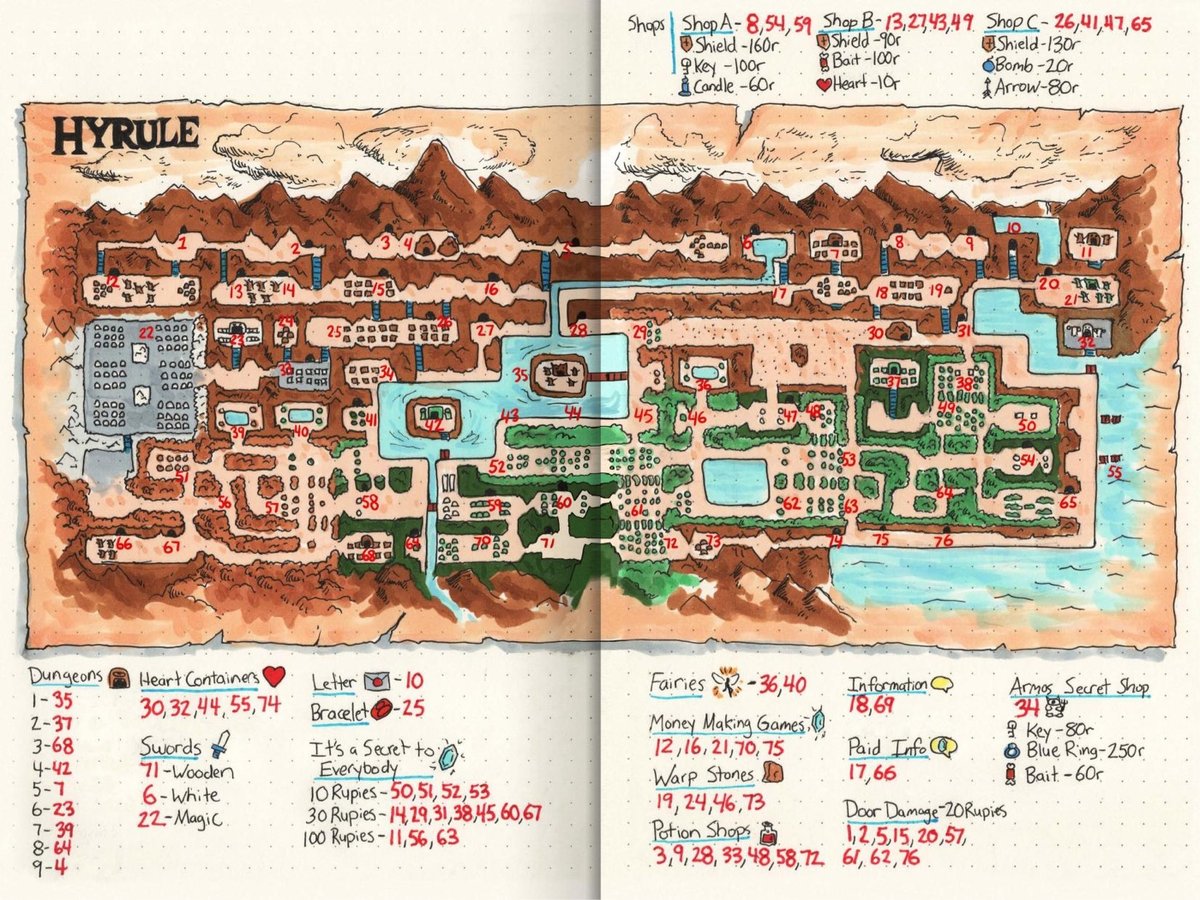
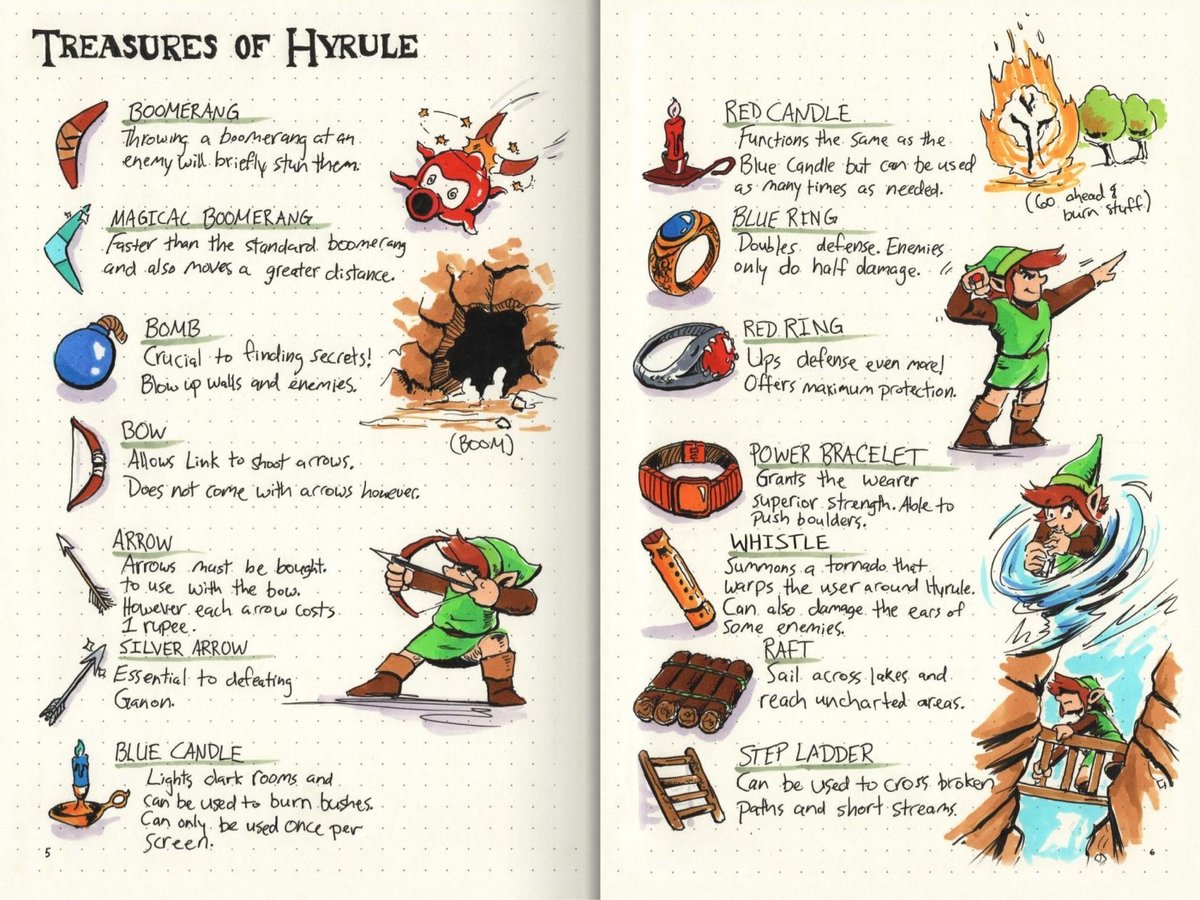
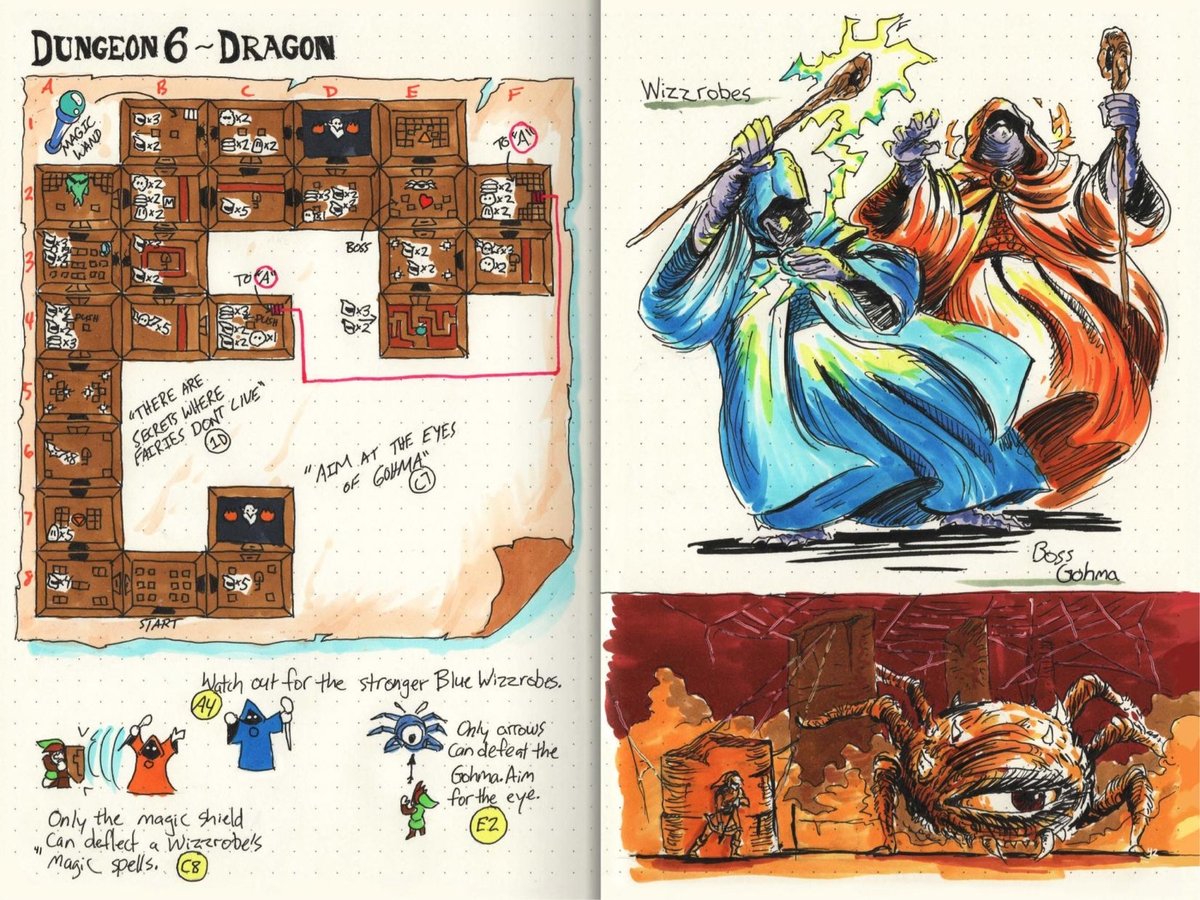
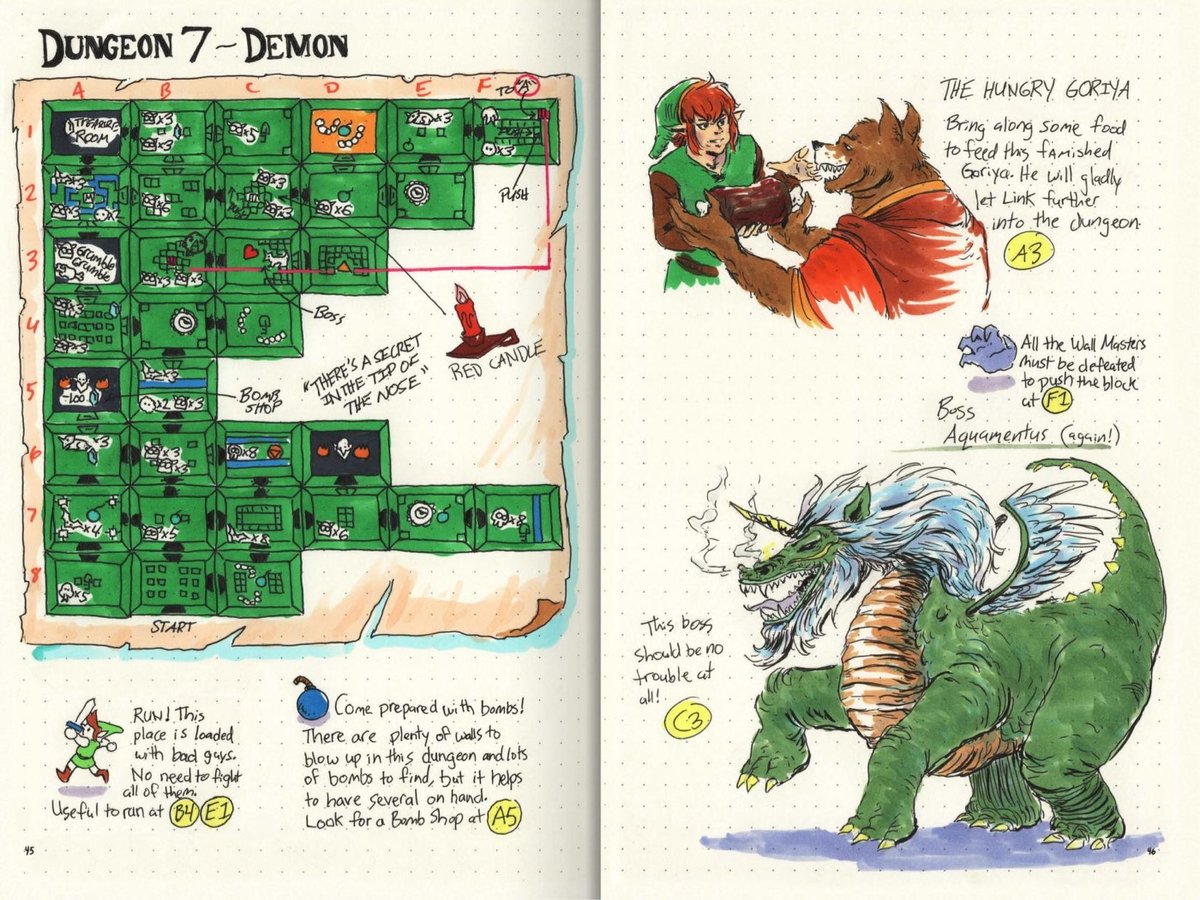
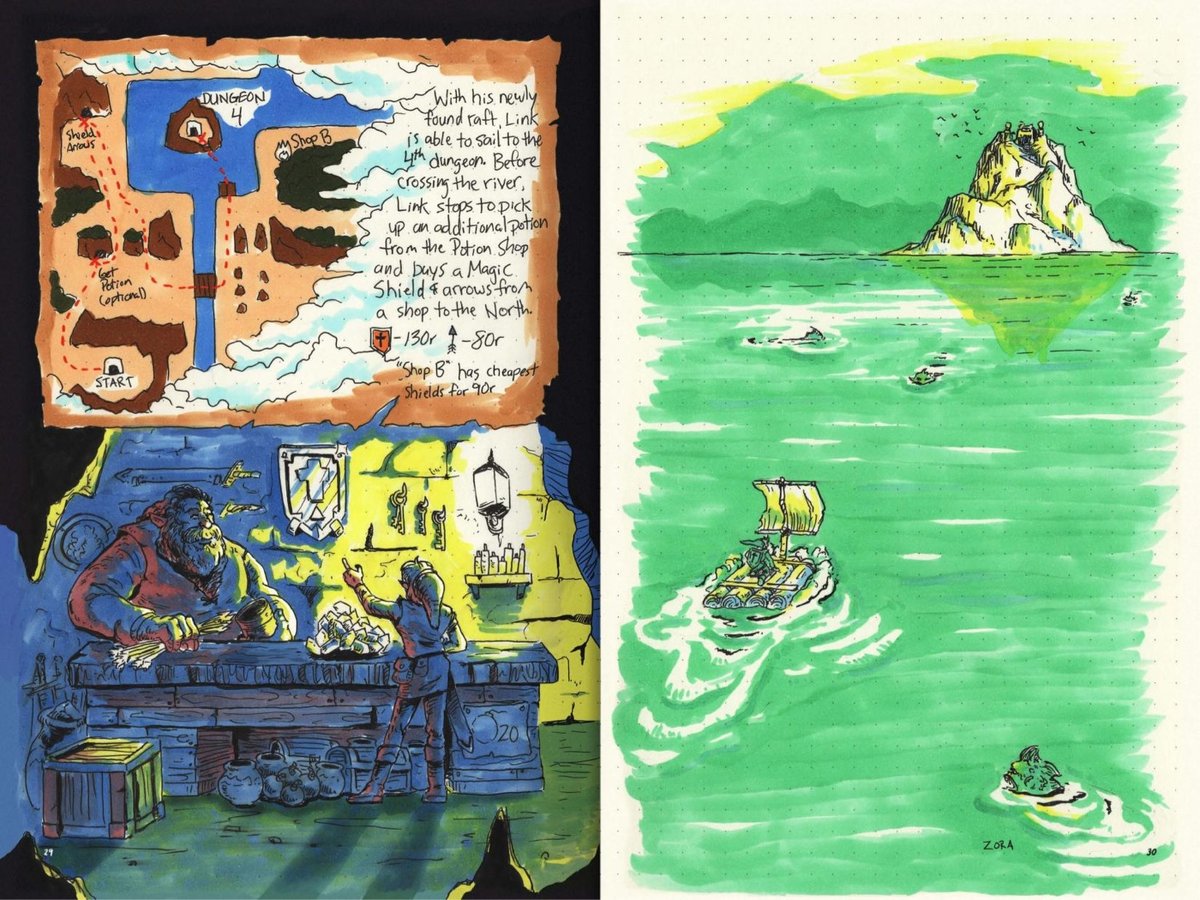
Beautiful Hand-Drawn Guide to The Legend of Zelda

Philip Summers hand-draws game guides for old school video games. He’s done guides for games like Mega Man, Castlevania, Teenage Mutant Ninja Turtles (NES), and Metroid.

But my favorite one is The Legend of Zelda game guide because Zelda was (and still is, tbh) my absolute favorite NES game — and you can get it for free at the Internet Archive. Somewhere in my personal archive is the map I drew for the second quest of Zelda; I also still have my original game cartridge.

Tags: art · Philip Summers · The Legend of Zelda · video games