MAX Vakantieman heeft een nieuw decor nodig

Het is zomer. Nederland wil op vakantie. Maar waar kunnen we nog naartoe? De eerste aflevering van MAX Vakantieman biedt verdieping in dit urgente vraagstuk. De oplossing ligt volgens onze tv-recensent in de Achterhoek.

Amerikaanse chipfabrikant Intel steekt 5 miljard in Europese fabriek

De Amerikaanse chipfabrikant Intel investeert 5 miljard euro in de uitbreiding van zijn chipfabriek in Ierland.

Behance Featured Projects

The latest projects featured on the Behance

Illustrations for The Ring Magazine


The Register

Biting the hand that feeds IT — Enterprise Technology News and Analysis

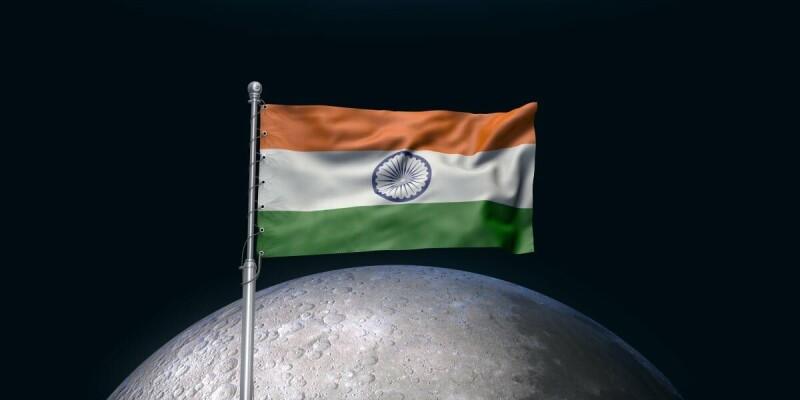
India's crewed space mission is ready for splashdown, but not launch

Indian Space Research Organisation (ISRO) has successfully tested systems it plans to use on the nation's first crewed space mission, but when that mission will launch remains a mystery. ISRO's crewed mission program, "Gaganyaan," is intended to carry astronauts on a rocket called the Human-Rated Launch Vehicle Mark 3 (HLVM3) into orbit. The space agency has already launched the cargo-rated version of the three-stage LVM3 rocket nine times and has a perfect success rate. When India launches humans into space, they'll occupy a crew module. On Sunday, ISRO announced it had successfully accomplished three major qualification tests for that module. One test qualified the primary flotation unit in the system designed to right the crew module after splashdown. Another tested the mechanism that disconnects the umbilical links between the crew and service modules. The third assessed whether the crew module structure could withstand the loads generated when the cover protecting its parachutes separates. The tests are the latest in a long series of qualification milestones for Gaganyaan. Last July, ISRO tested the Service Module Propulsion System (SMPS) and proclaimed it ready to raise and maintain its orbit, handle an emergency mission abort, and perform the deorbit maneuvers ahead of re-entry. However, the agency has had little to say about when Gaganyaan will fly. ISRO initially targeted 2022 for the first crewed Gaganyaan flight, then changed the date to 2024, before scheduling an uncrewed flight carrying a robot astronaut for 2025. ISRO missed that deadline too. Officials and ministers have since suggested test flights could take place in 2027, followed by crewed missions in 2028. But the agency has never published a firm timeline. That caution is understandable because space is hard and the stakes are high for any crewed mission – never mind a mission that would make India just the fourth nation to launch humans into space. ®

How do you solve a problem like Capita?

OPINION Capita's share price tanked 9 percent last week after it told investors it was taking a hit on its contract with the UK government's Civil Service Pension Scheme (CSPS), which has left some of its 1.7 million members unpaid following a disastrous launch. A trading update said operating profit would be down between £25 million and £40 million in 2026 as a result. Sage voices were soon on hand to calm fears, though. "The scale of the reaction sits oddly with the contract's modest financial weight," said Ian Lyall of Proactive Investors. The hit to revenue was "a sliver of Capita's roughly £2 billion turnover." For the first four months of the year, Capita reported £750 million of total contract value won, up 20 percent on a year earlier. "For now, there is no sign that reputational damage is denting that momentum," Lyall added. The assessment that Capita's CSPS troubles may barely dent its long-term prospects will be of little comfort to scheme members left struggling to make ends meet. But they do suggest the wider problem. In the House of Commons last week, Minister for the Cabinet Office Nick Thomas-Symonds said the Capita CSPS contract "could be a prime candidate for insourcing in the future." However, he also admitted that option would have to wait. "If I were to terminate the contract straightaway, that would clearly cause severe disruption to the payroll. I cannot replace a complex pension operation overnight," Thomas-Symonds said. So, for now, the government is stuck with Capita, and its performance will be of concern on other contracts. It has a deal to work on CSPS cases to provide the so-called McCloud remedy removing age discrimination from public service pensions. That work is expected to be completed by March next year, through a separate contract at an additional cost of £45 million. Then there is the promise to take over running finance and HR services for the Department for Work and Pensions (DWP), Ministry of Justice (MoJ), Home Office, and the Department for Environment, Food and Rural Affairs (Defra). Its £370 million contract win is being challenged in court by rival bidder Sopra Steria, which alleges the winning bid was "abnormally low" and based on staffing "significantly below the current levels." At the time, Capita told The Register it had taken part in a robust procurement process and stood ready to work with the DWP to ensure value for money. A DWP spokesperson said its priority was continuity of service and value for money for the public. Nonetheless, concerns about staffing levels echo the CSPS contract. In October last year, a report from Parliament's spending watchdog said Capita planned to employ 332 staff on the scheme, 33 less than the previous provider, MyCSP. The Public Accounts Committee (PAC) report said estimated resourcing levels assumed that "more automation and increased functionality of its IT system will require fewer staff." Speaking to the PAC last week, Government Chief Commercial Officer Andrew Forzani said Capita made a series of commitments about its ability to deploy technology and automate the service as part of the selection process. Chris Clements, managing director of Capita Pension Solutions, said that Capita employed additional staff in a "surge" before go-live "because we identified that some of the technology was not going to be there on time." Group CEO Adolfo Hernandez also told the meeting it hired more people because it didn't appreciate the backlog from the previous provider. Whether the DWP's shared service cluster will encounter similar problems is yet unanswered. However, Sopra Steria's case alleges the Capita bid was 40 percent under the DWP's own cost modeling. To understand why the government continues to choose Capita, you have to understand its options. Forzani explained to the PAC last week that "a very lengthy procurement process" for CSPS started with six providers but there were "only two credible final bids, which were Capita and MyCSP." Civil Service Chief Operating Officer and Cabinet Office Permanent Secretary Cat Little also told the PAC the public sector is one of the last parts of the economy to offer defined benefit pension schemes. "We are a very large customer for complex schemes in a market that has a very small number of suppliers," she said, adding that the government's ability to "shape the market" for suppliers was limited by the high risk and complex nature of the scheme. "We are in a very classic make-or-buy decision making process." That kind of decision will come into focus from April next year, when a government policy announced in June kicks in. All contracts over £1 million in value must be assessed for in-house viability before renewal, and central government departments exceeding £100 million in annual spend must develop five-year insourcing strategies. "This framework builds the exact long-term capability that we need, shifting our focus from short-term pricing to service quality and operational resilience," Thomas-Symonds promised the House of Commons last week. While the new policy might seem like a good option given Capita's recent performance on the CSPS, insourcing raises more questions than it answers. Does the government have the management skills to bring contracts in-house, design the services, and build the technology? Can it recruit those skills? Are Civil Service skills, pay, and recruitment systems set up to support such an ambition? The government has promised "a competitive pay framework, high-impact work and clear pathways for new and existing talent" in tech leadership as part of its Roadmap for Modern Digital Government. A report from Parliament's Science, Innovation and Technology committee said earlier this year that the government's aim to ensure that those in leadership roles have the necessary digital expertise "will require reforms to recruitment and retention mechanisms, including pay, as well as a broader process of cultural transformation." Even before its new insourcing rules, the government was struggling to find the technical professionals and leaders it needed. Back in 2023, the PAC reported on barriers to achieving greater efficiency through digital transformation. Dame Meg Hillier MP, chair at the time, said digital ambitions were "hobbled by staff shortages, and a lack of support, accountability and focus from the top." Recruiting the requisite workforce for significant insourcing will take time. The next general election is due by 2029. Until the government builds that capability, inertia may remain stronger than its insourcing ambitions, leaving departments dependent on the same small pool of suppliers. ®

Slashdot

News for nerds, stuff that matters

Scientists Find Sugar Deep In Our Galaxy

Astronomers have detected erythrulose, a sugar found in raspberries and self-tanners, in a gas cloud near the center of the Milky Way. While not essential for life itself, the molecule can convert into a form thought to be important for life's origins, adding evidence that key prebiotic ingredients may be widespread across the galaxy. The Associated Press reports: Using two dish-shaped radio telescopes in Spain, researchers collected data from a large gas cloud near the center of the Milky Way. They identified the sugar in gas form by comparing telescope signals to samples in the lab. It's the latest kind of sugar detected in space -- in a region crossed by NASA's twin Voyager, the farthest spacecraft to ever travel from Earth.

Scientists have found interesting chemistry in our galaxy, including building blocks for genetic material and parts of the cell. They spotted a cousin to table sugar near the center of the Milky Way about 25 years ago, and black grains from asteroid Bennu retrieved by NASA's Osiris-Rex spacecraft yielded other sugars, including a key DNA ingredient. The latest sugar isn't essential for life, but can easily convert to a form that's thought to be crucial to kick-starting life on Earth. And it's one of the most complex sugars spotted so far, said astrophysicist Erika Hamden with the University of Arizona. The results were published in the journal Nature Astronomy.

Read more of this story at Slashdot.

The Moscow Times - Independent News From Russia

The Moscow Times offers everything you need to know about Russia: Breaking news, top stories, business, analysis, opinion, multimedia

FSB Accuses Ukrainian Rapper of Organizing Drone Attack on Defense Enterprise

Ukrainian rapper Kyivstoner denied the Russian allegations in a series of posts on Instagram.

NL ziekenhuizen starten omstreden vorm van late abortus zonder medische indicatie "waarbij de foetus niet zelden levend ter wereld komt"

Social

Deze vorm van abortus tussen de 22 en 24 weken ligt zo gevoelig omdat het, zoals bij een aangeboren afwijking of een ernstige bedreiging voor de gezondheid van de moeder, niet op medische indicatie is, maar op "sociale indicatie". En sociale indicatie komt er eigenlijk op neer dat de zwangerschap ongewenst is, om welke reden dan ook.

Het Amsterdamse Onze Lieve Vrouwe Gasthuis (OLVG) is begonnen met een pilot-programma, maar de gynaecologenberoepsvereniging Nederlandse Vereniging voor Obstetrie en Gynaecologie (NVOG) schrijft dat "de oproep aan ziekenhuizen (PDF) inmiddels heeft geleid tot belangstelling vanuit verschillende centra verspreid over het land." De oproep schrijft voor dat er onder dit pilot-programma "maximaal vier" van dit soort abortussen uitgevoerd zullen worden.

Maar goed, dan het pijnpunt: "‘Niet zelden’ wordt een foetus bij zo’n zwangerschapsafbreking levend geboren, stelt de NVOG," schrijft het Algemeen Dagblad. En dan rijst natuurlijk de vraag: hoe wordt een levend geboren kindje dan 'geaborteerd'? We zochten het op, en lazen in dit 'Modelprotocol Medisch handelen bij late zwangerschapsafbreking' (PDF) van de NVOG het volgende:

"Het postnatale beleid zal, in beginsel, bestaan uit het niet beginnen van levensverlengend handelen, waarbij in voldoende mate palliatieve zorg wordt verleend."

De voorkeur gaat echter uit naar zogeheten "foeticide" voordat het kind ter wereld komt:

"Foeticide kan op verschillende manier verricht worden, dan wel door het intracardiaal of intrathoracaal inspuiten van een medicijn met asystole tot gevolg, dan wel door middel van navelstrengcoagulatie. Het valt te overwegen om de foetus te sederen en pijnstilling toe te dienen voordat hiertoe wordt overgegaan." Een 'asystole' is een hartstilstand, en een 'navelstrengcoagulatie' betreft het dichtbranden van de navelstreng. Maar foeticide is dus niet altijd mogelijk.

De NVOG schat dat er in Nederland jaarlijks zo'n 225 late abortussen zonder medische indicatie plaatsvinden, waarbij de vrouwen daarvoor dan uitwijken naar Spanje, Engeland of sommige Amerikaanse staten. Volgens het ministerie van Volksgezondheid werden er in 2024 in Nederland in totaal 331 abortussen tussen de 22 en 24 weken uitgevoerd.

De NVOG erkent in het eigen vakblad over deze abortussen op enkel sociale indicatie "dat dat deze late abortussen een ‘aanzienlijke zorgzwaarte’ voor het zorgpersoneel kunnen opleveren. Maar de NVOG vindt ook dat het gaat om ‘wettelijk toegestane en noodzakelijke zorg‘ en dat deze zorg nu ‘tekortschiet’. En, benadrukken de auteurs: ‘Het gaat niet om grote aantallen, maar wel om zwangeren in een uiterst kwetsbare situatie.’ (...) Individuele personeelsleden zouden volgens een woordvoerder altijd mogen weigeren, maar het team heeft als geheel wel een zorgplicht. Verder is de pilot nog in de beginfase en wil het OLVG niets kwijt over de uitvoering ervan."

Toestanden.


Nouky

Original Mastodon Post

Nouky

The Summer of Love

Thomas Hawk posted a photo:

The Summer of Love