The Guardian

Latest news, sport, business, comment, analysis and reviews from the Guardian, the world's leading liberal voice

Is it true that … we should eat every two to three hours to boost our metabolism?

Yes, digesting food requires energy, but you need to do more than snack for a meaningful impact

It helps to understand what people mean when they talk about “metabolism”, says James Betts, professor of metabolic physiology at the University of Bath. Usually, they’re referring to metabolic rate; the amount of energy your body burns in a given time. This is largely determined by factors such as your size, age, sex and body composition.

Your daily energy expenditure comes from three main sources: your resting metabolism (the energy needed to keep your organs and tissues functioning), the calories burned processing food, and physical activity. Of those, exercise and movement are by far the most variable.

Continue reading...

China tests long-range missile in South Pacific in move Australia condemns as ‘destabilising to region’

Australian government confirms it was informed by China of its intent to conduct the test on Monday

China has conducted a long-range missile test in the South Pacific, in a move the Australian government condemned as “destabilising to the region” and which was also criticised by other regional leaders.

A ⁠test missile topped with ‌a ‌dummy warhead landed ‌in “designated waters” of the Pacific, China’s state news agency Xinhua ‌reported on Monday. The missile test was a “routine arrangement” of China’s annual ⁠military training, with prior notification to relevant countries, Xinhua said.

Continue reading...

Extra: Q&A met de makers van Cocaïnekoorts

Hoe gaat het proces van Flor Bressers nu verder? Hoe maak je een journalistieke podcastserie op basis van een strafdossier?

Touretappe finisht maandag zonder publiek door natuurbrand in de Pyreneeën

De derde etappe van de Tour de France gaat maandag door, maar met beperkingen. Vanwege de natuurbranden in de regio is bij de laatste veertig kilometer tot finishplaats Les…

Rijnmond - Nieuws

Het laatste nieuws van vandaag over Rotterdam, Feyenoord, het verkeer en het weer in de regio Rijnmond

Deze grote wegwerkzaamheden gaan deze zomer voor veel files zorgen

De zomervakantie is begonnen in de regio Noord, de vakantie in andere regio's volgen binnen enkele weken. Dat moment is voor Rijkswaterstaat de aanleiding om een aantal grote klussen op te pakken. In de regio Rijnmond gaat het om de A27, de A20, de Papendrechtsebrug (N3) en de Algerabrug (N210) die wekenlang niet toegankelijk zijn.

Zomervakantie begonnen: en dus ook de grote werkzaamheden aan de weg

De zomervakantie is begonnen in de regio Noord, de vakantie in andere regio's volgen binnen enkele weken. Dat moment is voor Rijkswaterstaat de aanleiding om een aantal grote klussen op te pakken. In de regio Rijnmond gaat het om de A27, de A20, de Papendrechtsebrug (N3) en de Algerabrug (N210) die wekenlang niet toegankelijk zijn.

Djan (20) is blind maar staat toch voor de klas: ‘Daar leer ik ook van’

Vlaardinger Djan van der Kraan is blind, maar heeft aan ambitie geen gebrek. Hij wil leraar worden en staat al, samen met geleidehond Terry, voor de klas.

May Day for Freddie Gray, Oakland, CA 2015

Thomas Hawk posted a photo:

May Day for Freddie Gray, Oakland, CA 2015

Firestone

Thomas Hawk posted a photo:

Firestone

The Register

Biting the hand that feeds IT — Enterprise Technology News and Analysis

Japan’s asteroid sample retriever rapidly buzzes remote space rock

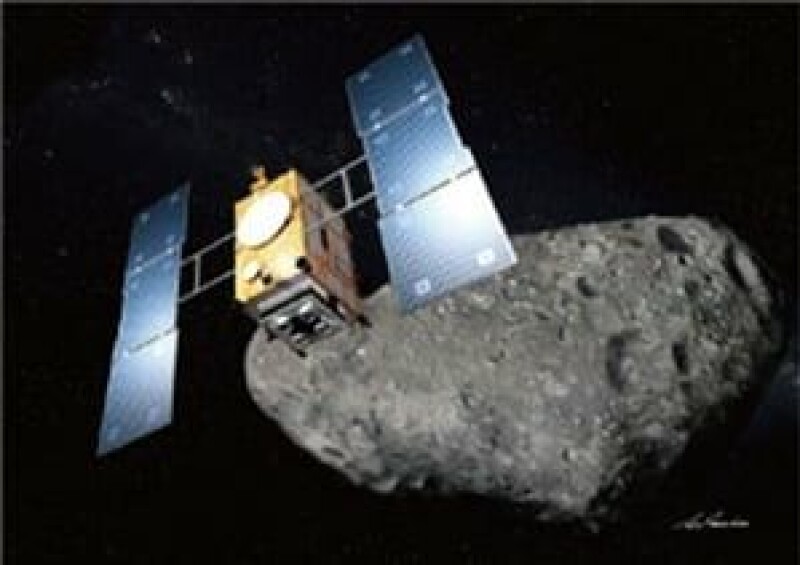
Japan’s Hayabusa2 craft has just buzzed an asteroid, successfully completing the first objective of its extended mission. Hayabusa2 launched in 2014, and four years later arrived at Asteroid Ryugu. In 2019 the craft sent a pair of landers onto Ryugu’s surface and collected samples that it dropped off in the Australian outback in late 2020. Analysis of those samples suggests Ryugu is home to amino acids, and probably came from the outer solar system before somehow settling into an elliptical orbit that crosses over the celestial paths traversed by both Earth and Mars. After delivering its sample, the craft then headed back into deep space – with around 30 kilograms of propellant aboard. Japan’s Space Exploration Agency (JAXA) soon defined an extended mission with two objectives. The last of those will hopefully occur in 2031 at Asteroid 1998 KY26, a tiny space rock that astroboffins think may be just 11 meters wide. JAXA ticked off the other objective on Sunday with a flyby of asteroid 98943 Torifune, a 450-meter diameter rock. The space agency decided to visit Torifune out of scientific curiosity, and because it’s conveniently located for Hayabusa2. The fact that the asteroid’s orbit intersects Earth’s was another motive, as JAXA feels anything we can learn about the object can contribute to planetary defense strategies. Expectations for the flyby were low, because Hayabusa is set up to observe asteroids at close quarters – but it sped past Torifune at around five kilometers per second. JAXA managed to maneuver the craft to within 800 meters of the asteroid and has said Hayabusa2 operated normally after the flying visit. The agency hasn’t released detailed data or images. We’ll update this story if it does so after a planned press conference later today – but for now hope readers appreciate the many excellent feats of engineering and astrogation that made the flyby possible. Hayabusa2 was JAXA’s second sample return mission and the agency hopes to soon launch another in the form of the Martian Moons eXploration (MMX) spacecraft, which it hopes to launch in November or December. The mission plan calls for the craft to land on Phobos next year and grab some samples that will land on Earth in 2031. If successful, the mission will be the first to land on Phobos. JAXA’s also working on another interesting project: a voice interface for spacecraft. As explained in an announcement posted last Friday, the “Mission Buddy” project aims to replace complicated instrument panels with a conversational interface. “‘Mission Buddy’ is not simply a mechanism for personifying spacecraft, but is positioned as a cognitive interface that connects researchers, operators, educational institutions, and general users through dialogue, based on mission information, observation data, operational knowledge, and research results,” JAXA wrote. “This is expected to create a wide range of value, including mission understanding, learning support, science communication, knowledge transfer and utilization, and even multilingual information dissemination.” ®