Rijnmond - Nieuws

Het laatste nieuws van vandaag over Rotterdam, Feyenoord, het verkeer en het weer in de regio Rijnmond

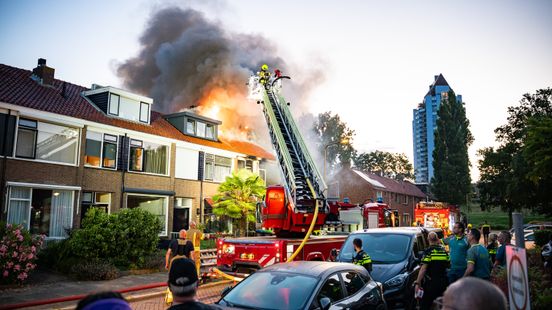
Woning compleet verwoest door grote brand, meerdere huizen ontruimd

In een woning aan de Pretoriusstraat in Ridderkerk-Bolnes is in de nacht van woensdag op donderdag brand uitgebroken. De vlammen hebben het huis compleet verwoest. Er is niemand gewond geraakt, de bewoners zijn opgevangen in een kerk in de buurt. Twee naastgelegen woningen zijn ook ontruimd.

VK: Voorpagina

Volkskrant.nl biedt het laatste nieuws, opinie en achtergronden

We meten armoede in Nederland niet, we maskeren het

The Guardian

Latest news, sport, business, comment, analysis and reviews from the Guardian, the world's leading liberal voice

‘Beautiful blobs’: can scientists build life from scratch? – podcast

Researchers claim they are closer to creating life from nothing after building tiny, quivering blobs that use lab-made DNA to feed, grow and multiply in a dish. To find out how significant this step is, and where scientists hope it will lead, Madeleine Finlay hears from co-host Ian Sample and from Kate Adamala, professor of genetics at the University of Minnesota

Follow It’s Complicated on YouTube

Support the Guardian: theguardian.com/sciencepod

Continue reading...

Andy Burnham urged to be radical on economy to help Labour win next election

Exclusive: Poll shows policies such as rent control and higher wealth taxes could fend off Reform UK in key seats

Andy Burnham is being urged to adopt an “economic populist” approach to combating the cost of living crisis if he becomes prime minister, as a detailed opinion poll shows radical policies could help Labour to retain its majority at the next election.

Senior figures advising the Makerfield MP have been circulating a seat-by-seat poll showing Labour’s majority could be demolished at the next general election with the party on course to win fewer than 100 seats.

Continue reading...

‘It’s peak tick season!’ Should Charlie xcx really have been lolling around in long grass?

Harry Styles, Zoë Kravitz, Sarah Pidgeon … celebrities love stretching out on Britain’s lawns and meadows. But with the tick-borne Lyme disease on the rise, is it safe for any of us?

Do we need to worry about ticks in the UK? How serious are the risks associated with the diseases they can carry? Should we avoid rolling around in long grass à la Charli xcx in the video for her latest single, Wink Wink?

These are questions that have been circulating on social media this week, after the release of the pop star’s video, filmed in Essex, and sightings of celebrity couples Zoë Kravitz and Harry Styles and Sarah Pidgeon and Joe Alwyn lounging in the long grass on Hampstead Heath in London.

Continue reading...

I visited seven themed bars in one week. Can ball pits and bingo save British nightlife?

While most hospitality venues are struggling, there has been an enormous rise in ‘competitive socialising’. But why? And could I find the answer while dressed in a prison jumpsuit and drinking a daiquiri?

British hospitality is in crisis. In the first quarter of 2026, three hospitality sites closed every day, while one in five remaining businesses fear collapse over the next year owing to rises in tax and employment costs. For those venues struggling to make ends meet in London in particular, there is the added worry of increasingly stringent licensing rules and influential lobby groups making once-thriving areas such as Soho a ghost town after 11pm.

And yet one hospitality niche seems to be bucking the trend: themed bars. Blending booze with, say, axe-throwing, darts, immersive theatre or adult-sized ball pits, these experiential venues have seen a boom in recent years. A report from Savills estate agents found a 58% increase in “competitive socialising” venue openings in 2025 compared with 2018, while another survey found one in three adults had visited one of these venues in the UK in 2024-25. Photo-friendly interiors have made many of them a hit on social media, too.

Continue reading...

My mother has died and I can mourn her. That makes me one of the fortunate | Shada Islam

Grief is universal, but being able to mourn is a privilege. For those dying in wars from Gaza to Sudan, there is no shroud, no grave, no funeral

It was the early-morning phone call that so many of us dread. My mother was in the emergency ward of her local hospital. She was struggling to breathe. I went into automatic mode, booking the first available flight to Karachi. I threw clothes into a bag, grabbed my passport and headed for Brussels airport with a heavy heart.

Only 12 hours earlier, we had spoken on the phone. It was my birthday. She was her usual cheerful self, her signature laugh ringing out as she regaled me with stories from my childhood. She asked about my granddaughter – her great-granddaughter, whom she adored – and wanted to know what I was working on and where I planned to travel next.

Continue reading...

Valuable Spanish painting left on street salvaged by man who liked its frame

Andrés Hurtado found work by Joaquín Sorolla after its owners mislaid it, before responding to theft alert

The mystery of a small and very valuable picture by the Spanish artist Joaquín Sorolla that vanished over the weekend has been solved after a man told police he had mistaken the painting for junk when he found it on a Seville street but rescued it because he liked the frame.

Rather than being entranced by the painting’s subject matter – two boats off a beach – Andrés Hurtado was instead captivated by its handsome gold frame.

Continue reading...

‘Techno in a monastery – are you ready?’ The Greek priest whose doom metal album is the year’s hippest record

His church thinks electric guitars are the devil’s work. But Father Tabakis is on a mission to change that – with Paradise Metal, a religious dubstep album that outdid Daft Punk and Aphex Twin

‘The guitar was made by God,” says Father Dionysios Tabakis, sitting in the living room of his flat in Nafplio, a city on Greece’s Peloponnesian coast, surrounded by a huge assortment of musical instruments and religious icons. Dressed in long black robes and sporting a fine grey wispy beard, Tabakis sounds as if he could be speaking from the pulpit when he adds: “The devil cannot create something. God has created all.”

His favourite is an adapted Harley Benton R-457. Bought for only €135, it’s a striking electric guitar, yielding chords that are more wobbly and atonal than those of an ordinary guitar, but also warmer. Tabakis likens the sound to the “waves” of the human voice.

Continue reading...

‘It is comforting to be haunted’: how attitudes to abortion have changed through the ages

The abortion debate – the language of life, choice and rights – severs women, and their pain, from history. I don’t want to forget my abortion and I don’t want to forget theirs

The physical fact of my abortion caught me off guard. I had been so accustomed to defending abortion as an abstract right – as a right to privacy, to healthcare, to autonomy – that when it came to having one, I was surprised by the brutality of it. Fasting for hours before. Clammy and light-headed, my hands freezing and damp, in the clinic waiting room. Waves of contracting pain afterwards, the blood and the vomit from the anaesthesia, the days of cramping and bleeding. Soaking through pads. Cold sweat. I thought having an abortion would feel like the exercise of the hard-won autonomy of generations of feminists before me. But mostly it just hurt.

What do you do with the brute fact of pain? Of what Annie Ernaux describes, writing about her own abortion before legalisation in France, as an experience that sweeps through the body? I could not translate it easily into a feminist politics, into a slogan, into something I could shout or wanted to shout. It did not feel like the exercise of bodily autonomy; it did not feel like a choice, though of course, in some formal and factual way, I did choose to have an abortion. It’s just that the choice seemed to be the least important and least interesting part of the whole experience, totally unmemorable when it came up against the violence and urgency of the body, reeling and revolting against the sudden transformation from pregnancy to unpregnancy. Nor did the sensations of aborting feel like the making of an abortion story, like the raw material for an anecdote that could be compressed and publicised on social media, piled up with the others to make some kind of aggrieved claim. There was no real plot – but feeling.

Continue reading...