Wel.nl

Minder lezen, Meer weten.

Amerikaanse denktank: 2 miljoen slachtoffers in oorlog Oekraïne

NEW YORK (ANP) - In de oorlog tussen Oekraïne en Rusland zijn ruim 2 miljoen militairen omgekomen, gewond geraakt of vermist, meldt The New York Times op basis van het in Washington gevestigde Center for Strategic and International Studies (CSIS). Zo'n 450.000 Russische en 125.000 tot 150.000 Oekraïense militairen zouden zijn omgekomen.

De denktank heeft in de afgelopen jaren vaker dit soort statistieken gepubliceerd. Betrouwbare cijfers van zowel de Russische als de Oekraïense overheid ontbreken. De denktank baseert zich op onder meer Britse en Amerikaanse bronnen.

In een rapport benadrukt CSIS ook dat de terreinwinst van Rusland in Oekraïne beperkt is en dat het in sommige maanden onder de streep veroverd terrein kwijtraakte. Hoewel Rusland meer verliezen zou lijden op het slagveld, is Oekraïne een groter deel van zijn leger kwijtgeraakt, aldus The New York Times.


Klimmers hangen spandoek aan spits van Empire State Building

NEW YORK CITY (ANP) - Twee gemaskerde mensen hebben helemaal bovenop het Empire State Building in New York gestaan met een spandoek. Op het spandoek stond een vredesboodschap. Bij de afdaling leek de ene klimmer de ander een huwelijksaanzoek te doen. Niet veel later werden ze hoog boven de grond opgewacht door de politie, zo was te zien op livebeelden vanuit een helikopter.

De twee stonden in het zwart gekleed bovenop het ruim 440 meter hoge gebouw. Ze lieten daar een spandoek wapperen met de tekst "When the power of love / beats the love of power / the world knows peace" (als de macht van de liefde de liefde voor de macht overwint, kent de wereld vrede). Vervolgens klommen ze met hun doek weer naar beneden.

De twee kwamen al snel in beeld van een televisiehelikopter van WCBS, waardoor de afdaling en het vermoedelijke aanzoek live te zien waren. De beelden werden breed gedeeld door Amerikaanse nieuwsmedia en op de socials.

Opgepakt

Vanwege de actie werd een deel van de straat afgezet door de politie. De twee zijn volgens mediaberichten opgepakt.

De tekst op het spandoek lijkt geïnspireerd te zijn op een kreet die vaak wordt toegeschreven aan de beroemde gitarist Jimi Hendrix, al zijn er twijfels of hij de bedenker is.


VVD: boeren geraakt, maar ook geholpen door stikstofplannen

DEN HAAG (ANP) - De stikstofplannen van het kabinet gaan boeren raken, zei VVD-Kamerlid Renate den Hollander in het debat over die plannen. Tegelijkertijd bestreed ze verwachtingen die partijen op de rechterflank lieten klinken over de gevolgen voor boeren. "Ik ga niet meedoen in het beeld dat er helemaal geen toekomst is. Dat is gewoon een onwaar beeld."

Caroline van der Plas (BBB) zei dat 600.000 mensen werk hebben dat met landbouw te maken heeft. Maatregelen om stikstofuitstoot terug te dringen leiden tot een "fors verlies van werkgelegenheid", voorspelde ze.

"Mevrouw Van der Plas heeft volledig gelijk: enorm veel mensen worden geraakt met dit pakket", antwoordde Den Hollander. "Maar er gaan ook heel veel mensen weer perspectief krijgen. Het beeld dat hier geschetst wordt, is dat de hele agrarische sector de nek wordt omgedraaid. Daar is helemaal geen sprake van."


VS willen vrijhandelsverdrag met Canada en Mexico niet verlengen

WASHINGTON (ANP/BLOOMBERG/RTR/AFP) - De Verenigde Staten willen de vrijhandelsovereenkomst met Mexico en Canada niet verlengen. In plaats daarvan willen de VS het akkoord jaarlijks evalueren. Dat heeft de Amerikaanse handelsgezant Jamieson Greer woensdag gezegd, na een bijeenkomst met de Canadese handelsminister Dominic LeBlanc en de Mexicaanse economieminister Marcelo Ebrard.

"De Verenigde Staten zullen in gesprek blijven met Mexico en Canada om de tekortkomingen van het verdrag en onze handelstekorten met deze landen aan te pakken", zei Greer. Canada en Mexico wilden het juist met zestien jaar verlengen.

Het besluit dreigt voor extra onzekerheid te zorgen voor bedrijven in Noord-Amerika. De toeleveringsketens in sectoren zoals de auto-industrie zijn in die regio sterk met elkaar verbonden.

Het handelsverdrag blijft nog tien jaar gelden. Als geen van de landen besluit zich terug te trekken uit het akkoord, zal het verdrag daarna jaarlijkse evaluaties ondergaan.


DNA Lounge: Wherein it's a series of tubes

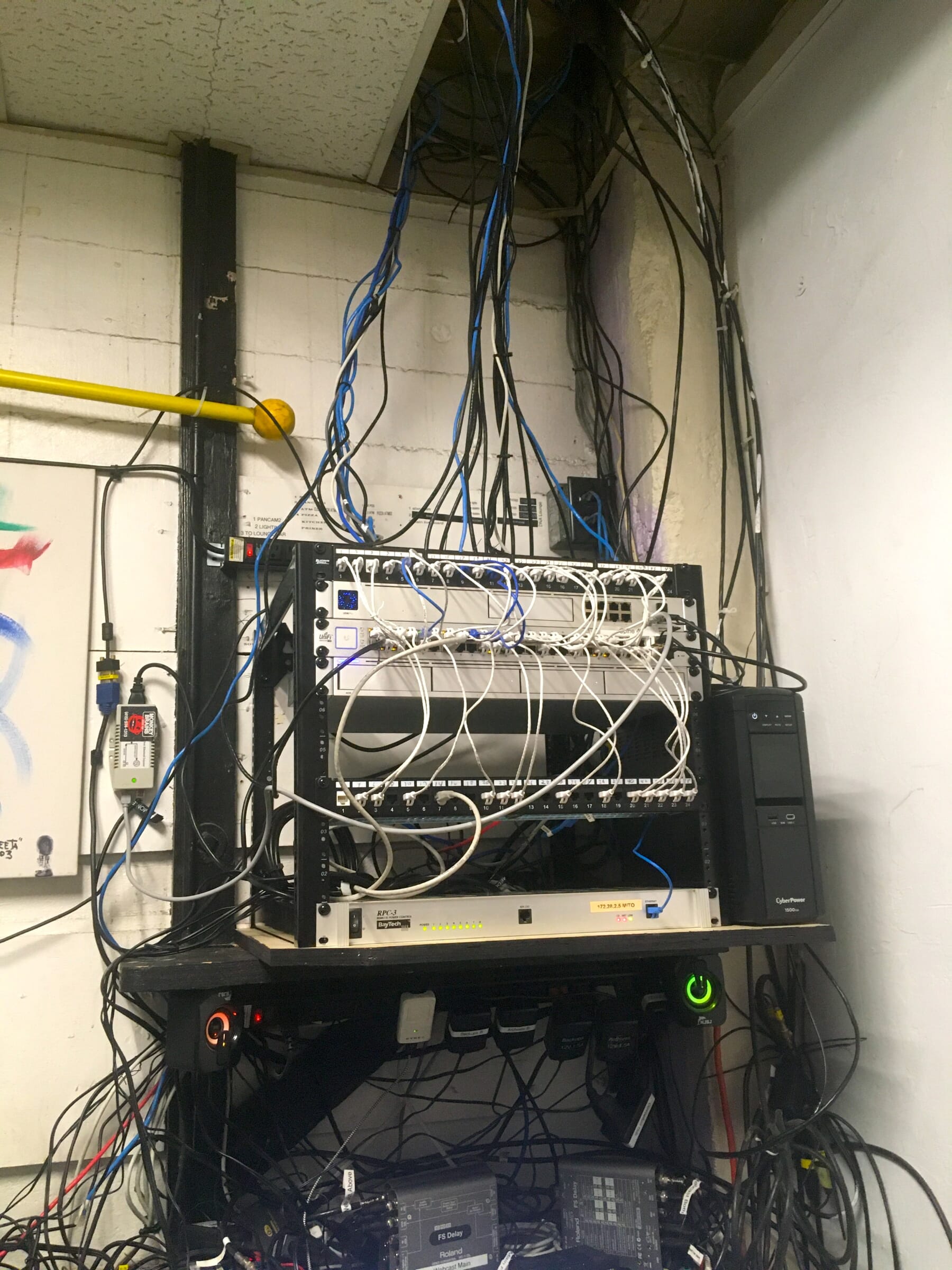
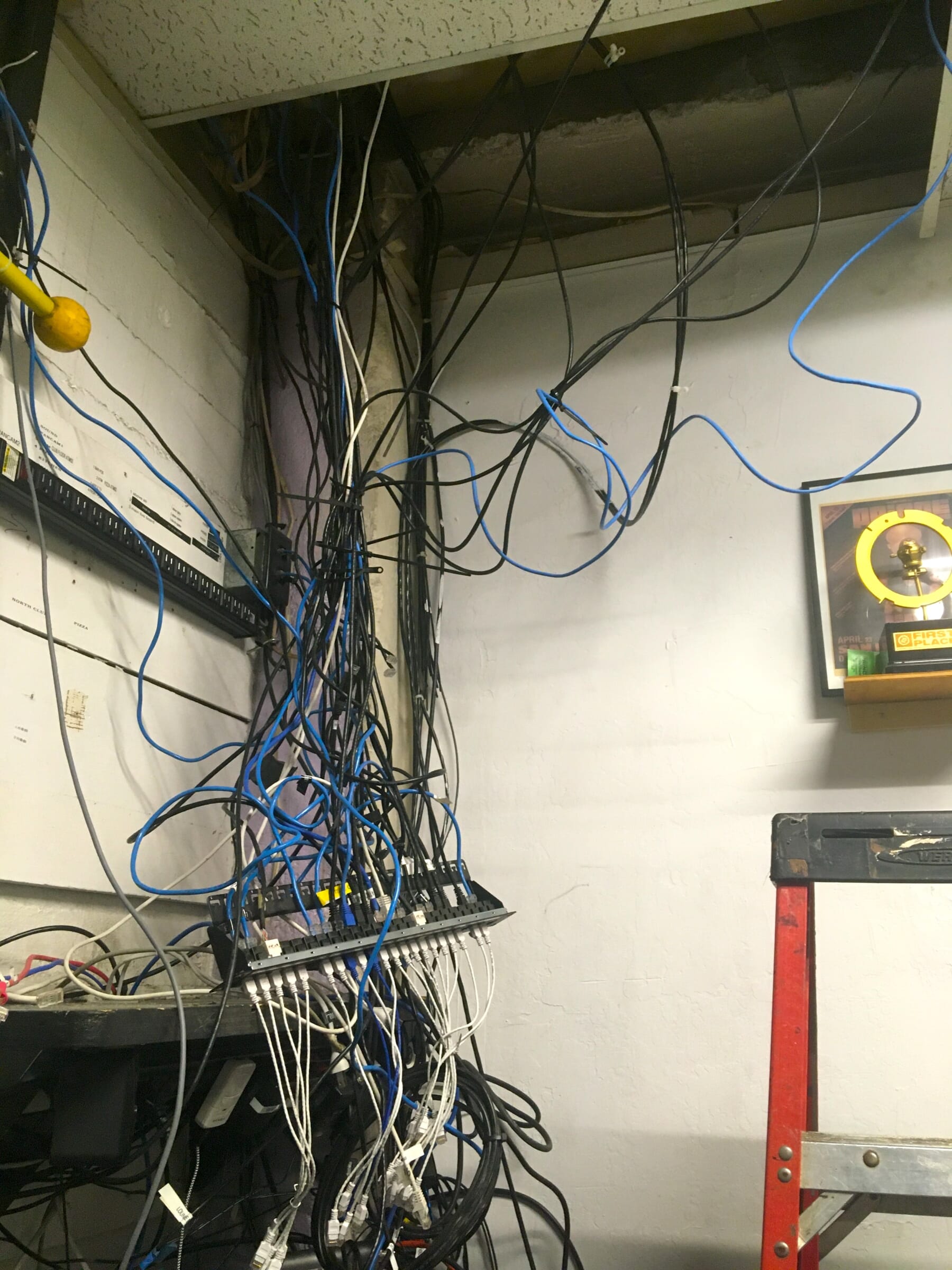
We replaced our network rack with a slightly larger one. Exciting news, I know, but I'm posting these photos because I know that there is a certain segment of my readership who will be upset by them, perhaps even scarred. Is this what peak performance looks like? Probably.

The Register

Biting the hand that feeds IT — Enterprise Technology News and Analysis

An artificial cell with a full lifecycle has been created for the first time

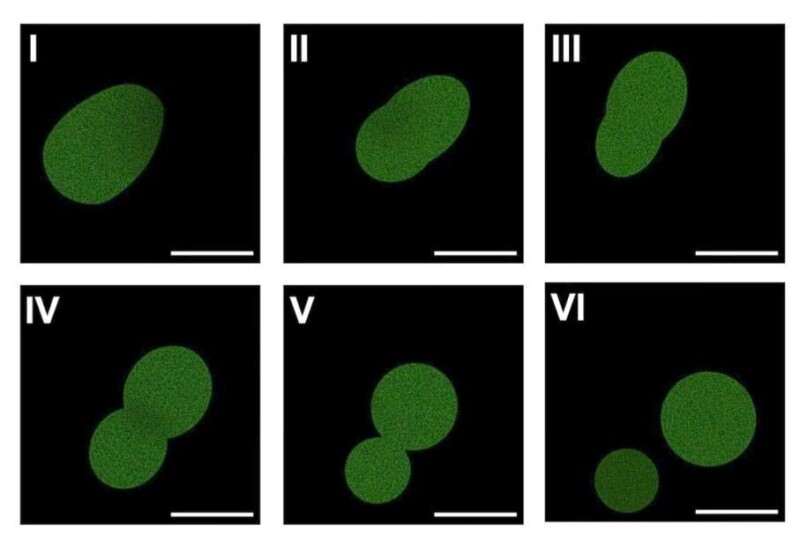
A group of scientists in a Minnesota laboratory have made history, creating the first artificial cell with a complete life cycle. SpudCell, as the team behind it has dubbed the creation, is built entirely from known chemical components, and can grow, replicate its genome, divide into new generations of cells, and even demonstrate natural selection and competition as its genes change. That’s not to say SpudCells are alive, mind you, as the team behind it aren’t claiming to have become gods. What they have done, they note in a preprint paper [PDF] published while awaiting peer review, is to give new insights into the minimal qualifications for what it actually takes for something to be alive. That, and they’ve created what they say could be a “chassis” that could be adapted for everything from formulating new drugs to the actual creation of artificial organisms. “SpudCell is not a ‘finished’ cell, and it is far simpler than anything in nature,” biochemist, University of Minnesota professor, and SpudCell project leader Kate Adamala told The Register in an email. “SpudCell is proof of what is possible. It proves that non-living, defined molecules can be assembled into a cell capable of functions that previously were exclusively reserved for natural life.” For those wondering where the name came from, Adamala told us that it was originally dubbed “Potato Cell” as a nod to her Polish heritage, before the name was shortened to SpudCell. In terms of those minimal qualifications, one of the things that SpudCell suggested was how few kilobase pairs (kbp - one kbp represents 1,000 base pairs) a genome may need to support a complete synthetic cell cycle. Prior scientific work estimated a minimal genome could be as small as 113 kbp (human genomes contain around 3 million kbp), but SpudCells only contain 90 kbp. SpudCells are also able to divide without the need for a cytoskeleton, the internal scaffolding that gives many cells their structure and helps coordinate cell division, side-stepping what the team said has long been a bottleneck in synthetic cell research due to the cytoskeleton's complexity. Instead, SpudCells divide when proteins used to grow the cell crowd together at the membrane surface of the cell until mechanical stress forces it to split. As mentioned above, SpudCells also demonstrate competition and natural - or unnatural, in this case - selection. “When researchers introduced a genetic change that increased production of the fusion protein, cells with that change grew faster and produced more offspring,” the team explained. “After five generations, the faster-growing variant had outcompeted the original.” As a rather primitive cell without the full complement of features needed to sustain life, SpudCell does have its limitations. “SpudCell has a very primitive metabolism, and it cannot yet build its own ribosomes,” Adamala told us. Because SpudCells can't yet build their own ribosomes, researchers have to keep 'em fed with liposomes carrying ribosomes, enzymes, lipids, and other molecular components needed to keep the synthetic cells functioning. That’s good news for anyone worried about the little creatures escaping the lab and wreaking havoc on the outside world: Their biology precludes survival outside very specific lab conditions. The artificial cellular future The potential uses of things like SpudCell, which is in essence an artificial proto life form with biology that’s entirely known, understandable, and manipulable, are vast. As Adamala explained it to us, medicines, materials, industrial chemicals, and other manufactured products the world relies on are created via molecular transformation in natural living cells we manipulate to produce desired products, or from industrial processes with huge energy and environmental costs. “Cells built from scratch could perform molecular transformations industrial chemistry cannot,” the biochemist told us. Using biology in such a way requires far more understanding of cellular structures and processes, Adamala added, and to do that we need cells we fully understand - like SpudCell. “I’m a chemist, and ever since I started working on biology, I’ve been frustrated by our inability to fully describe and characterize any natural living cell,” Adamala said. “To understand and routinely use biology, we need engineerable and fully defined cells.” That’s where the second part of her team’s work comes in: Together with a group of colleagues, Adamala is taking her work out of the university lab and into a public-benefit institution called Biotic. The outfit intends to do its work publicly and openly in a bid to standardize artificial cell research and speed up whatever societal benefits the project could help create. “Every lab in this field is solving the same problems from scratch, and little of that institutional knowledge is carrying over to the next group,” Adamala explained in an email. “That is the problem I want Biotic to solve: How to turn a field of one-off accomplishments into a real engineering discipline, built on shared, open foundations, so the ability to engineer biology is not something only a few private hands ever hold.” There’s a lot of work to be done before SpudCell takes Biotic and the artificial cell research world beyond the basics, but it’s a start that SpudCell has contributed to, Adamala said, making a number of long-standing challenges tractable instead of far-future dreams of labcoat-bedecked boffins. “My personal immediate to-do list includes ribogenesis, better metabolism, and more robust division,” the professor told us. “Those three things, with the support of the community built by Biotic, will go very far towards making it a viable platform for practical applications.” ®
Rijnmond - Nieuws

Het laatste nieuws van vandaag over Rotterdam, Feyenoord, het verkeer en het weer in de regio Rijnmond

Politie grijpt in bij viering Keti Koti: verdachten met wapens opgepakt, ME houdt toezicht

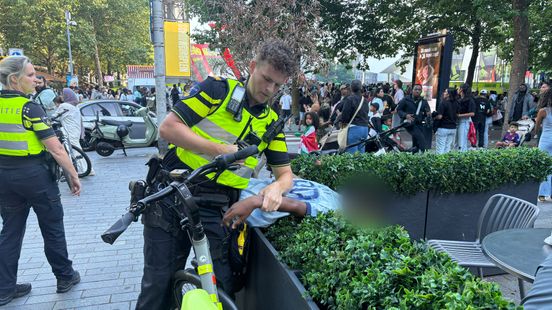
Tijdens de viering van Keti Koti op het Schouwburgplein in het centrum van Rotterdam zijn woensdagavond twee verdachten aangehouden. Eén van hen had een mes op zak, de ander een vuurwapen. De Mobiele Eenheid (ME) is aanwezig en houdt een oogje in het zeil.

VK: Voorpagina

Volkskrant.nl biedt het laatste nieuws, opinie en achtergronden

Lukaku weer op de bank bij België in knock-outwedstrijd tegen Senegal

Pro-Kamerlid Laura Bromet wordt kop-van-jut in verhit stikstofdebat

Behance Featured Projects

The latest projects featured on the Behance

Monocle x Hoper


A series of editorial illustrations created for Monocle Magazine in collaboration with Hoper Hélicoptères. This project visually explores how the aviation platform Hoper transforms helicopter travel into the smoothest, most seamless part of the journey?from the sun-drenched Côte d'Azur to the scenic Greek islands. Client: Monocle Magazine x Hoper Hélicoptères Art Direction: Monocle Magazine