Mark Rothko is known for his “color field” paintings, a genre that was coined in the 1950s to describe his work specifically, along with peers like Barnett Newman and Clyfford Still. These works are generally characterized by their total abstraction and emphasis on clearly delineated areas, or “fields,” of different hues. One might also think of Josef Albers’ seminal series titled Homage to the Square, which delved into the virtually infinite relationships between colors.
For Rothko, canvases were often very large, measuring upwards of 10 feet. The works inside the Rothko Chapel in Houston, for example, are architectonic, commanding the viewer’s complete attention and inviting us to slow down and truly immerse ourselves in a contemplative space. Even on social media, a new generation is discovering the artist’s meditative works as an antidote to visual and information overload. His oeuvre also forms the basis of a project called Current Rothko by New York-based designer and creative director Joonas Virtanen.
On the elegantly simple website, type in any location in the world and the algorithm will produce a Rothko painting representative of the weather there. Currently, the catalogue contains 89 paintings, each of which are tagged with a color register, brightness, temperature, and mood so that the search engine can match them to the conditions of specific places at any moment.
Virtanen has sourced many of the images from WikiArt and WikiMedia, plus fair-use image databases from major institutions like the National Gallery of Art, MoMA, Tate, and others. Rothko’s work remains copyrighted, as artworks generally enter the public domain after 95 years. Access to high-quality imagery is therefore limited to what Virtanan describes as small “capped” previews that could never be reproduced at scale.
While each image is accompanied by the title of work, the designer acknowledges that the platform is a work in progress, and details such as dimensions and medium would enrich the experience. In the meantime, since I began this article, Chicago has transitioned from 77 degrees and clear with “No. 5/No. 22” (1950) to a cloudy, humid 81 degrees with a chance of “Black on Maroon (Seagram V)” (1958).
For another art historical twist on the weather, check out Virtanen’s Plein Airweather visualizer. And you’re in New York City, you might also get a kick out of his subway status tool, Tangled Lines.
The UK's Competition and Markets Authority (CMA) is considering new requirements around "steering" for Apple and Google's mobile platforms. The consultation concerns restrictions the CMA says are "currently preventing UK app developers from 'steering' their customers away from Apple and Google's platforms for payment." Direct engagement with customers allows developers to bypass the tech giants' app stores and avoid the fees they charge. According to the CMA, Apple currently prohibits the practice in the UK, while Google restricts it. Although the CMA does not expect Apple or Google to eliminate fees when developers engage directly with customers, it does expect steering fees to be lower than current app store charges. It suggested that savings could be passed on to customers or "invested back into the developers' businesses to support future innovation." Will Hayter, Executive Director for Digital Markets, said: "While it is only fair for Apple and Google to be compensated for the services they provide, any fees they charge must be justified through a robust, evidence-led framework involving due reference to both cost and value." Apple did not respond to a request for comment. A Google spokesperson told The Register: "We have already made the changes that the CMA is proposing today." This includes its fee structure, with the new rates due to take effect on June 30. The company says the changes will reduce costs for many developers, although the CMA has yet to say whether they go far enough. In June, the regulator imposed new rules on Google Search to help publishers prevent their work appearing in AI overviews, and secured commitments from the pair regarding how their app stores operate. Both Google and Apple have already been designated as having Strategic Market Status (SMS), meaning the CMA has far-reaching powers over how the duo runs their mobile businesses. The CMA is also looking at access to near-field communications (NFC) on Apple devices and is considering a potential requirement to allow developers access, which could address the current "high fees and strict terms." Google and Apple are not the only tech giants to come under scrutiny. Microsoft and AWS have also attracted the regulator's attention. Respondents have until July 28 to submit responses to the steering consultation. NFC views need to be in by July 21. The CMA expects to decide later in the year whether to impose new requirements. ®
Door een wetswijziging mag iedereen die kan aantonen een Canadese voorouder te hebben een paspoort aanvragen. Vooral Amerikanen maken daar gebruik van. „Ik voel een enorme opluchting dat er een plaats voor mij is waar ik heen kan als het in de VS nog erger wordt dan het al is.”
Scammers are selling seeds for plants that don’t exist with spectacular, AI-generated images of technicolor leaves that bloom in the shape of birds, butterflies, and cat heads. This type of fake seeds scam predates widespread access to AI image generators, but the ability to easily create these images has made the scam more widespread, especially on big online retailers like eBay, Amazon, and Etsy, which are unable to keep up with the flood of scam plant sellers on their platforms.
The type of images scammers use to sell seeds online range from slightly exaggerated aesthetics to full-blown, obviously fake AI slop that looks like it was rejected from Avatar’s alien jungle.
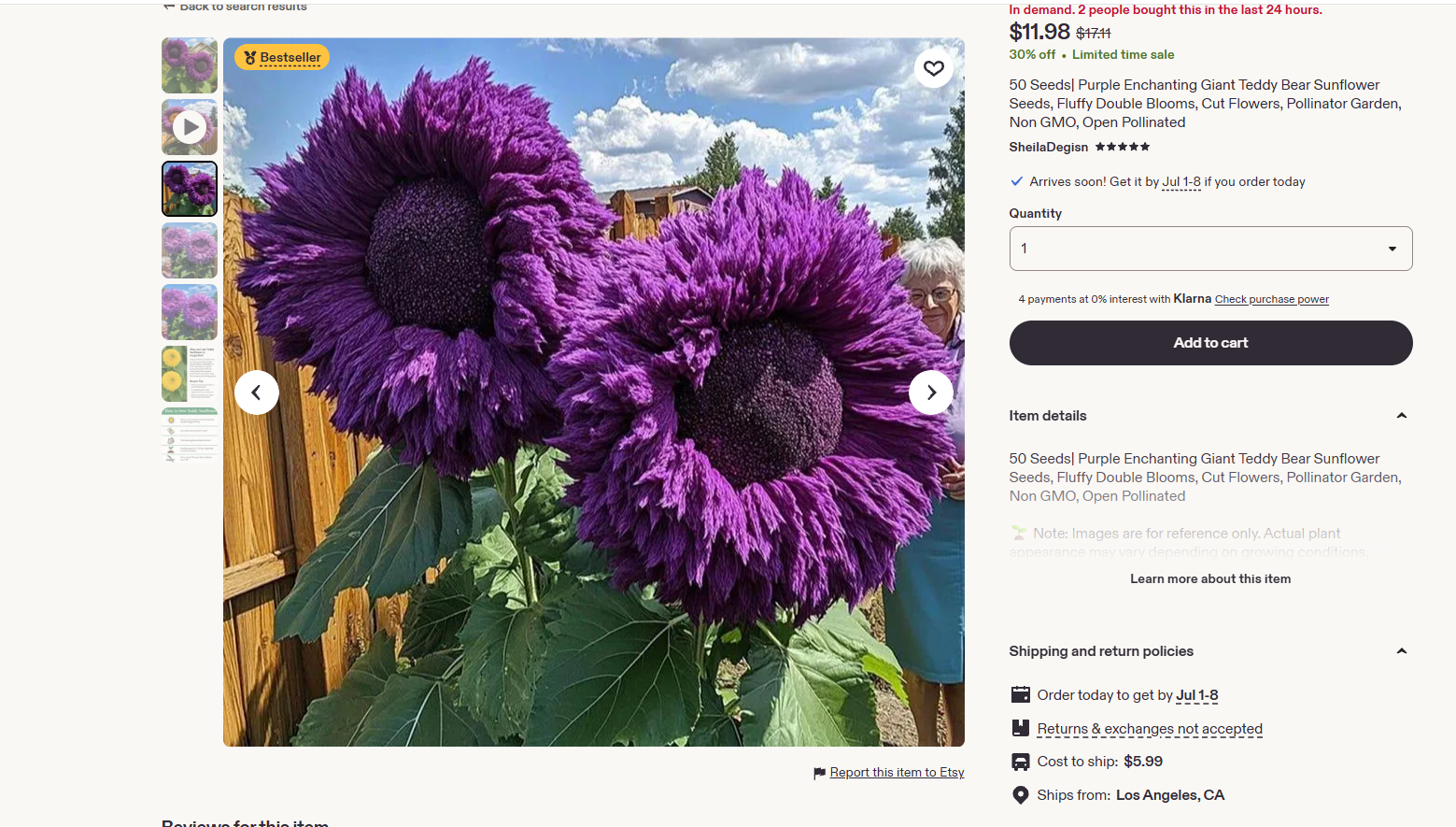
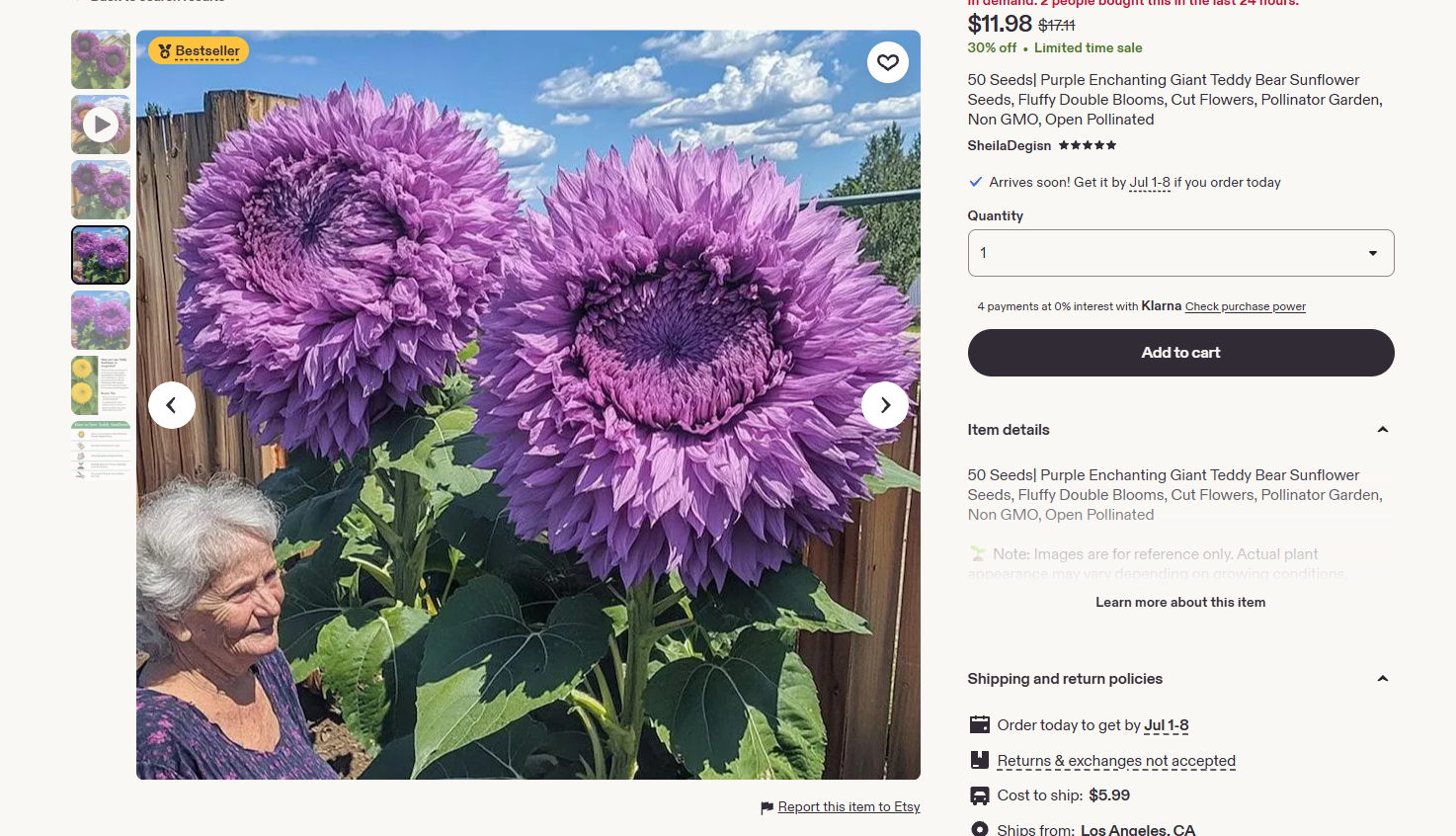
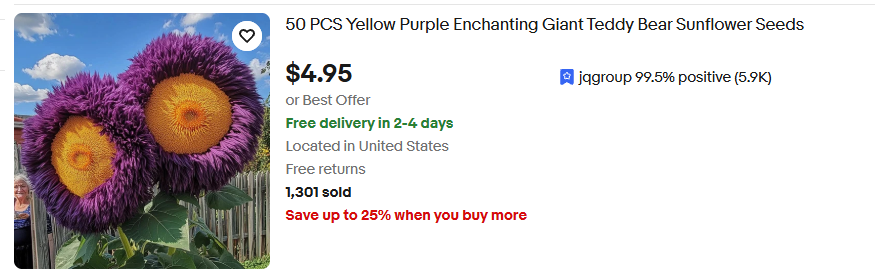
One common scam seed is for a sunflower variety called ‘teddy bear,’ named after its poofy, fluffy appearance. You can see what it looks like in reality on the Royal Horticultural Society’s website. Spectacular, yes, but that is nothing compared to the AI-generated images of gigantic, purple teddy bear sunflowers on Etsy:
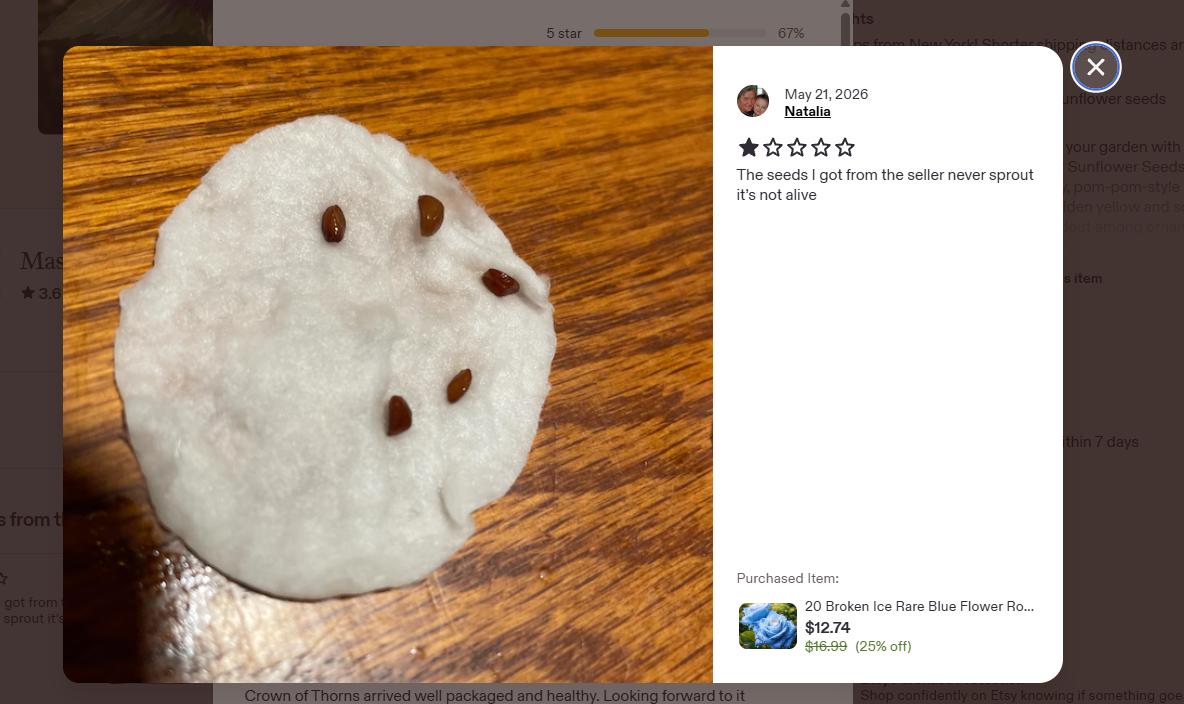
This Etsy store, which sells a wide selection of seeds for real plants with AI-generated images, and which also randomly sells AI-generated Trump T-shirts, has mixed reviews, with some buyers saying the seeds look healthy, and others complaining they never got their shipment, or that they received seeds for the wrong plant.
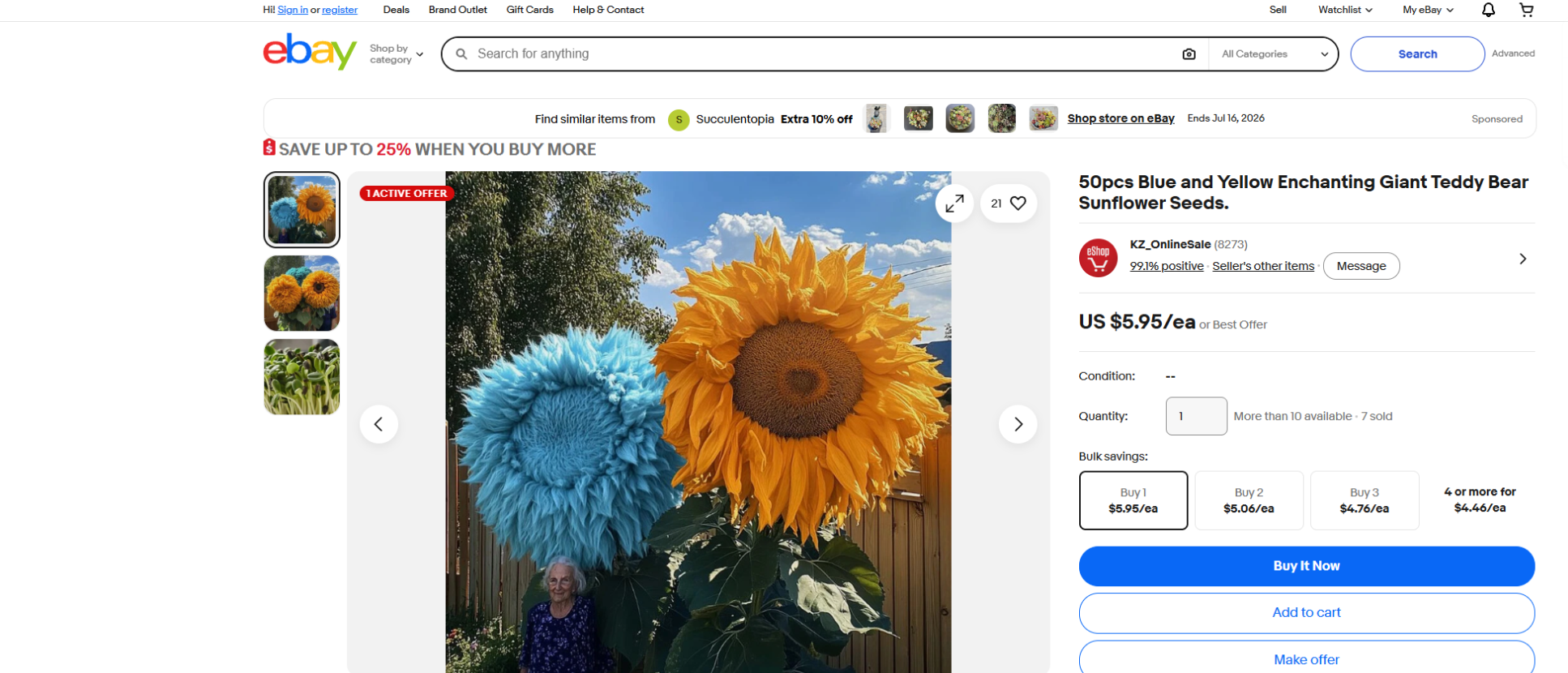
At least dozens of sellers on eBay and Amazon also offer seeds for plants they promote with clearly AI-generated images. Searching the stores for “sunflower teddy bear seeds” returns many such images, including identical images to those I found on Etsy. For some reason, AI-generated images for teddy bear sunflowers often feature a random old lady next to the gigantic flowers (grandma for scale?).
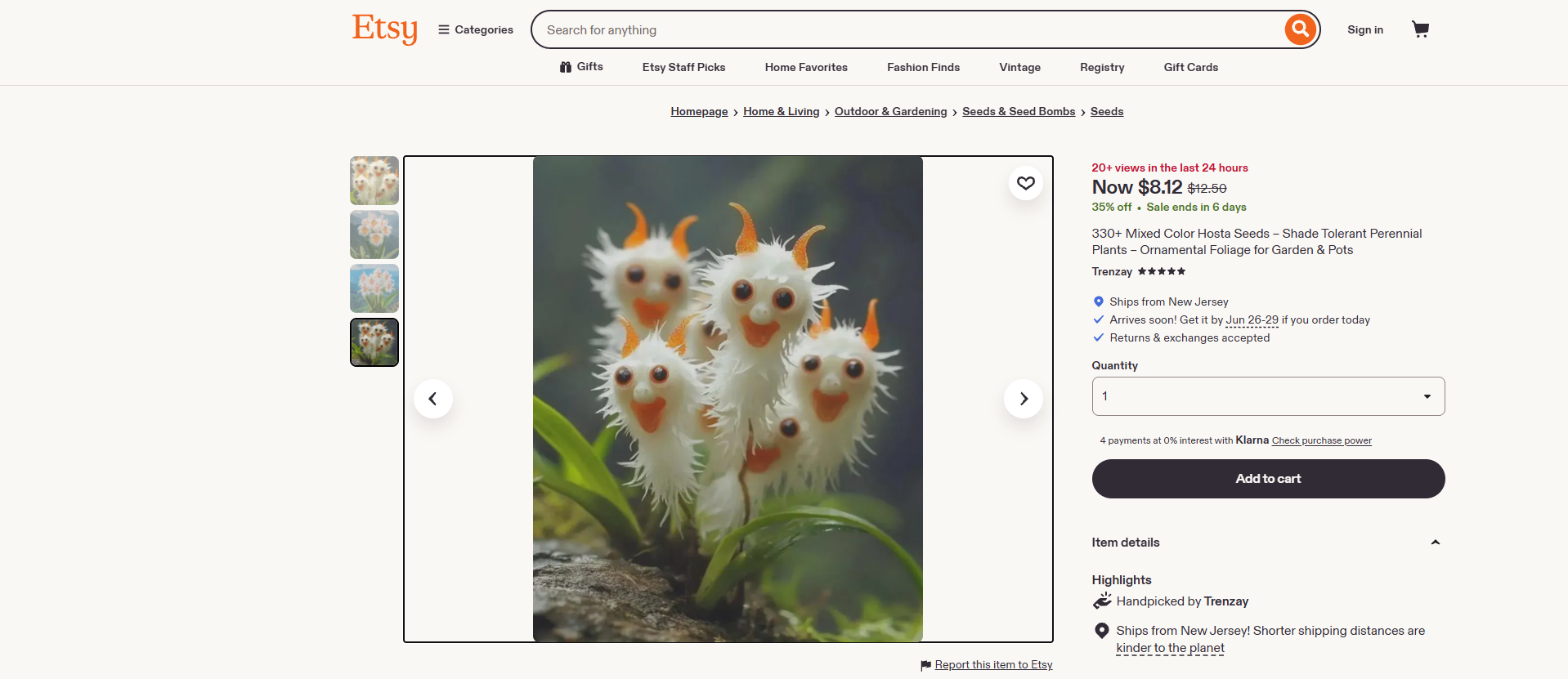
On the more obviously fake end of the spectrum is basically anything sold on Etsy by Trenzay. For example, this hosta plant that looks like a bunch of screaming demon shrimps:
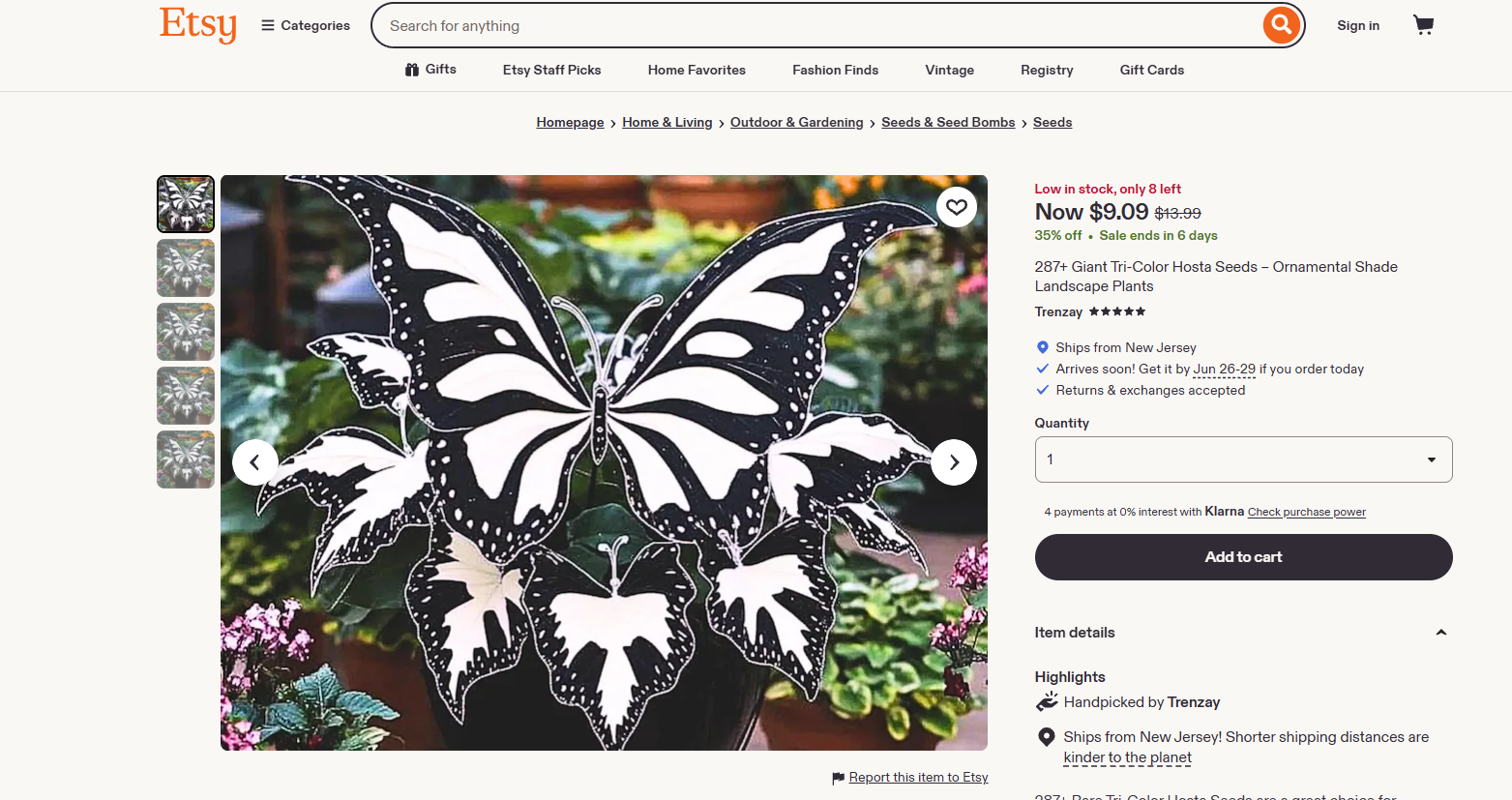
This plant that looks like a butterfly:
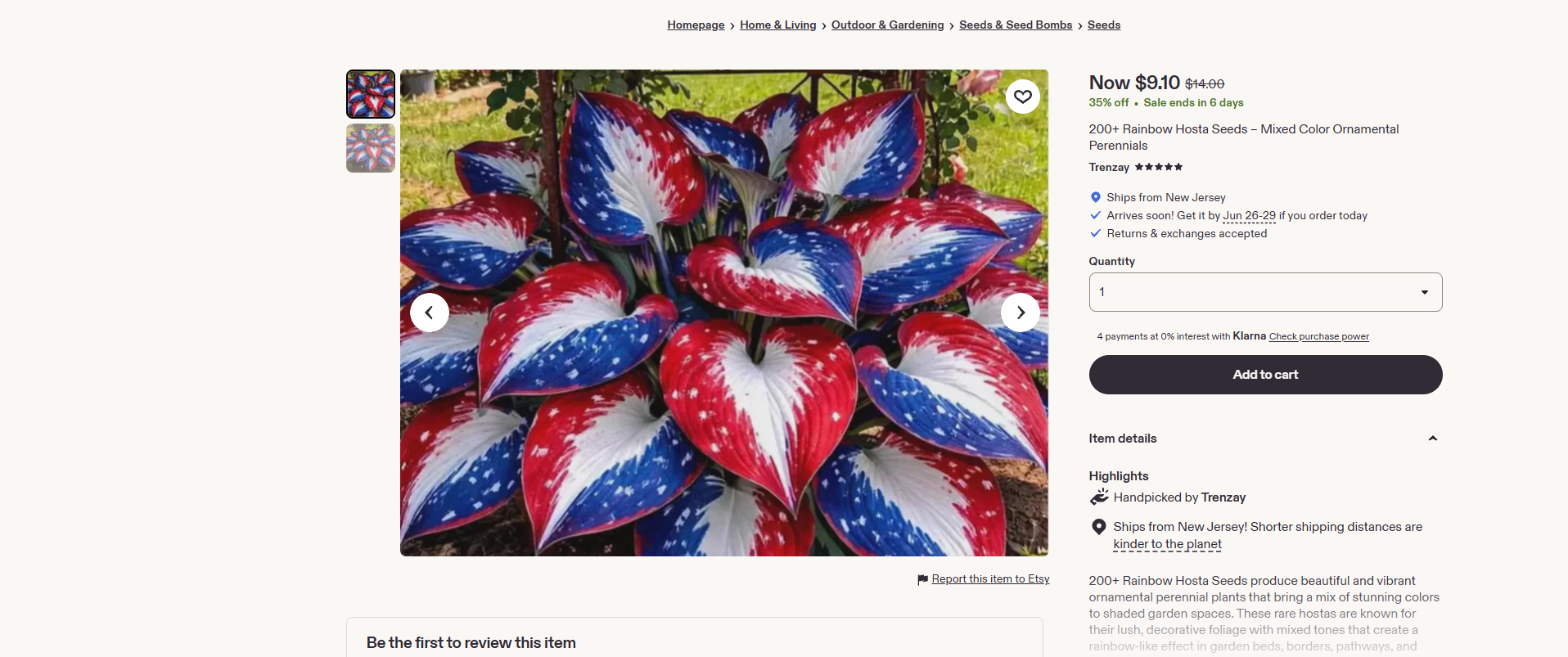
Or this very patriotic, red, white, and blue plant:
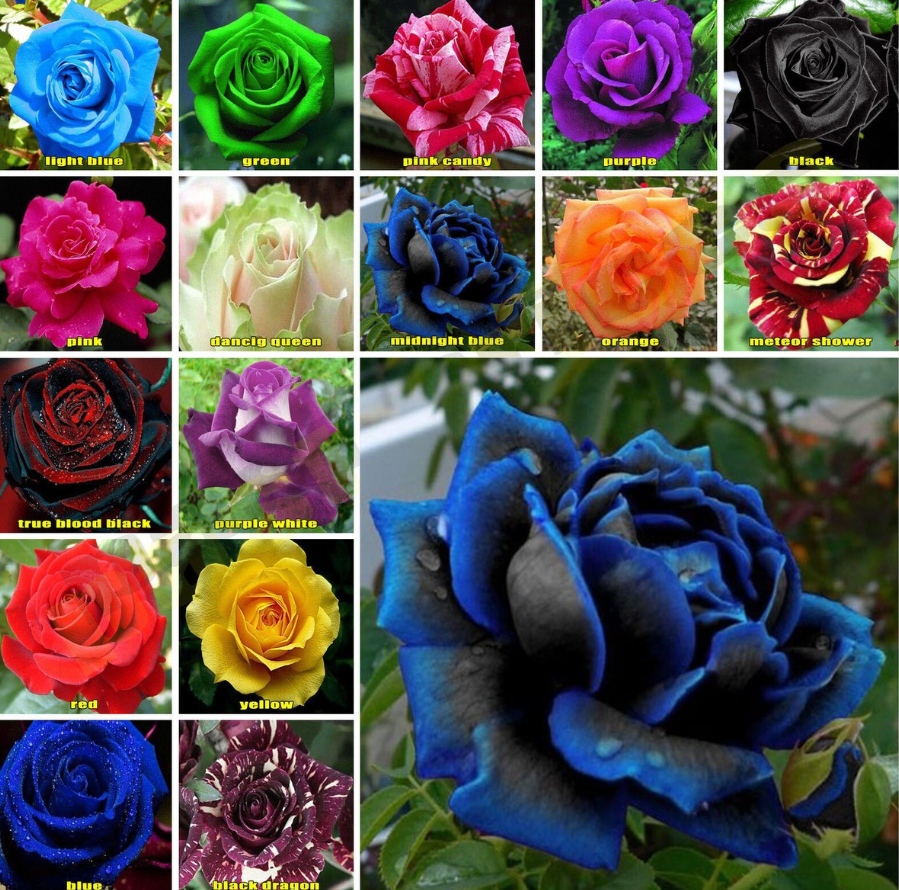
“Rose seeds” and “rainbow seeds” are two of the more common types of fake plants promoted with AI-generated images, probably because the rainbow-colored leaves and bushes are eye-catching. To me, they seem obviously, laughably AI-generated, but their popularity and public facing data from some online retailers indicate people have bought them thousands of times. This is reflected not only in user reviews who claim the sellers are scammers, but also by the number of units sold, which is sometimes shown on eBay.
🌸
Do you know anything else about these seed scams? I would love to hear from you. You can message me securely on Signal at @emanuel.404. Otherwise, send me an email at emanuel@404media.co.
In 2024 I wrote a story about Google serving users AI-generated images of mushrooms, which could potentially have dangerous consequences for users who are using Google to decide whether a mushroom is safe to eat. A moderator of the r/mycology Reddit community told me at the time that at some point, scams for exotic rose seeds were so common that Google image search results for that term turned up AI-generated or photoshopped images of fake flowers almost exclusively.
Seeds for these clearly fake, colorful roses sold 37,271 times on eBay before eBay banned the seller:
Seeds for these gigantic, fake teddy bear sunflowers sold 1,301 times (AI-generated grandma not included):
“These listings have remained unchanged for years. It is a profitable business to sell fake seeds since there is no cost involved beyond an envelope and postage, a plastic bag and a few hours to collect random seeds,” the r/mycology moderator told me at the time. “The selling price may be low but enough people buy them to make it add up.”
The fake seed scam is not limited to the dominant online retailers either. On Reddit and Facebook, plant enthusiasts warn each other about shady sites dedicated to selling seeds that offer the same fake plants.
In addition to confusing search engines about what real plants look like, the risk to people ordering seeds for a fake plant is that they’re not going to get what they want and waste their money. The seeds might sprout an entirely different plant than the one advertised, or not sprout at all.
The bigger problem is that if people don’t realize that they’re planting seeds for an entirely different plant than the one they ordered, they could unknowingly introduce invasive species to their environment. Last year, three states issued warnings against planting seeds they received in the mail as part of a widespread scam popularized around 2020, in which people were sent unsolicited packets of mystery seeds that sellers then used to write bogus online reviews for unrelated items.
“Trust is foundational to eBay’s marketplace and we have policies and controls in place to help detect and prevent fraudulent activity on our marketplace, including misleading AI-generated images that violate our listing practices policy,” an eBay spokesperson told me in an email. “We work diligently to prevent and remove non-compliant listings through seller compliance audits, block filter algorithms, AI-supported monitoring by in-house specialists, and through close partnerships with regulators. We continue to invest in tools and technologies and we encourage users to report suspicious activity and, where we identify behavior that violates our policies, we take appropriate action.”
Etsy and Amazon did not respond to a request for comment.
The warehouse was built in 1890 for Goode Durrant & Co., Ltd. which was then one of
Adelaide's leading merchant firms. The company was represented throughout South
Australia, with branches in London, Broken Hill, Perth and Kalgoorlie.
The company was formed soon after Charles H. Goode's arrival in 1849. In partnership with
his friend Thomas Good he opened up a general softgoods business in Kermode Street, North
Adelaide. They became brothers-in-law when each married the other's sister. Charles Goode
is said to have been South Australia's first commercial traveller. When the American Civil
War reduced the supply of cotton to Australia he decided to go out on the road to find more
business. When Thomas Good retired, Charles' brothers Samuel and Matthew joined the
business and it steadily expanded. Warehouses were established in Rundle Street, Stephens
Place and Grenfell Street. Charles Goode was elected to parliament in 1865, representing East
Torrens in the House of Assembly. In 1882 the business became known as Goode, Durrant
and Co. when W.H. Durrant joined the firm.
These premises, comprising bulk store, stabling and a dwelling, were designed by Charles' son
Charles Thomas Goode who was sent to England by his father for his architectural training.
He was articled to Osborn & Good of Birmingham and this was followed by a year in London
with George Vigars. The plans for the complex were approved by Council in May 1890.
The complex is important architecturally due to the combination of warehouse, residence and
central service archway leading to a courtyard at the rear. This is one of the best surviving
examples of this type of building, which was formerly characteristic of business activities in
the city. The building is well constructed of bluestone, with stuccoed and red-brick dressings.
The coved plaster soffit to the eaves is unusual.
The basic integrity of the complex is high although new doors and windows have been
provided to suit present day office accommodation requirements.
John Mentz (the original spelling) and Magdalena Lass arrived in Adelaide aboard the
Steinwaerder from Hamburg in January 1849 and married in May at Holy Trinity Church. In
about 1850 they set up a grocery and bakery shop in Wakefield Street, living in a two room
brick house at the rear. Ten years later John died, but, like many other colonial widows,
Magdalena managed the business until her sons could accept the responsibility. William took
over in 1867 and was joined by his brother August eleven years later.
Under their management the business made major changes. In 1878 a large shop was built at
the corner of Wakefield Street and Divett Place. Continuing success was reflected in
expansion of the factory and purchase of the Goode and Durrant warehouse in Divett Place
and the Wheelwright's Arms Hotel in Roper Street. In the 1880s the business moved into the
biscuit trade and closed the grocery section.
By the 1890s the firm operated under the trading name of W. Menz & Co. which became a
limited company in 1919. This became a public company in 1951 and by 1979 was part of
Arnott-Motteram-Menz.
Menz became a household name in South Australia. The family business and the company
were associated with the Wakefield Street premises for more than a century. All biscuit
production was transferred to premises at Marleston in 1953, followed by the offices, then the
remaining operations by 1979.
Besides these historical connections, part of the old factory is of architectural significance; the
two storey Italianate block extending along Wakefield Street from Divett Place to Roper
Street. The original section at the western corner dates from 1878. Major additions were
made by architects F.W. Dancker in 1911-12 and McMichael and Harris in 1946.
The complex includes a chimney at the rear which emphasises its important industrial role
and, more broadly, reflects the city's pre-eminence as an industrial centre in the nineteenth
and early twentieth centuries. Industry is a vital theme in the historical development of the
city: an 1876 S. Calvert engraving reveals more than thirty such chimneys in Adelaide. Now
there are only three. The factory interior has been frequently altered, once after a large
section was gutted by fire. Recent conversion and adaption have restored the original shop
front and balconettes on the Wakefield Street/Divett Place corner.
The complex is a significant element in Wakefield Street, pairing the two storey scale of the
Wakefield Hotel on the opposite side of Divett Place. Despite the construction of much larger
public buildings nearby during the 1970s, the Menz Biscuit Factory and the Wakefield Hotel
provide a valid reminder of Wakefield Street's nineteenth century scale of development and
visual character.
These Aussie artworks have been popping up all over Adelaide.
Since 2015, Peter Drew has used public walls and screen-printed posters to provoke national conversations through his Real Australians Say Welcome and Aussie street art poster series. Repurposing Australian National Archive photographs of early migrants, Drew’s posters are in direct response to Australia’s controversial immigration history.
Prime minister-in-waiting is seeking an interim base in the city centre before Ancoats site is completed in 2028
A civil service base that is under construction in Manchester has been earmarked for Andy Burnham’s No 10 North, according to reports.
The northern centre of government will be in Ancoats, on the outskirts of Manchester city centre, but the site is not due to be completed before 2028, according to the Manchester Evening News.




/s3/static.nrc.nl/wp-content/uploads/2026/06/16121930/210626BUI_2033440656_2.jpg)